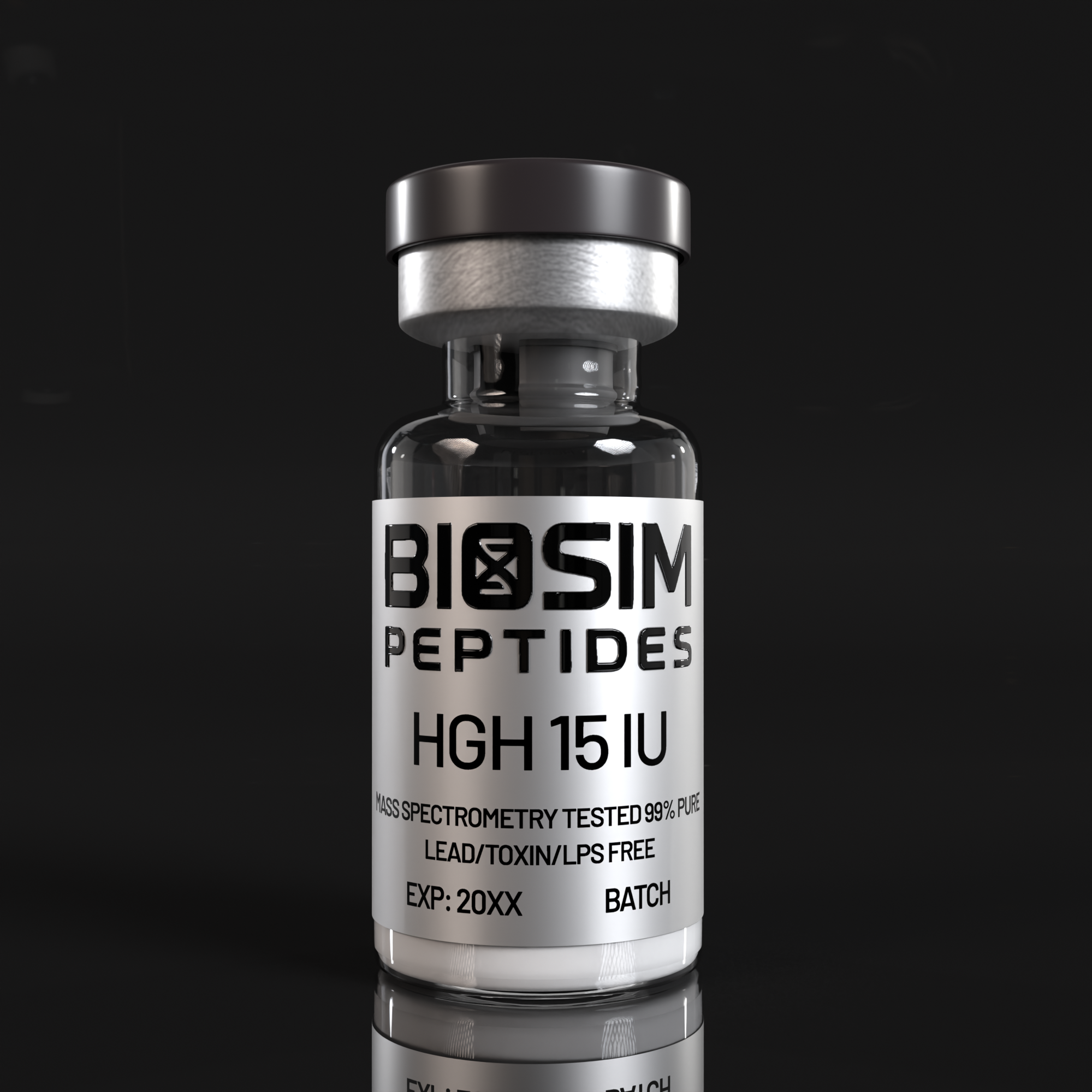
HGH
This product is a research-use-only peptide derived from human growth hormone (HGH) and is intended for academic, laboratory, or scientific investigations only. It is not intended for therapeutic, diagnostic, or cosmetic applications. The following information provides a factual summary of its potential relevance within a research context, including its chemical structure, potential applications in biochemistry, and considerations for safe handling.
Research Context
Human growth hormone (HGH) is a polypeptide hormone produced by the pituitary gland that plays a critical role in growth, development, and metabolism. Synthetic derivatives, including peptides designed to mimic or modulate HGH activity, have been studied for their biochemical properties in research settings. The HGH formulation may be used in biochemical assays, protein structural analysis, or molecular biology experiments where precise peptide quantification or activity evaluation is required.
Research Overview
Peptides like this HGH derivative are often employed in biochemical research to study hormone-receptor interactions, signal transduction pathways, or the structural characterization of growth factors. The concentration labeling may refer to the peptide’s activity in international units (IU), a measure of biological potency relevant to biochemical assays. Researchers may employ this peptide in cell culture studies, enzymatic assays, or chromatographic separations to observe specific molecular interactions or functional responses.
Key Research Focus Areas
- Biochemical Characterization: Evaluation of peptide folding, stability, and interaction with receptors or binding proteins in vitro.
- Signal Transduction Studies: Investigation of how this peptide may influence intracellular signaling cascades in controlled experimental conditions.
- Protein-Protein Interactions: Assessment of binding affinity or specificity between the peptide and target molecules (e.g., growth factor receptors, binding proteins).
- Chromatographic or Electrophoretic Analysis: Use in separation techniques (e.g., HPLC, SDS-PAGE) to purify or quantify peptide variants.
- Toxicological Screening: Pre-clinical assessment of safety parameters (e.g., cytotoxicity, inflammation) in research-grade cell lines.
Storage and Handling Recommendations
For optimal preservation, this product should be stored at -20°C or colder when not in use. Thawed samples should be aliquoted and stored at -20°C to minimize degradation. Avoid repeated freeze-thaw cycles, as they may alter peptide integrity. Always handle with sterile techniques to prevent contamination. Proper labeling of storage conditions is essential for maintaining research integrity.
Important Safety and Compliance
This material is for research purposes only and is not intended for human or animal consumption. Unauthorized distribution, use, or modification is prohibited by law. Failure to comply with research-only guidelines may result in legal and ethical violations. Always consult with a qualified researcher or institution before handling peptides for any non-commercial purposes.
For research use only. Not for human or animal consumption.
| Size | 15IU, 24IU |
|---|

Reviews
There are no reviews yet.