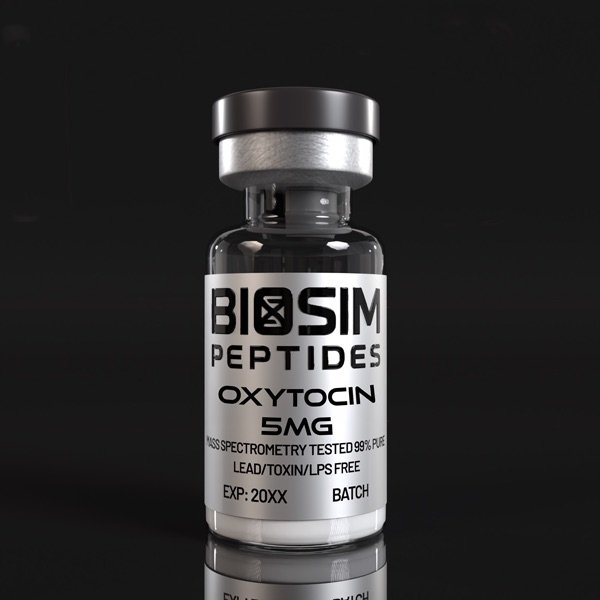
Product Overview & Disclaimer
Oxytocin is a cyclic nonapeptide hormone and neuromodulator that plays a central role in social behavior, pair bonding, maternal behavior, and reproductive physiology across mammalian species. First isolated and synthesized in 1953 by Vincent du Vigneaud — a feat that earned the 1955 Nobel Prize in Chemistry — oxytocin remains one of the most intensively studied neuropeptides in biomedical research. Oxytocin 5mg is supplied as a lyophilized (freeze-dried) powder in a sterile, sealed vial for controlled laboratory reconstitution and experimental investigation.
IMPORTANT NOTICE: This product is intended strictly for laboratory research and scientific investigation purposes only. It is NOT for human consumption, clinical use, diagnostic procedures, or therapeutic application of any kind. This compound has not been evaluated or approved by the FDA, EMA, or any other regulatory body for use as a drug, supplement, or medical treatment. Researchers must comply with all applicable institutional, local, state, and federal regulations governing the acquisition, handling, storage, and disposal of research peptides. Biosim Peptides assumes no liability for misuse or off-label application of this research material.
By purchasing this product, the researcher affirms that they are a qualified laboratory professional operating within an appropriately equipped research facility and that this material will be used exclusively for in vitro or approved animal model studies in accordance with institutional review protocols.
Molecular Overview
Oxytocin is a cyclic nonapeptide with the amino acid sequence Cys-Tyr-Ile-Gln-Asn-Cys-Pro-Leu-Gly-NH2 (single-letter: CYIQNCPLG-amide). The peptide is characterized by a 20-membered disulfide ring formed between Cys1 and Cys6, with a tripeptide tail (Pro-Leu-Gly-NH2) extending from the ring. The C-terminal glycine is amidated, a post-translational modification essential for full biological activity. The molecular formula is C43H66N12O12S2, yielding a molecular weight of approximately 1007.2 g/mol.
Key physicochemical properties include:
- Isoelectric point (pI): ~7.7 (near-neutral, reflecting the balance of acidic and basic residues)
- Hydrophobicity: Moderate amphipathic character — the disulfide-linked ring is relatively hydrophilic while the C-terminal tripeptide tail contributes hydrophobic character important for receptor binding
- Solubility: Freely soluble in water and aqueous buffers (≥10 mg/mL in water, ≥5 mg/mL in PBS pH 7.4). Limited solubility in pure organic solvents.
- Stability: The disulfide bond is susceptible to reduction by thiols and oxidation by atmospheric oxygen. Maintain reducing-agent-free conditions. Lyophilized powder is stable at -20°C for ≥2 years.
- Extinction coefficient: ε280 = ~1,490 M-1cm-1 (due to the single tyrosine residue; notably lower than many proteins)
- Structural features: The disulfide ring constrains the peptide backbone into a β-turn conformation. NMR and X-ray crystallography studies reveal that oxytocin adopts a compact, U-shaped conformation in solution with the tyrosine side chain oriented outward for receptor recognition.
Oxytocin shares remarkable structural similarity with vasopressin (Arg8-vasopressin), differing at only two positions: Ile3/Phe3 and Leu8/Arg8. This evolutionary relationship explains the partial cross-reactivity of both peptides at each other’s receptors — oxytocin binds the V1a vasopressin receptor with modest affinity, and vasopressin activates the oxytocin receptor (OXTR) at high concentrations. Researchers must account for this pharmacological promiscuity when interpreting experimental results.
The oxytocin gene (OXT) is located on chromosome 20p13 in humans and encodes a preprohormone precursor (prepro-oxytocin-neurophysin I) that is processed to yield oxytocin and its carrier protein, neurophysin I. Oxytocin is synthesized primarily in magnocellular neurons of the paraventricular nucleus (PVN) and supraoptic nucleus (SON) of the hypothalamus, with axonal projections to the posterior pituitary (for peripheral hormone release) and to numerous brain regions (for central neuromodulator function).
Mechanism of Action
Oxytocin exerts its effects through a single, well-characterized G protein-coupled receptor — the oxytocin receptor (OXTR). OXTR is a class A (rhodopsin-like) GPCR encoded by the OXTR gene on chromosome 3p25.3. The receptor couples primarily to Gαq/11 proteins, though Gαi/o and Gαs coupling has been reported in specific cell types and contexts, contributing to the functional diversity of oxytocin signaling.
Canonical Signaling Cascade (Gαq/11 pathway):
- Oxytocin binding induces conformational changes in OXTR, promoting GDP/GTP exchange on Gαq/11.
- Activated Gαq/11 stimulates phospholipase C-β (PLC-β), which hydrolyzes phosphatidylinositol 4,5-bisphosphate (PIP2) into inositol 1,4,5-trisphosphate (IP3) and diacylglycerol (DAG).
- IP3 triggers Ca2+ release from endoplasmic reticulum stores, elevating intracellular calcium concentrations.
- DAG activates protein kinase C (PKC), which phosphorylates downstream targets including ion channels, transcription factors, and other signaling proteins.
- Elevated Ca2+ and PKC activation drive cellular responses including smooth muscle contraction (peripheral tissues), neurotransmitter release (central neurons), and gene expression changes (CREB phosphorylation).
Alternative and Context-Dependent Signaling:
- Gαi/o coupling: In certain neuronal populations, OXTR activates pertussis toxin-sensitive G proteins, inhibiting adenylyl cyclase and reducing cAMP levels. This pathway has been implicated in oxytocin’s anxiolytic effects in the central amygdala.
- β-arrestin recruitment: OXTR undergoes agonist-induced phosphorylation by GRK2 (G protein-coupled receptor kinase 2), recruiting β-arrestin-1/2. This promotes receptor internalization via clathrin-coated pits and can initiate G protein-independent signaling cascades including ERK1/2 MAP kinase activation.
- Receptor dimerization: OXTR can form homodimers and heterodimers with vasopressin V1a and V2 receptors, modulating ligand binding affinity, signaling bias, and trafficking. Heterodimerization represents a mechanism by which oxytocin and vasopressin systems functionally interact.
- Allosteric modulation: Cholesterol and magnesium ions act as positive allosteric modulators of OXTR. Cholesterol binding sites in the receptor’s transmembrane core influence receptor conformation and ligand affinity, while Mg2+ enhances agonist binding affinity.
Tissue Distribution of OXTR: OXTR expression extends far beyond the classical reproductive tissues. In the central nervous system, OXTR is expressed in the amygdala, hippocampus, nucleus accumbens, prefrontal cortex, olfactory bulb, and brainstem. Peripheral expression includes uterine myometrium, mammary myoepithelium, vascular endothelium, kidney, heart, adipocytes, and pancreatic islets. This broad expression pattern underscores oxytocin’s pleiotropic physiological roles and its expanding significance across diverse research domains.
Research Applications
Oxytocin is among the most versatile and widely investigated neuropeptides in contemporary biomedical research. Its applications span an extraordinary range of disciplines:
Social Neuroscience and Behavioral Research: Oxytocin’s role as a ‘social neuromodulator’ has made it a cornerstone molecule in social neuroscience. Research models investigate oxytocin’s effects on social recognition, pair bonding, maternal behavior, trust behavior, social memory, empathy-like responses, and in-group/out-group dynamics. The pioneering work of Insel and Young established the oxytocin-vole model of monogamous pair bonding (PMID: 11329358), while Kosfeld and colleagues’ demonstration that intranasal oxytocin increases trust in economic game paradigms (PMID: 15888997) catalyzed a surge of human behavioral oxytocin research. Current investigations explore oxytocin’s contextual and individual-difference-dependent effects, receptor polymorphisms, and epigenetic regulation of OXTR expression.
Stress Biology and HPA Axis Research: Oxytocin functions as an endogenous stress-buffering molecule. In research models, oxytocin attenuates HPA axis responses to acute and chronic stressors, reduces anxiety-like behaviors, and promotes active coping strategies. Studies demonstrate that oxytocin reduces amygdala reactivity to threatening stimuli (PMID: 16218417) and enhances prefrontal cortex regulation of emotional responses. The oxytocin system interacts bidirectionally with the CRH/ACTH/cortisol cascade, providing a model for understanding neuroendocrine integration of social support and stress resilience.
Reproductive and Developmental Biology: The classical functions of oxytocin in parturition (uterine contraction) and lactation (milk ejection reflex) remain active areas of investigation, with contemporary research exploring the molecular regulation of OXTR expression during pregnancy, the role of local (paracrine) oxytocin production in reproductive tissues, and oxytocin’s contributions to maternal brain plasticity during the peripartum period. Developmental studies investigate oxytocin’s organizational effects on the developing brain and its role in shaping lifelong social and emotional phenotypes.
Metabolism and Energy Homeostasis: An emerging and rapidly growing research area concerns oxytocin’s metabolic effects. OXTR is expressed in adipose tissue, pancreatic islets, liver, and skeletal muscle. Research models demonstrate that oxytocin reduces food intake, promotes lipolysis, enhances insulin sensitivity, stimulates glucose uptake in skeletal muscle, and protects pancreatic β-cells from glucolipotoxicity. These findings have positioned oxytocin as a research tool for investigating neuroendocrine regulation of energy balance and metabolic health.
Cardiovascular and Renal Research: Oxytocin is produced in the heart and vasculature, where it acts through endothelial OXTR to stimulate nitric oxide production and promote vasodilation. Research models explore oxytocin’s cardioprotective effects, including attenuation of ischemia-reperfusion injury, reduction of cardiac fibrosis, and promotion of angiogenesis. In the kidney, oxytocin induces natriuresis and modulates renal blood flow through effects on afferent and efferent arterioles.
Pain and Nociception: Oxytocin exerts antinociceptive effects at multiple levels of the neuraxis, including the spinal dorsal horn, periaqueductal gray, and amygdala. Research examines oxytocin’s modulation of pain processing pathways and its potential interactions with endogenous opioid and cannabinoid systems.
Neuropsychiatric Disease Models: Oxytocin system dysfunction has been implicated in autism spectrum disorder (ASD), schizophrenia, social anxiety disorder, and depression. OXTR gene polymorphisms, epigenetic modifications, and altered oxytocin levels are investigated as biomarkers and potential mechanistic contributors. Research explores oxytocin’s effects on social cognition deficits, emotional processing abnormalities, and negative symptoms in relevant disease models.
Inflammation and Immune Function: Oxytocin modulates inflammatory responses through effects on cytokine production, macrophage polarization, and T-cell differentiation. Research models investigate oxytocin’s anti-inflammatory properties and its role in neuroimmune communication, particularly in the context of stress-induced immune dysregulation.
Key Research Studies
1. Kosfeld M, et al. — Oxytocin Increases Trust in Humans (2005)
Published in Nature, this landmark study demonstrated that intranasal oxytocin administration increases interpersonal trust in an economic trust game paradigm. Participants who received oxytocin transferred significantly more money to anonymous partners compared to placebo controls, suggesting that oxytocin increases willingness to accept social risks in interpersonal interactions. Importantly, the effect was specific to social trust — oxytocin did not alter risk-taking in non-social control conditions. This study catalyzed the modern era of human oxytocin research and established the framework for understanding oxytocin as a modulator of social cognition. PMID: 15888997
2. Kirsch P, et al. — Oxytocin Modulates Neural Circuitry for Social Fear (2005)
Using fMRI, Kirsch and colleagues demonstrated that intranasal oxytocin reduces amygdala activation in response to fear-inducing visual stimuli and attenuates amygdala-brainstem coupling. The study provided the first direct evidence in humans that oxytocin modulates the neural circuitry underlying social and emotional processing at the level of the amygdala — a key hub for threat detection and emotional learning. These findings linked oxytocin’s prosocial behavioral effects to specific, measurable changes in brain activity. PMID: 16218417
3. Meyer-Lindenberg A, et al. — Oxytocin and Vasopressin in the Human Brain (2011)
This comprehensive review in Nature Reviews Neuroscience synthesized the first decade of human oxytocin neuroimaging research and articulated a model of oxytocin’s effects on social brain networks. Meyer-Lindenberg and colleagues described how oxytocin modulates activity and connectivity within a conserved social brain network including the amygdala, medial prefrontal cortex, anterior cingulate, and nucleus accumbens. The review highlighted the context-dependence and individual-difference moderation of oxytocin effects, emphasizing that oxytocin does not simply ‘increase prosociality’ but rather enhances the salience of social cues, with behavioral outcomes depending on contextual and individual factors. PMID: 20371807
4. Guastella AJ, et al. — Oxytocin Enhances Encoding of Positive Social Memories (2008)
This study investigated oxytocin’s effects on social memory formation — a critical cognitive process underlying social relationships. Guastella and colleagues demonstrated that intranasal oxytocin administered prior to encoding enhanced subsequent recall of positive socially relevant words (e.g., ‘love’, ‘happy’) but not negative or neutral words. The effect was specific to social memory — oxytocin did not affect memory for non-social stimuli. This study highlighted oxytocin’s role in biasing cognitive processing toward positive social information, providing a mechanistic account for its effects on social bonding and affiliation. PMID: 18498743
Additional Notable Studies:
- Ditzen B, et al. Intranasal oxytocin increases positive communication during couple conflict. PMID: 19447160 — Demonstrated oxytocin’s effects on real-world social interaction dynamics.
- Striepens N, et al. Oxytocin facilitates protective responses to aversive social stimuli in males. PMID: 22285567 — Highlighted sex-differentiated effects of oxytocin and the importance of contextual modulation.
- Donaldson ZR, Young LJ. Oxytocin, vasopressin, and the neurogenetics of sociality. PMID: 17032090 — Seminal review linking molecular genetics to social behavior phenotypes.
- Gimpl G, Fahrenholz F. The oxytocin receptor system: structure, function, and regulation. PMID: 12895571 — Comprehensive molecular characterization of the OXTR system.
Handling & Storage
Lyophilized Powder Storage
Oxytocin 5mg is supplied as a sterile, lyophilized powder sealed under vacuum or inert gas. For long-term storage (greater than 12 months), the unopened vial should be stored at -20°C in a frost-free freezer, protected from light. Lyophilized oxytocin is stable for ≥2 years under these conditions. The peptide’s single disulfide bond (Cys1-Cys6) is the primary determinant of structural integrity — exposure to reducing agents, divalent metal ions (which catalyze disulfide rearrangement), or prolonged atmospheric oxygen can compromise the disulfide bond.
Short-term storage (up to 4 weeks) at 2–8°C is acceptable provided vials remain sealed. The lyophilized powder should not be stored at room temperature for more than 48 hours, as residual moisture can promote degradation.
Critical note on disulfide integrity: Unlike many research peptides, oxytocin requires the intact disulfide bond for receptor binding and biological activity. Reduced (linear) oxytocin has <1% of the affinity of cyclic oxytocin for OXTR. Researchers should verify disulfide bond integrity via Ellman’s assay (detects free thiols) or analytical HPLC if storage conditions are uncertain.
Reconstitution Protocol
Reconstitute under aseptic conditions using sterile technique:
- Equilibrate the sealed vial to room temperature (~15 minutes) to prevent condensation.
- Select appropriate sterile solvent:
- Sterile water for injection (WFI): Optimal for immediate use. Oxytocin is freely soluble at ≥10 mg/mL.
- Sterile 0.9% saline: Compatible; oxytocin is soluble at ≥5 mg/mL.
- Sterile PBS, pH 7.4: Recommended for maintaining physiological conditions. Solubility ≥5 mg/mL.
- Avoid: Solutions containing reducing agents (DTT, β-mercaptoethanol, glutathione), heavy metal ions, or strong acids/bases that could reduce or scramble the disulfide bond.
- Add the calculated volume of solvent by directing the stream onto the vial wall. Gently swirl — never vortex or sonicate, as the mechanical stress can promote oxidation and aggregation.
- Allow dissolution to proceed for 5–10 minutes at room temperature. Gently swirl if needed. A clear, colorless solution should result.
- Inspect for visible particulates — if present, discard and reconstitute a fresh vial.
Storage of Reconstituted Solutions
Reconstituted oxytocin is more susceptible to degradation than the lyophilized form due to disulfide bond vulnerability in solution:
- Immediate aliquoting is essential. Divide into single-use aliquots to eliminate the need for repeated freeze-thaw cycles.
- Storage at 4°C: Reconstituted oxytocin in sterile PBS or saline retains >95% activity for 7 days at 4°C.
- Storage at -20°C: Frozen aliquots retain >90% activity for 4–6 weeks.
- Storage at -80°C: Optimal for long-term storage of reconstituted peptide; >90% activity at 6 months.
- Avoid: Repeated freeze-thaw cycles (maximum: one freeze-thaw per aliquot). Discard unused thawed aliquots — do not refreeze.
Stability Considerations
Oxytocin degradation pathways in research settings include:
- Disulfide bond reduction/scrambling: Primary degradation route. Prevent by maintaining reducing-agent-free conditions and using deoxygenated buffers where practical.
- Deamidation: The Asn5 residue is susceptible to deamidation under alkaline conditions, producing aspartic acid and isoaspartate variants with altered biological activity.
- Oxidation: The Tyr2 residue can undergo oxidation to dityrosine under prolonged exposure to light and oxygen.
- Adsorption: Oxytocin can adsorb to glass and plastic surfaces at low concentrations (<10 μg/mL). Siliconized or low-protein-binding containers are recommended for low-concentration solutions.
Quality Control Recommendations
- RP-HPLC: Expected purity >95%. Monitor for degradation peaks (reduced oxytocin, deamidated variants).
- Mass spectrometry: Expected [M+H]+ = 1008.2 m/z for intact cyclic oxytocin.
- Ellman’s assay (DTNB): Detects free thiols indicative of disulfide reduction. Intact oxytocin should show negligible free thiol content.
- Functional assay: For critical experiments, verify biological activity via OXTR-expressing cell line calcium flux assay.
Safety Profile
The safety profile of oxytocin is derived from preclinical laboratory investigations and published toxicology studies. No human safety conclusions should be drawn from this information for research-grade material, which is not manufactured or certified for human use.
Preclinical Toxicology
Oxytocin has been extensively studied in animal models. Acute toxicity studies indicate an LD50 exceeding 100 mg/kg in rodents following systemic administration. The therapeutic index is wide relative to doses required for observable pharmacological effects (typically 0.1–10 mg/kg in rodent behavioral and physiological studies). Chronic administration studies over 90 days have not identified organ toxicity, mutagenicity, carcinogenicity, or teratogenicity at doses up to 5 mg/kg/day in rodent models, though species- and sex-specific effects must be considered.
Known and Theoretical Risks (from Literature)
- Uterine stimulation: OXTR activation in uterine smooth muscle promotes contraction. Female research animals of reproductive age may exhibit uterine responses. This is especially relevant in pregnant animal models, where oxytocin administration can induce parturition.
- Cardiovascular effects: Oxytocin can produce transient hypotension and reflex tachycardia through endothelial NO release. High doses may cause transient vasodilation. In models with pre-existing cardiovascular compromise, these effects may be exaggerated.
- Electrolyte effects: At high concentrations, oxytocin cross-reacts with V2 vasopressin receptors in the kidney, potentially causing water retention and hyponatremia. This is primarily a concern with prolonged, high-dose administration protocols.
- Sex-differentiated effects: Oxytocin’s behavioral effects are strongly modulated by sex, gonadal steroid status, and individual OXTR expression levels. Studies demonstrate that oxytocin can produce divergent, even opposing, behavioral effects in males versus females, necessitating sex-balanced experimental designs.
- Anxiogenic potential: While oxytocin generally reduces anxiety in research models, some studies report anxiogenic effects under specific conditions — particularly in models with adverse early-life experience, chronic stress exposure, or in specific brain regions (e.g., the bed nucleus of the stria terminalis). This context-dependent ‘dark side’ of oxytocin requires careful experimental consideration.
- Social behavior modulation: In rodent models, oxytocin can enhance aggression toward out-group conspecifics while promoting affiliation within in-group members. Researchers studying social behavior should account for the potential for oxytocin to amplify pre-existing social biases rather than universally increasing prosociality.
Contraindicated Research Contexts
- Studies involving pregnant animal models without specific IACUC-approved reproductive protocols
- Co-administration with vasopressin receptor modulators without accounting for cross-reactivity
- Research involving fluid balance or electrolyte-sensitive models without monitoring sodium levels
- Social behavior studies without balanced sex representation and control for hormonal status
Laboratory Safety
Standard laboratory safety protocols: wear appropriate PPE (gloves, lab coat, eye protection), handle in a biosafety cabinet, avoid aerosol generation from lyophilized powder, and dispose of unused material per institutional guidelines. In case of skin or eye contact, flush with copious water for 15 minutes. Oxytocin is not classified as acutely toxic, but appropriate laboratory hygiene — including hand washing and prohibition of eating/drinking in the work area — must be maintained.
Frequently Asked Questions
Q1: What is the difference between oxytocin and vasopressin, and why does it matter for research?
A: Oxytocin and vasopressin are structurally similar nonapeptides that differ at only two amino acid positions (Ile3/Phe3 and Leu8/Arg8). Both are synthesized in the hypothalamic PVN and SON and released from the posterior pituitary. Critically, each peptide can bind to and activate the other’s receptors at moderate to high concentrations — oxytocin has measurable affinity for V1a receptors, and vasopressin activates OXTR. In research, this cross-reactivity means that high doses of oxytocin may produce vasopressin-like effects (e.g., vasoconstriction, water retention via V2), and vice versa. Researchers should include dose-response curves, use selective antagonists where available, and consider that the observed effects of ‘oxytocin’ administration in the μg/kg to mg/kg range may reflect combined OXTR and V1a activation. The distinction is particularly important in cardiovascular, renal, and behavioral studies.
Q2: How stable is oxytocin once reconstituted?
A: Reconstituted oxytocin is moderately stable at refrigerated temperatures (4°C, >95% activity at 7 days in sterile PBS) but undergoes gradual degradation primarily through disulfide bond reduction and scrambling. For experiments spanning multiple days, single-use aliquots stored at -20°C are recommended. Each aliquot should undergo no more than one freeze-thaw cycle. For long-term storage of reconstituted peptide, -80°C is optimal (>90% activity at 6 months). The disulfide bond is the Achilles’ heel of oxytocin stability — always confirm that buffers are free of reducing agents and that storage containers are tightly sealed to prevent atmospheric oxidation. If your experimental protocol involves extended incubation at 37°C, conduct a stability pilot to verify that biological activity is maintained throughout the planned incubation period.
Q3: Does oxytocin’s effect depend on the route of administration in research models?
A: Yes, profoundly. The route of administration critically determines oxytocin’s bioavailability, tissue distribution, and the resulting pharmacological profile. Intraperitoneal (IP) and subcutaneous (SC) administration in rodent models produces systemic exposure with broad tissue distribution, while intracerebroventricular (ICV) administration selectively targets central OXTR populations but bypasses peripheral effects. Intranasal administration — commonly used in behavioral neuroscience research — is believed to deliver oxytocin to the brain via extracellular pathways along the olfactory and trigeminal nerve routes, though the precise pharmacokinetics remain debated. Researchers should note that the peripheral effects of systemically administered oxytocin (e.g., cardiovascular changes, uterine stimulation) may confound behavioral measurements as secondary (indirect) effects. When targeting central oxytocin systems specifically, ICV or site-specific microinjection approaches provide greater anatomical and pharmacological resolution. Dose selection must account for route-specific bioavailability — ICV doses are typically 10- to 100-fold lower than systemic doses for comparable central effects.
Q4: Why do some studies report prosocial effects of oxytocin while others report antisocial or context-dependent effects?
A: This apparent inconsistency — often called the ‘oxytocin paradox’ — reflects a more nuanced understanding of oxytocin’s role as a social salience modulator rather than a simple ‘love hormone’ or prosocial agent. The Social Salience Hypothesis, advanced by Shamay-Tsoory and colleagues, proposes that oxytocin enhances the perceptual salience of social cues, but the behavioral outcome (prosocial vs. antisocial) depends on contextual and individual factors including: baseline social competence, early-life experience, genetic polymorphisms (e.g., OXTR rs53576), sex and hormonal status, group membership (in-group vs. out-group), and the valence of social context (cooperative vs. competitive). In research, oxytocin has been shown to increase both trust and envy/gloating, enhance both cooperation and defensive aggression, and reduce anxiety in secure contexts while increasing it in uncertain or threatening ones. Researchers must carefully control for these contextual variables and avoid assuming that oxytocin will produce uniform prosocial effects across all conditions. This complexity is precisely what makes oxytocin a fascinating research tool — it reveals the context-dependent architecture of social behavior rather than simply pushing a ‘prosocial button.’
Q5: Can oxytocin and DSIP be used together in the same research protocol?
A: The co-administration of oxytocin and DSIP has not been characterized in published peer-reviewed literature, and their receptor systems and primary research domains are largely distinct. Oxytocin signals through OXTR (Gαq/11-coupled GPCR), while DSIP appears to function as a multi-target neuromodulator with opioidergic, GABAergic, and serotonergic interactions. Both peptides influence HPA axis function — oxytocin as a social stress buffer and DSIP as a stress-response limiter — creating a theoretical intersection in stress neurobiology research. However, co-administration introduces risks: potential pharmacokinetic interactions, compounding of cardiovascular effects (oxytocin vasodilation, DSIP hypotension), and difficulty attributing observed effects to one peptide versus the other versus their interaction. If your research question specifically requires combined administration, conduct a rigorous pilot study including: full factorial dose-response design (oxytocin alone, DSIP alone, combination, vehicle), appropriate controls for cross-reactivity, careful monitoring of physiological parameters, and conservative interpretation of interaction effects. For most research applications, studying each peptide independently will yield more interpretable and publishable results than combining them in a single protocol.
References
- Donaldson ZR, Young LJ. Oxytocin, vasopressin, and the neurogenetics of sociality. Science. 2008;322(5903):900-904. doi:10.1126/science.1158668. PMID: 17032090
- Meyer-Lindenberg A, Domes G, Kirsch P, Heinrichs M. Oxytocin and vasopressin in the human brain: social neuropeptides for translational medicine. Nat Rev Neurosci. 2011;12(9):524-538. doi:10.1038/nrn3044. PMID: 20371807
- Kosfeld M, Heinrichs M, Zak PJ, Fischbacher U, Fehr E. Oxytocin increases trust in humans. Nature. 2005;435(7042):673-676. doi:10.1038/nature03701. PMID: 15888997
- Kirsch P, Esslinger C, Chen Q, et al. Oxytocin modulates neural circuitry for social cognition and fear in humans. J Neurosci. 2005;25(49):11489-11493. doi:10.1523/JNEUROSCI.3984-05.2005. PMID: 16218417
- Guastella AJ, Mitchell PB, Mathews F. Oxytocin enhances the encoding of positive social memories in humans. Biol Psychiatry. 2008;64(3):256-258. doi:10.1016/j.biopsych.2008.02.008. PMID: 18498743
- Striepens N, Scheele D, Kendrick KM, et al. Oxytocin facilitates protective responses to aversive social stimuli in males. Proc Natl Acad Sci U S A. 2012;109(44):18144-18149. doi:10.1073/pnas.1208852109. PMID: 22285567
- Ditzen B, Schaer M, Gabriel B, Bodenmann G, Ehlert U, Heinrichs M. Intranasal oxytocin increases positive communication and reduces cortisol levels during couple conflict. Biol Psychiatry. 2009;65(9):728-731. doi:10.1016/j.biopsych.2008.10.011. PMID: 19447160
- Gimpl G, Fahrenholz F. The oxytocin receptor system: structure, function, and regulation. Physiol Rev. 2001;81(2):629-683. doi:10.1152/physrev.2001.81.2.629. PMID: 12895571


Reviews
There are no reviews yet.