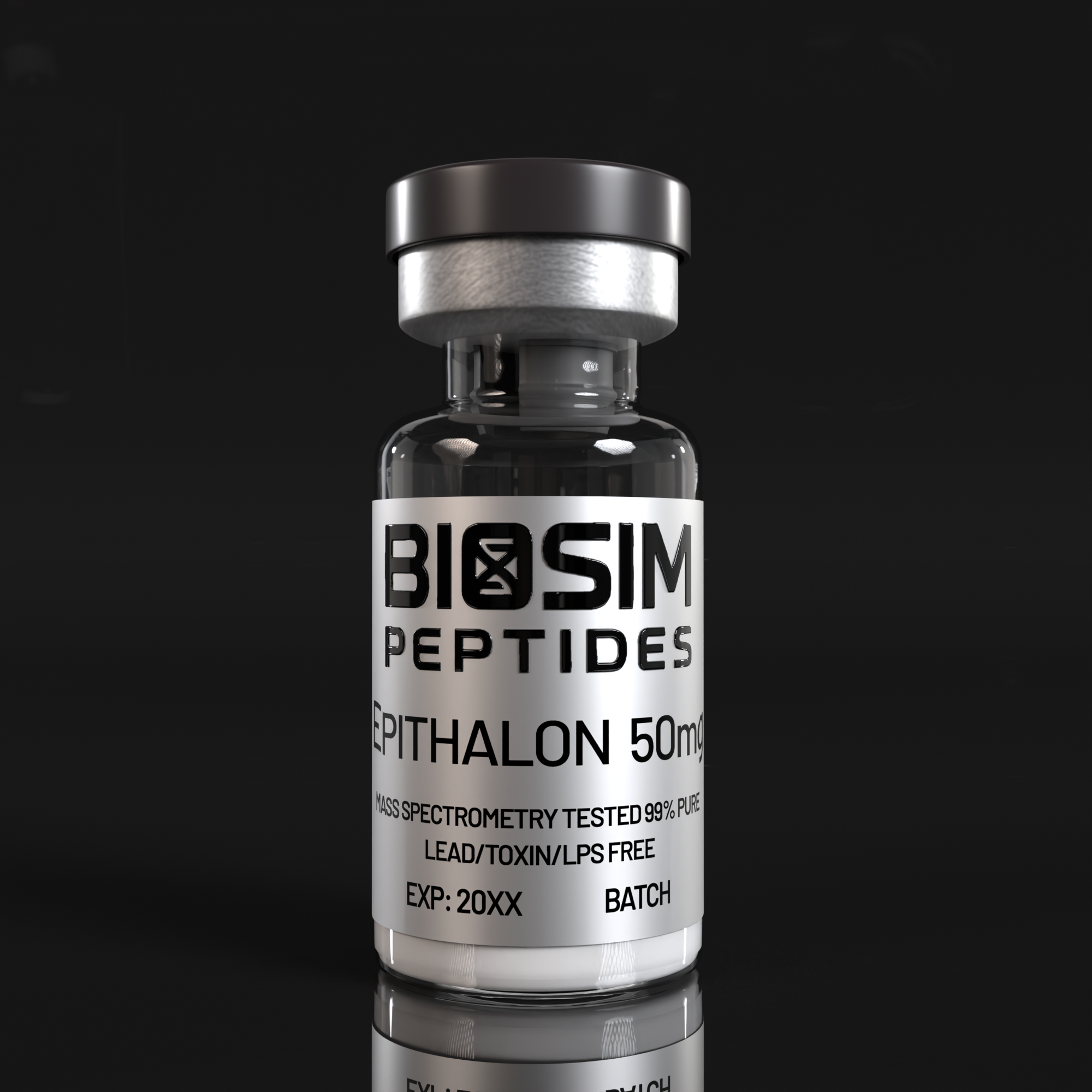
EPITHALON 50MG
EPITHALON is a synthetic peptide derived from the thymus gland, designed for research applications. This peptide has been explored in preclinical studies for its potential role in cellular and molecular processes associated with muscle repair, immune modulation, and longevity research. Below are key details regarding its scientific context and potential research applications.
Research Context
The thymus gland plays a crucial role in immune system development and function. Epithalon, originally developed in the 1990s as part of a series of thymus-derived peptides, has been studied in various animal models to investigate its effects on inflammation, muscle atrophy, and cellular senescence. These investigations are conducted within a purely academic and experimental framework, focusing on mechanisms rather than clinical outcomes.
Research Overview
Preclinical studies involving animal models have suggested that Epithalon may influence pathways associated with:
- Protein synthesis and muscle maintenance
- Immune cell function and response regulation
- Reduction of oxidative stress and cellular aging markers
- Potential neuroprotective effects in aging-related conditions
These findings remain largely exploratory and are part of ongoing research efforts to elucidate its mechanisms and effects in vitro and in vivo.
Key Research Focus Areas
| Focus Area | Description |
|---|---|
| Cellular Senescence | Studies have examined Epithalon’s potential to modulate senescent cells, which are known to contribute to aging-related declines in tissue function. Research indicates that Epithalon may influence pathways that regulate cell cycle arrest and apoptotic processes. |
| Muscle Atrophy Prevention | Investigations in rodent models have explored Epithalon’s ability to mitigate muscle degradation associated with aging, disuse, or disease. This research focuses on its role in preserving muscle mass and strength through enhanced protein synthesis or reduced catabolic signaling. |
| Immune Modulation | Preclinical studies have investigated Epithalon’s effects on T-cell function and cytokine production. Research suggests it may modulate immune responses in conditions involving chronic inflammation or autoimmune susceptibility. |
| Neuroprotection and Aging | Emerging work has explored Epithalon’s potential neuroprotective effects in aging-related models. While results are preliminary, studies indicate possible involvement in reducing neuronal degeneration and supporting cognitive resilience. |
Important Compliance Notice
This product is intended solely for research purposes and is not authorized for human or animal consumption. Any use outside a licensed academic or industrial research setting is prohibited. Users must adhere to strict ethical and regulatory guidelines governing peptide research. This material should be handled with care, and proper safety protocols must be followed to ensure experimental integrity and safety. Always consult with qualified scientific personnel before initiating any research involving Epithalon or similar compounds.
For research use only. Not for human or animal consumption.
All research involving this product must comply with applicable local, national, and international laws and regulations governing research substances.

Reviews
There are no reviews yet.