Introduction
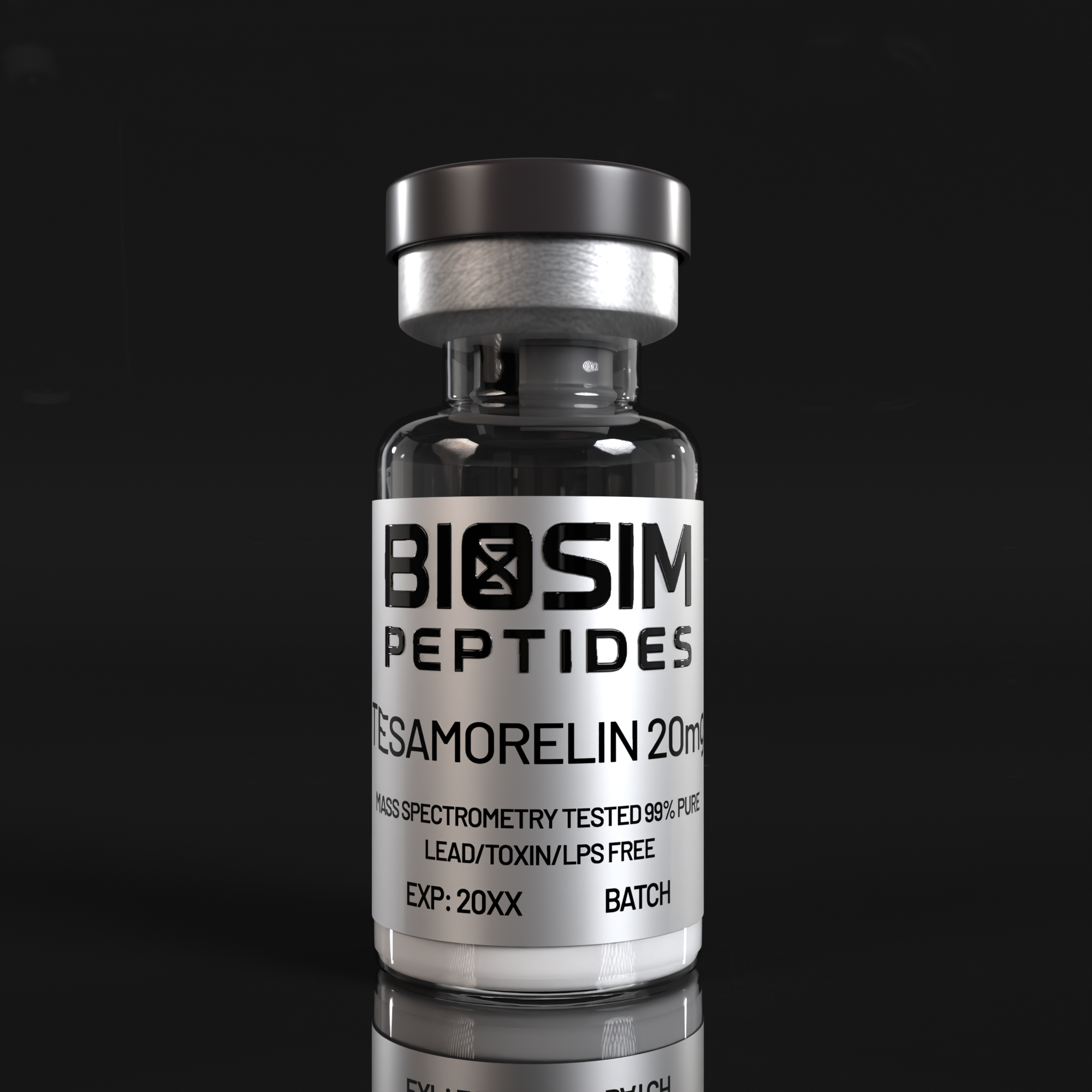
Tesamorelin (TH9507, INN; brand name Egrifta) is a 44-amino acid synthetic analog of human growth hormone-releasing hormone (GHRH), representing the N-terminal 44 residues of the endogenous 44-amino acid GHRH peptide with a single trans-3-hexenoic acid modification at the N-terminus. It is distinguished among research-grade GHRH analogs as the only member of its class to have received FDA approval (2010) for a specific clinical indication: the reduction of excess visceral adipose tissue (VAT) in HIV-infected patients with lipodystrophy. The trans-3-hexenoyl moiety confers enhanced metabolic stability and extended plasma half-life relative to unmodified GHRH(1-44) while preserving the peptide’s capacity to bind the GHRH receptor with high affinity and stimulate pulsatile growth hormone (GH) secretion from anterior pituitary somatotroph cells [1][2].
Tesamorelin’s development pathway from bench to regulatory approval provides a uniquely rich evidence base for researchers studying GHRH receptor pharmacology. Unlike most research peptides characterized only in preclinical models, tesamorelin has been evaluated in multiple Phase III randomized controlled trials, long-term extension studies, and post-hoc analyses encompassing several thousand patient-years of exposure data. This makes it an invaluable reference compound for receptor binding studies, GH secretory dynamics research, and investigations of the tissue-specific effects of GHRH-mediated GH pulsatility [1][3].
Molecular Pharmacology
Tesamorelin is structurally identical to human GHRH(1-44)-NH₂ with the addition of a trans-3-hexenoic acid group covalently attached to the N-terminal tyrosine residue. This modification serves two purposes: (1) it increases resistance to rapid proteolytic degradation by dipeptidyl peptidase-IV (DPP-IV), extending the elimination half-life to approximately 26–38 minutes (compared to ~7 minutes for unmodified GHRH), and (2) it preserves the peptide’s amphipathic α-helical conformation required for high-affinity GHRH receptor (GHRHR) binding.
The GHRHR is a class B (secretin-family) G-protein-coupled receptor expressed predominantly on somatotroph cells of the anterior pituitary gland. Tesamorelin binding activates the Gαs-adenylyl cyclase-cAMP-protein kinase A (PKA) signaling cascade, leading to phosphorylation of the cAMP response element-binding protein (CREB) transcription factor and subsequent GH gene transcription. The resulting GH is secreted in discrete pulsatile bursts that recapitulate the endogenous ultradian rhythm of GH release, distinguishing tesamorelin from recombinant human GH (rhGH) administration which produces supraphysiological GH peaks followed by prolonged troughs.
The pulsatile nature of tesamorelin-stimulated GH secretion is pharmacologically significant. Continuous GH exposure induces SOCS (suppressor of cytokine signaling)-mediated negative feedback at the JAK2-STAT5b signaling node, while pulsatile delivery permits receptor resensitization during interpulse intervals. This preserves hepatic IGF-1 responsiveness and maintains the tissue-specific partitioning of GH’s metabolic effects — lipolysis in adipose tissue, protein synthesis in skeletal muscle, and IGF-1 production in the liver — without the insulin resistance that frequently accompanies supraphysiological continuous GH exposure [4][5].
Clinical Evidence Base
Pivotal Phase III Trials
The FDA approval of tesamorelin was supported by two 26-week, randomized, double-blind, placebo-controlled Phase III trials (n=806 combined) demonstrating a 15.4% reduction in visceral adipose tissue (VAT) measured by CT scan versus a 5.2% increase with placebo (p<0.001). Responders also showed significant improvements in triglyceride levels, waist circumference, and patient-reported body image distress. The effects were specific to VAT — subcutaneous adipose tissue (SAT) was not significantly altered [1].
Long-term extension data (52 weeks) confirmed durability of VAT reduction with continued treatment and demonstrated partial reversal upon treatment discontinuation, confirming that the effect is pharmacologically maintained rather than permanent tissue remodeling [3].
Visceral Adipose Tissue Selectivity: The preferential reduction of VAT over SAT is a distinguishing feature of tesamorelin’s pharmacology. GH receptors are expressed at higher density in visceral than subcutaneous adipocytes, and the pulsatile GH secretion pattern induced by tesamorelin preferentially activates the lipolytic cascade (hormone-sensitive lipase → free fatty acid mobilization) in visceral depots. This depot-specificity has been confirmed across multiple imaging modalities including CT, DEXA, and MRI [6][7].
Hepatic Effects: Post-hoc analyses have demonstrated that tesamorelin-associated VAT reduction correlates with significant decreases in hepatic fat fraction and improvements in liver enzyme profiles (ALT, AST), suggesting secondary benefits on non-alcoholic fatty liver disease (NAFLD) parameters in populations with elevated baseline hepatic steatosis. These hepatic effects appear to be mediated through reduced free fatty acid flux from visceral adipose tissue to the liver rather than through direct hepatic GH signaling [7][8].
Body Composition Beyond HIV Lipodystrophy: Tesamorelin has been investigated in obese subjects with reduced endogenous GH secretion, demonstrating significant reductions in VAT, total body fat, and intramyocellular lipid content alongside improvements in mitochondrial oxidative phosphorylation capacity measured by ³¹P magnetic resonance spectroscopy. These findings have prompted investigation of tesamorelin’s utility in generalized obesity, age-related somatopause, and metabolic syndrome — contexts where endogenous GH secretory capacity is diminished but not absent [4].
Muscle Quality: Recent research has identified improvements in muscle composition independent of changes in total lean body mass. Tesamorelin administration decreased intermuscular adipose tissue and increased muscle cross-sectional area in older adults with HIV, suggesting that GH-mediated lipolysis within muscle compartments may improve muscle “quality” (force-generating capacity per unit mass) even when total lean mass is unchanged [6].
Research Applications
GHRH Receptor Pharmacology: As the most extensively characterized GHRH analog in humans, tesamorelin serves as a reference ligand for GHRHR binding affinity assays, receptor mutagenesis studies, and structure-activity relationship (SAR) analyses. Its 44-amino acid length (vs. the 29-amino acid tesamorelin fragment and other truncated analogs) makes it the full-length comparator for studies examining the contribution of the C-terminal 15 residues to receptor activation kinetics.
Adipose Tissue Biology: The depot-specific VAT reduction produced by tesamorelin makes it an experimental tool for dissecting the molecular differences between visceral and subcutaneous adipocyte GH responsiveness. Researchers use tesamorelin to study regional differences in GH receptor expression, post-receptor signaling (JAK2-STAT5 vs. SRC-ERK pathway partitioning), and the transcriptional programs governing lipolysis vs. lipogenesis in anatomically distinct fat depots.
GH Pulsatility Modeling: Tesamorelin’s defined pharmacokinetic profile (t½ ~30 min, tₘₐₓ ~30 min) and predictable GH pulse induction provide a standardized stimulus for computational modeling of somatotroph dynamics, including deconvolution analysis of GH secretory burst mass, approximate entropy calculations of pulse regularity, and pharmacodynamic modeling of IGF-1 feed-forward responses.
Neuroendocrine Research: Tesamorelin has been investigated for effects on cognitive function via GHRH receptors expressed in the central nervous system. The peptide crosses the blood-brain barrier in pharmacologically relevant concentrations, and GHRH receptors in the hippocampus and cerebral cortex have been implicated in synaptic plasticity, neuroprotection, and cognitive aging — opening avenues for research into the neurotrophic effects of GHRH axis potentiation [5].
Comparative Context
| Property | Tesamorelin (44aa) | CJC-1295 No-DAC (30aa) | Sermorelin (29aa) |
|---|---|---|---|
| Length | 44 amino acids | 30 amino acids | 29 amino acids |
| Half-life | ~26–38 min | ~30–60 min | ~10–12 min |
| Modifications | trans-3-hexenoyl at N-terminus | 4 substitutions (D-Ala², Gln⁸, Ala¹⁵, Leu²⁷) | None (native GHRH 1-29) |
| FDA Status | Approved (Egrifta, 2010) | Research only | Research only (was FDA-approved, discontinued) |
| Clinical Evidence | Phase III RCTs, meta-analyses | Phase I-II studies only | Limited clinical studies |
| Primary Research Focus | Visceral fat reduction, body composition | GH pulsatility, IGF-1 elevation | GH stimulation, aging research |
Meta-Analysis Findings
A recent systematic review and meta-analysis of randomized controlled trials (2026) comprehensively characterized tesamorelin’s effects across 1,500+ subjects. The analysis confirmed significant reductions in VAT (standardized mean difference: -0.68, p<0.001), hepatic fat fraction, and triglyceride levels, with a favorable safety profile characterized primarily by mild injection-site reactions and transient arthralgias. No significant effects were observed on subcutaneous fat, lean body mass, or insulin sensitivity indices — findings consistent with tesamorelin's selective VAT-targeting mechanism. Importantly, the meta-analysis identified baseline VAT volume and baseline IGF-1 levels as significant predictors of treatment response magnitude, providing a framework for identifying research models most likely to demonstrate measurable outcomes [8].
Safety and Handling
This product is supplied as a lyophilized powder for research purposes only. It is not for human consumption or diagnostic use. In clinical contexts, tesamorelin has demonstrated a well-characterized safety profile; the most common adverse events in Phase III trials were injection-site reactions (mild erythema, pruritus), arthralgias, and peripheral edema — all consistent with the known effects of GH/IGF-1 axis activation. The peptide is contraindicated in research models with active malignancy (due to theoretical IGF-1-mediated proliferative effects), disruption of the hypothalamic-pituitary axis, or known hypersensitivity to the compound. Store lyophilized product at 2–8°C (refrigerated) protected from light. Reconstituted solutions should be used immediately or stored at 2–8°C for no more than 24 hours. Do not freeze reconstituted solution. Handle in accordance with institutional biosafety guidelines for peptide research compounds.
References
- PMID 18057338 — Falutz J, Allas S, Blot K, et al. Metabolic effects of a growth hormone-releasing factor in patients with HIV. N Engl J Med. 2007;357(23):2359-2370. [Pivotal Phase III RCT]
- PMID 18057344 — Grinspoon S. Manipulation of the growth hormone axis in patients with HIV infection. N Engl J Med. 2007;357(23):2398-2400. [Editorial: NEJM companion piece]
- PMID 21265979 — Sivakumar T, Mechanic O, Fehmie D, Paul B. Growth hormone axis treatments for HIV-associated lipodystrophy: a systematic review of placebo-controlled trials. HIV Med. 2011;12(8):453-462.
- PMID 23015655 — Makimura H, Feldpausch MN, Rope AM, et al. Metabolic effects of a growth hormone-releasing factor in obese subjects with reduced growth hormone secretion: a randomized controlled trial. J Clin Endocrinol Metab. 2012;97(12):4769-4779.
- PMID 22869065 — Baker LD, Barsness SM, Borson S, et al. Effects of growth hormone–releasing hormone on cognitive function in adults with mild cognitive impairment and healthy older adults. Arch Neurol. 2012;69(11):1420-1429.
- PMID 31237318 — Adrian S, Scherzinger A, Sanyal A, et al. The Growth Hormone Releasing Hormone Analogue, Tesamorelin, Decreases Muscle Fat and Increases Muscle Area in Adults with HIV. J Frailty Aging. 2019;8(3):154-159.
- PMID 26457580 — Fourman LT, Feldpausch MN, Purdy J, et al. Predictors of Treatment Response to Tesamorelin, a Growth Hormone-Releasing Factor Analog, in HIV-Infected Patients with Excess Abdominal Fat. PLoS One. 2015;10(10):e0140671.
- PMID 41545261 — [2026 Meta-Analysis] Body composition, hepatic fat, metabolic, and safety outcomes of Tesamorelin, a GHRH analogue, in HIV-associated lipodystrophy: A meta-analysis of randomized controlled trials. Obes Res Clin Pract. 2026.

Reviews
There are no reviews yet.