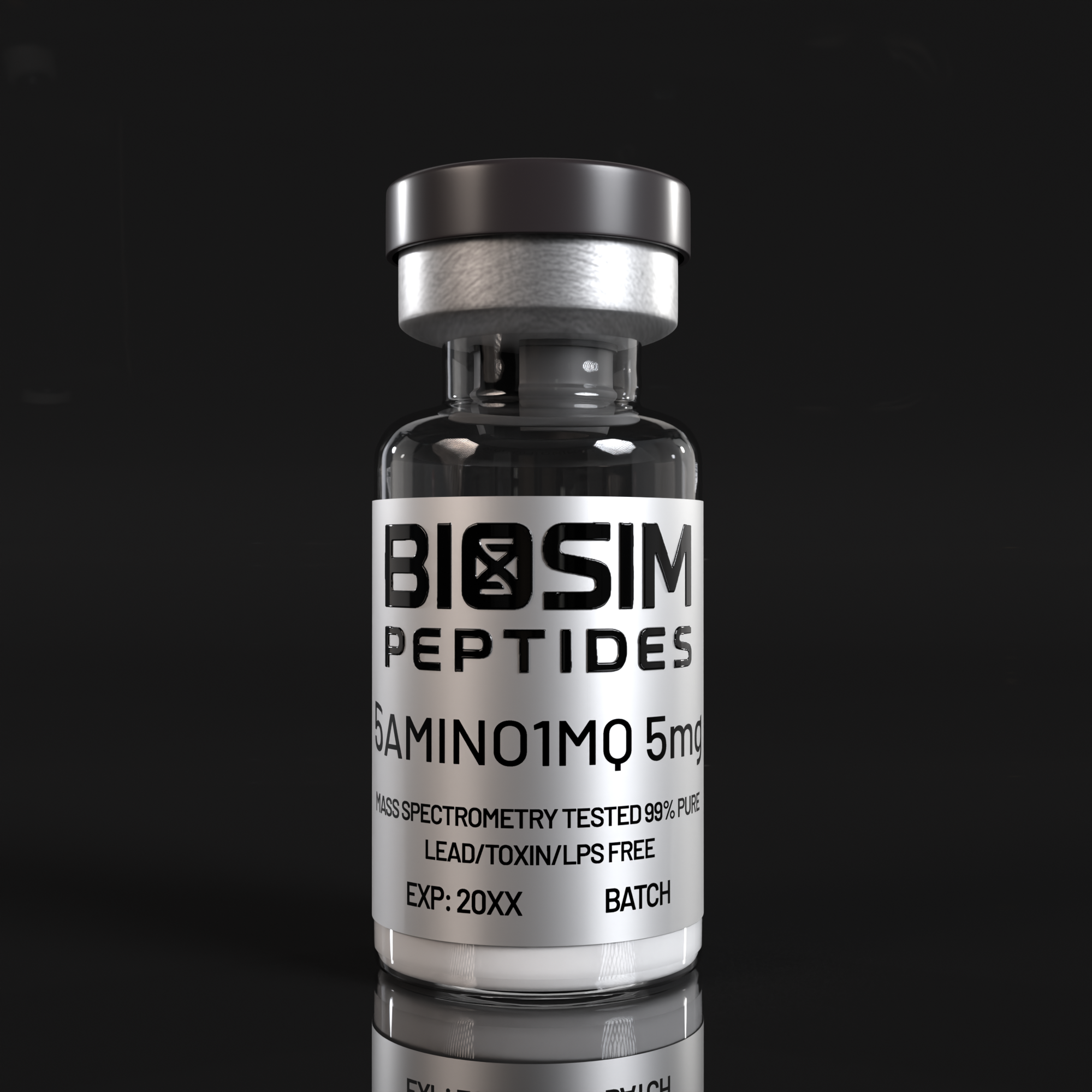
5-Amino-1MQ 5mg — Selective NNMT Inhibitor
5-Amino-1-methylquinolinium (5-Amino-1MQ) is a selective, small-molecule inhibitor of nicotinamide N-methyltransferase (NNMT), an enzyme that catalyzes the N-methylation of nicotinamide using S-adenosyl methionine (SAM) as the methyl donor. NNMT has emerged as a critical regulator of cellular energy metabolism, with elevated expression linked to obesity, type 2 diabetes, cardiovascular disease, and certain cancers. 5-Amino-1MQ blocks NNMT activity with high selectivity, making it a valuable tool compound for metabolic and oncology research. Supplied as lyophilized powder at 99%+ purity by HPLC. For laboratory research use only.
NNMT: A Master Metabolic Regulator
Nicotinamide N-methyltransferase occupies a central position in cellular metabolism by controlling the balance between nicotinamide (NAM) methylation and its recycling through the NAD+ salvage pathway. When NNMT is overexpressed, nicotinamide is diverted toward the methylation product N1-methylnicotinamide (MNAM), reducing the availability of NAM for NAD+ biosynthesis via nicotinamide phosphoribosyltransferase (NAMPT). This shift has profound metabolic consequences: lower NAD+ levels impair sirtuin activity, reduce mitochondrial oxidative capacity, shift cellular metabolism toward glycolytic pathways, and alter the cellular epigenome through reduced sirtuin-mediated histone deacetylation.
The role of NNMT in adipose tissue biology is particularly well-characterized. NNMT expression in white adipose tissue is increased in obesity and type 2 diabetes, and the enzyme functions as a key regulator of energy homeostasis in adipocytes. Glucose availability directly regulates NNMT expression in adipocytes through a mechanism involving the transcription factor ChREBP (carbohydrate response element-binding protein), creating a feed-forward loop where elevated glucose drives NNMT expression, which in turn depletes NAD+ and impairs oxidative metabolism, promoting further lipid accumulation (PMID: 32112869). Knockdown of NNMT in adipocytes increases energy expenditure through enhanced NAD+-SIRT1 signaling, PGC-1α deacetylation, and mitochondrial biogenesis, with UCP1-dependent thermogenesis in white adipose tissue depots contributing to the metabolic phenotype. This positions NNMT as a metabolic sensor linking nutrient status to energy storage decisions.
NNMT in Obesity & Type 2 Diabetes
The connection between NNMT and metabolic disease has been extensively documented through both human studies and animal models. NNMT is significantly upregulated in adipose tissue of obese and insulin-resistant individuals, and its overexpression in cultured adipocytes recapitulates features of metabolic syndrome including impaired glucose uptake, reduced insulin-stimulated AKT phosphorylation, and decreased adiponectin secretion. Comprehensive reviews have characterized NNMT’s roles in obesity and type 2 diabetes, identifying the enzyme as both a biomarker of metabolic dysfunction and a tractable therapeutic target (PMID: 34368359). The pathophysiological cascade involves NNMT-mediated depletion of the cellular NAD+ pool, which blunts SIRT1 activity and leads to hyperacetylation of key metabolic regulators including PGC-1α, FOXO1, and PPARγ.
In diet-induced obese (DIO) mouse models, NNMT inhibition using 5-amino-1-methylquinolinium combined with reduced-calorie diet produced dramatic reductions in whole-body adiposity and body weight — effects significantly greater than either intervention alone. Remarkably, this combination also established a distinct gut microbiome profile compared to diet alone, with enrichment of bacterial taxa associated with leanness and metabolic health (PMID: 35013352). The mechanism involves enhanced NAD+ availability in adipose tissue, which activates SIRT1-mediated deacetylation of transcriptional co-regulators including PGC-1α, driving mitochondrial biogenesis, fatty acid oxidation, and a shift from white to beige adipocyte phenotype. These findings position NNMT inhibition as a potential strategy for enhancing the metabolic benefits of dietary intervention.
NNMT in Liver Pathophysiology & Hepatocellular Carcinoma
Hepatocellular carcinoma (HCC) — the predominant form of primary liver cancer and the third leading cause of cancer death worldwide — exhibits marked NNMT upregulation across multiple tumor stages. NNMT overexpression in HCC creates a tumor-permissive metabolic environment through alterations in the SAM/SAH methylation index, disrupted one-carbon metabolism, and reprogrammed energy metabolism favoring aerobic glycolysis. The enzyme has been proposed as both a diagnostic biomarker (with elevated serum MNAM correlating with tumor burden) and a therapeutic target in HCC, with NNMT inhibition showing anti-proliferative effects in HCC cell lines and xenograft models (PMID: 40427612).
Alcohol-related fatty liver disease represents another pathological context where NNMT dysregulation drives disease progression. Endoplasmic reticulum (ER) stress induced by chronic alcohol consumption triggers NNMT upregulation in hepatocytes through the PERK-ATF4 branch of the unfolded protein response. Elevated NNMT activity depletes hepatic NAD+ pools, impairs sirtuin-dependent fatty acid oxidation, and promotes lipogenic gene expression through SREBP-1c activation. Pharmacological NNMT inhibition attenuates these effects, restoring NAD+ levels and protecting against lipid accumulation in both in vitro hepatocyte models and in vivo alcohol feeding studies, identifying NNMT as a mechanistic link between alcohol metabolism and steatosis progression (PMID: 32389809).
NNMT in Cardiovascular Disease
Heart failure with preserved ejection fraction (HFpEF) represents a major and growing global health burden, accounting for over 50% of heart failure cases, with limited effective treatment options. NNMT inhibition has demonstrated cardioprotective effects in preclinical models of HFpEF, with treated animals showing improved cardiac function — including preserved ejection fraction, reduced left ventricular filling pressures, and attenuated cardiac fibrosis — as well as improved exercise tolerance. The mechanism involves restored myocardial NAD+ levels, improved mitochondrial function, and reduced oxidative stress in cardiomyocytes (PMID: 40484359). These findings significantly expand NNMT’s relevance from metabolic disease to cardiovascular pathophysiology and suggest that the NAD+-sparing effects of NNMT inhibition may have broad tissue-protective applications.
NNMT, Exercise, and Performance Metabolism
The relationship between NNMT and exercise physiology is an emerging area of investigation at the intersection of metabolism and performance science. NNMT’s product, N1-methylnicotinamide (MNAM), has been identified as an exercise-induced metabolite that increases in circulation following endurance and high-intensity exercise. MNAM itself has demonstrated anti-inflammatory, anti-thrombotic, and gastroprotective properties in preclinical models. The connection between exercise intensity, NNMT activity, and MNAM production suggests that NNMT modulation may influence exercise capacity and recovery through NAD+-dependent mitochondrial efficiency pathways, though this remains an active area of investigation (PMID: 35152860). The potential for NNMT-inhibiting compounds to influence exercise metabolism, substrate utilization, and recovery adds a performance dimension to their metabolic research applications.
Laboratory Handling & Storage
Lyophilized 5-Amino-1MQ is supplied as a stable powder. Recommended storage is at -20°C in a desiccated environment, protected from light and moisture. For in vitro studies, reconstitution in sterile DMSO, dimethylformamide (DMF), or aqueous buffer is recommended, with fresh working solutions prepared prior to each experiment. The compound is a quaternary ammonium salt and exhibits good water solubility at neutral pH. For cell-based assays, final DMSO concentrations should be kept below 0.1% to avoid solvent toxicity. Researchers should verify IC50 values, selectivity profiles (against other methyltransferases), and cell-type-specific activity from current literature for their specific experimental systems. Quality control includes HPLC purity verification and structural confirmation by mass spectrometry for each batch.
Related Research

Reviews
There are no reviews yet.