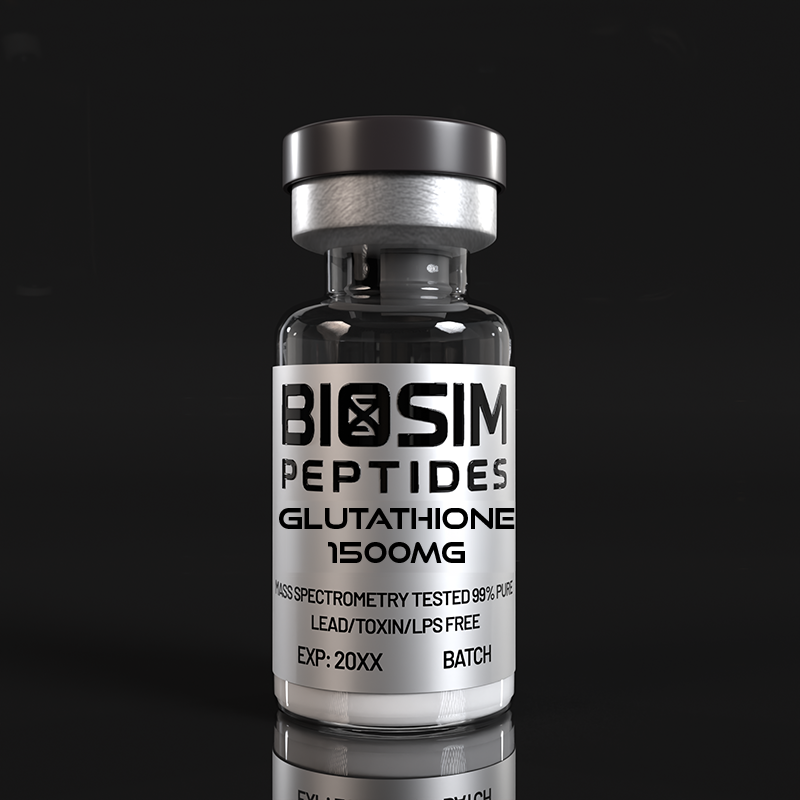
Glutathione 1500mg: Research Overview
Glutathione (γ-L-glutamyl-L-cysteinylglycine, GSH) is a ubiquitous tripeptide thiol found in millimolar concentrations (1–10 mM) in virtually all mammalian cells, where it serves as the body’s principal endogenous antioxidant and redox buffer. First isolated by Sir Frederick Gowland Hopkins in 1921 from yeast and muscle tissue, glutathione has since been recognized as a central regulator of cellular redox homeostasis, a critical cofactor for glutathione peroxidase and glutathione S-transferase (GST) family enzymes, a primary intracellular defense against electrophilic xenobiotics and oxidative damage, and an essential modulator of immune function, apoptosis, and protein folding. The reduced form (GSH) constitutes over 98% of total cellular glutathione under physiological conditions, with the oxidized disulfide (GSSG) maintained at low levels by the NADPH-dependent enzyme glutathione reductase. The GSH/GSSG ratio serves as a sensitive barometer of cellular oxidative stress and is a widely used biomarker in research spanning aging, cancer biology, neurodegeneration, metabolic disease, and toxicology. BioSim Peptides supplies reduced L-glutathione as a lyophilized powder at 1500mg per vial, verified to ≥98% purity by HPLC, for use exclusively in controlled laboratory research. This product has not been evaluated by the FDA for human use and is not a drug, dietary supplement, or therapeutic agent.
Unlike most small-molecule antioxidants that function as stoichiometric radical scavengers, glutathione operates within an integrated, enzymatically recycled antioxidant system of extraordinary capacity. The glutathione redox cycle — comprising glutathione peroxidase (GPx), glutathione reductase (GR), NADPH, and the pentose phosphate pathway — enables continuous catalytic detoxification of hydrogen peroxide (H2O2) and lipid hydroperoxides with minimal GSH consumption per peroxide eliminated. This system-level architecture distinguishes glutathione from non-enzymatic antioxidants and underlies its designation as the “master antioxidant” of the cell[1][2].
Molecular Background & Mechanism of Action
Structure and Biosynthesis
Glutathione is synthesized in the cytosol through two sequential ATP-dependent reactions. The first and rate-limiting step, catalyzed by glutamate-cysteine ligase (GCL, formerly γ-glutamylcysteine synthetase), forms an unusual γ-peptide bond between the γ-carboxyl group of glutamate and the amino group of cysteine. This non-α peptide linkage confers resistance to intracellular peptidases that would otherwise rapidly hydrolyze a conventional α-peptide. The second step, catalyzed by glutathione synthetase (GS), adds glycine to the C-terminus of γ-glutamylcysteine. GCL is subject to complex regulation: it is feedback-inhibited by GSH (non-allosteric competitive inhibition with respect to glutamate, Ki ≈ 2 mM), transcriptionally upregulated by the Nrf2/ARE pathway in response to oxidative and electrophilic stress, and limited by cysteine availability — the rate-limiting substrate in most cell types. The age-related decline in GCL activity and consequent depletion of cellular GSH is a well-characterized feature of the aging phenotype and is the subject of active investigation[2][3].
The Glutathione Redox Cycle
The glutathione redox system operates through a cyclical enzymatic architecture:
🔬 Glutathione Redox Cycle
- Peroxide detoxification (GPx): 2 GSH + H2O2 → GSSG + 2 H2O (catalyzed by glutathione peroxidase, selenium-dependent)
- GSSG recycling (GR): GSSG + NADPH + H+ → 2 GSH + NADP+ (catalyzed by glutathione reductase, FAD-dependent flavoprotein)
- NADPH regeneration: Glucose-6-phosphate → 6-phosphogluconate + NADPH (via glucose-6-phosphate dehydrogenase in the pentose phosphate pathway)
- Xenobiotic conjugation (GST): GSH + electrophile (RX) → GS-R + HX (catalyzed by glutathione S-transferase superfamily)
- Protein thiol maintenance (Grx): Protein-SSG + GSH → Protein-SH + GSSG (catalyzed by glutaredoxin, restoring protein thiols oxidized to mixed disulfides)
The GSH/GSSG ratio in healthy cells is typically maintained between 30:1 and 100:1 in the cytosol, reflecting the highly reduced intracellular environment (EGSH ≈ −240 mV). A decline in this ratio — via GSH depletion or GSSG accumulation — serves as a sensitive early indicator of oxidative stress and is implicated in the pathogenesis of numerous disease states. Systematic meta-analysis has confirmed that the blood glutathione redox state is significantly altered in chronic obstructive pulmonary disease (COPD), with decreased GSH and elevated GSSG relative to healthy controls[4].
Mitochondrial Glutathione Pool
Mitochondria maintain a distinct glutathione pool (mGSH) that is metabolically separate from the cytosolic pool. Because mitochondria lack the enzymes for de novo GSH synthesis, mGSH is imported from the cytosol via the 2-oxoglutarate carrier (OGC, SLC25A11) and the dicarboxylate carrier (DIC, SLC25A10) on the inner mitochondrial membrane. The mitochondrial GSH pool constitutes approximately 10–15% of total cellular GSH but is disproportionately important because mitochondria are the primary intracellular source of ROS. mGSH depletion sensitizes cells to mitochondrial ROS-mediated apoptosis, and selective mGSH depletion strategies are being actively investigated in cancer research as a means of sensitizing tumor cells to chemotherapy[5][6].
Preclinical Evidence
Glutathione in Aging and Longevity Research
The decline in cellular glutathione levels with advancing age is one of the most robustly documented biochemical hallmarks of the aging process. This age-dependent GSH depletion has been attributed to multiple converging mechanisms: decreased GCL catalytic subunit (GCLC) expression, reduced Nrf2 transcriptional activity, diminished cysteine availability, and increased basal oxidative consumption. Comprehensive reviews of the glutathione-dependent enzyme network have established that both GSH levels and the activities of GPx, GR, and GST decline with age across multiple tissues and species, correlating with accumulation of oxidative damage markers (protein carbonyls, lipid peroxidation products, 8-oxo-dG) and functional decline. Conversely, interventions that maintain or restore glutathione homeostasis — including caloric restriction and Nrf2 activation — are among the most effective strategies for extending healthspan in model organisms[1][2]. A recent comprehensive review of glutathione’s role in the body highlighted its dual function in disease prevention and anti-aging, emphasizing that dietary and supplemental strategies to maintain glutathione homeostasis represent a promising research frontier[7].
Neuroprotection and Neurodegenerative Disease
The brain is particularly vulnerable to oxidative stress due to its high oxygen consumption rate (20% of total body O2), abundance of peroxidation-susceptible polyunsaturated fatty acids, relatively low antioxidant enzyme expression compared to liver, and high iron content in specific regions (substantia nigra, striatum). Glutathione depletion is an early and consistent finding in Parkinson’s disease, where post-mortem studies have documented approximately 40% reductions in reduced GSH in the substantia nigra — occurring before the loss of dopaminergic neurons. Nebulized glutathione has been investigated as a non-invasive delivery strategy for addressing oxidative stress in neurodegenerative conditions, with research demonstrating its potential as a key antioxidant intervention[8]. In Alzheimer’s disease research, glutathione depletion correlates with mitochondrial dysfunction, amyloid-β toxicity, and neuroinflammation — positioning the glutathione system as a convergence point in neurodegenerative pathophysiology[1][8].
Detoxification and Xenobiotic Metabolism
The glutathione S-transferase (GST) superfamily catalyzes the conjugation of GSH to a structurally diverse array of electrophilic compounds, representing the primary cellular defense against chemical carcinogens, environmental toxins, chemotherapeutic agents, and products of oxidative metabolism. GST-mediated GSH conjugation increases substrate water solubility, facilitating biliary or renal excretion via ATP-dependent efflux transporters (MRP1/MRP2). Polymorphisms in GST genes (GSTM1, GSTT1, GSTP1) are among the most intensively studied genetic modifiers of cancer susceptibility and chemotherapeutic response. A comprehensive review of GSTs in human disease pathogenesis documented their roles not only in detoxification but also in cell signaling, protein S-glutathionylation, and the regulation of stress kinase cascades (ASK1, JNK), highlighting the expanding recognition of glutathione conjugation as a regulatory rather than purely eliminative process[9].
Glutathione Precursors: N-Acetylcysteine Research
N-acetylcysteine (NAC) is the most extensively studied pharmacological strategy for increasing intracellular glutathione levels. NAC is deacetylated to cysteine, which enters the GSH biosynthetic pathway at the GCL-catalyzed step. A recent comprehensive narrative review of NAC’s therapeutic potential documented its multifaceted actions across multiple organ systems, including mucolytic activity (cleavage of disulfide bonds in mucus glycoproteins), direct antioxidant effects (free thiol scavenging), glutathione repletion, and modulation of glutamatergic neurotransmission via the cystine-glutamate antiporter system[10]. An evidence-based consensus document on NAC’s therapeutic advantages in respiratory diseases affirmed its role as a mucolytic and antioxidant agent while calling for further research to optimize delivery and dosing strategies[11].
Research Applications
- Redox biology: Quantify intracellular GSH/GSSG ratios as a primary endpoint in studies of oxidative stress, using commercially available fluorometric (monochlorobimane, ThiolTracker Violet) or HPLC-based assays with electrochemical or fluorescence detection.
- Aging research: Investigate the role of age-related GCL downregulation in cellular senescence, and evaluate interventions (Nrf2 activators, cysteine prodrugs) that restore youthful glutathione homeostasis in fibroblast, endothelial, and stem cell models.
- Neurodegeneration models: Measure compartment-specific glutathione depletion (cytosolic vs. mitochondrial) in neuronal cultures exposed to α-synuclein aggregates, amyloid-β oligomers, or mitochondrial complex I inhibitors (MPTP, rotenone).
- Cancer biology: Study the role of elevated glutathione in chemoresistance — GSH overexpression via GCL upregulation or Nrf2 hyperactivation is a major mechanism of resistance to platinum-based agents, alkylating agents, and anthracyclines.
- Toxicology: Employ glutathione as a mechanistic probe to determine whether specific toxicants act via electrophilic/oxidative mechanisms (GST-dependent conjugation, GSH depletion kinetics).
- Immunology: Investigate the requirement for glutathione in T-cell activation, proliferation, and differentiation — GSH levels modulate NF-κB, NFAT, and STAT signaling pathways critical for adaptive immunity.
- Metabolic research: Characterize glutathione dysregulation in insulin resistance, non-alcoholic fatty liver disease (NAFLD), and diabetic complications — hyperglycemia-driven oxidative stress depletes GSH in pancreatic β-cells, endothelium, and peripheral neurons.
Comparative Context: Glutathione vs. Other Thiol Antioxidants
Glutathione’s unique tripeptide structure and enzymatically coupled redox cycle distinguish it from other thiol-containing antioxidants commonly used in laboratory research. The following comparison clarifies key differences for experimental design:
| Feature | Glutathione (GSH) | N-Acetylcysteine (NAC) | α-Lipoic Acid | L-Cysteine |
|---|---|---|---|---|
| Chemical nature | Tripeptide (γ-Glu-Cys-Gly) | Acetylated amino acid | Dithiolane-containing fatty acid | Sulfur-containing amino acid |
| Primary mechanism | Direct antioxidant + enzyme cofactor + GST substrate | Cysteine prodrug (GSH precursor) + mucolytic + direct -SH scavenger | Direct radical scavenger + metal chelator + GSH synthesis enhancer | GSH precursor (rate-limiting substrate) |
| Intracellular GSH elevation | Direct (but limited membrane permeability) | Indirect (via cysteine supply) | Indirect (via Nrf2 activation + cysteine regeneration) | Indirect (substrate for GCL) |
| Redox potential | E°’ = −240 mV (GSH/GSSG) | E°’ ≈ −220 mV (Cys/Cystine) | E°’ = −320 mV (DHLA/LA) | E°’ ≈ −220 mV (Cys/Cystine) |
| Enzyme coupling | GPx, GR, GST, Grx, Prx systems | None (non-enzymatic) | Thioredoxin reductase (partial) | GCL, GS (GSH synthesis pathway) |
| Key advantage | Integrated antioxidant system; catalytic detoxification | Oral bioavailability; well-characterized clinical safety | Amphipathic (aqueous + membrane); metal chelation | Direct GSH substrate; essential nutrient |
| Key limitation | Poor oral bioavailability; limited membrane permeability | Not a direct antioxidant; requires deacetylation | Pro-oxidant potential at high concentrations | Rapidly oxidized to cystine (insoluble); neurotoxic at high concentrations |
| Research applications | Redox biology gold standard; GST substrate studies; GSH/GSSG ratio biomarker | GSH depletion models; mucolysis research; glutamate modulation | Diabetic neuropathy models; mitochondrial antioxidant studies | GSH synthesis kinetics; cysteine limitation studies |
For researchers investigating the glutathione system specifically, reduced L-glutathione (GSH) remains the definitive research tool. NAC serves as an effective glutathione precursor — particularly valuable in experimental contexts where GSH synthesis capacity is intact but cysteine supply is limiting — but does not replicate the full spectrum of glutathione’s biological activities, particularly its role as a GST co-substrate and its enzyme-coupled catalytic detoxification cycle. α-Lipoic acid offers complementary properties (metal chelation, Nrf2 activation, direct radical scavenging in both aqueous and lipid compartments) that may be synergistic with glutathione in experimental systems, but its mechanism is fundamentally distinct from the glutathione redox cycle.
Safety & Handling for Laboratory Research
Storage and Stability
Reduced L-glutathione (GSH) is susceptible to oxidation in solution, where the free thiol group of the cysteine residue spontaneously oxidizes to form the disulfide dimer (GSSG) in the presence of dissolved oxygen, trace metals, or alkaline pH. Lyophilized glutathione should be stored at −20°C in a tightly sealed, desiccated container protected from light and moisture. Under these conditions, the lyophilized powder is stable for a minimum of 24 months. For reconstitution, use sterile, degassed, deionized water or PBS (pH 6.5–7.0) immediately before use. GSH is freely soluble in water at concentrations up to 100 mg/mL. Reconstituted solutions should be prepared fresh whenever possible; if storage is necessary, aliquot under inert gas (nitrogen or argon), seal tightly, and store at −20°C or −80°C for no more than 7 days. The oxidation of GSH to GSSG can be monitored spectrophotometrically by the loss of absorbance at 210 nm or by DTNB (Ellman’s reagent) assay at 412 nm.
Laboratory Handling Precautions
- Wear appropriate PPE: lab coat, nitrile gloves, and safety glasses.
- Handle in a Class II biosafety cabinet using aseptic technique.
- Use sterile, pyrogen-free, metal-free consumables — glutathione is susceptible to metal-catalyzed oxidation, particularly by Fe²⁺ and Cu²⁺.
- Degas aqueous buffers by sonication under vacuum or nitrogen sparging before use for reconstitution.
- Add EDTA (0.1–1 mM) to buffer solutions to chelate trace metals and retard GSH oxidation.
- Document lot number, date of reconstitution, and buffer composition on all aliquots.
- Sodium hydroxide solutions (0.1–1 M) can be used to adjust pH of GSH solutions if necessary; the thiol pKa of glutathione is approximately 9.2.
- Dispose of unused material in accordance with institutional chemical waste guidelines.
- Glutathione has not been evaluated for human safety by the FDA or any regulatory agency in this formulation. Do not ingest, inject, or apply topically.
References
- Lapenna D. Glutathione and glutathione-dependent enzymes: From biochemistry to gerontology and successful aging. Ageing Res Rev. 2023;92:102066. PMID: 37683986
- Ferguson G, Bridge W. Glutamate cysteine ligase and the age-related decline in cellular glutathione: The therapeutic potential of γ-glutamylcysteine. Arch Biochem Biophys. 2016;593:12-23. PMID: 26845022
- Lu SC. Glutathione synthesis. Biochim Biophys Acta. 2013;1830(5):3143-3153. Note: Foundational review of GSH synthesis regulation; see also PMID: 37683986
- Zinellu E, Zinellu A, Pau MC, et al. Systematic Review and Meta-Analysis of the Blood Glutathione Redox State in Chronic Obstructive Pulmonary Disease. Antioxidants (Basel). 2020;9(11):1146. PMID: 33218130
- Marí M, Morales A, Colell A, et al. Mitochondrial Glutathione in Cellular Redox Homeostasis and Disease Manifestation. Int J Mol Sci. 2024;25(2):1124. PMID: 38279310
- Ribas V, García-Ruiz C, Fernández-Checa JC. Glutathione and mitochondria. Front Pharmacol. 2014;5:151. Note: Seminal review of mGSH biology; see also PMID: 38279310
- Forman HJ, Zhang H, Rinna A. Glutathione in Our Diet and Its Role in the Body: From Disease Prevention to Anti-Aging. Nutrients. 2026;18(10):2234. PMID: 42197099
- Durmaz A, Kanmaz H, Yilmaz B, et al. Nebulized Glutathione as a Key Antioxidant for the Treatment of Oxidative Stress in Neurodegenerative Conditions. Nutrients. 2024;16(15):2476. PMID: 39125356
- Mazzetti AP, Fiorile MC, Primiano A, et al. The role of glutathione S-transferases in human disease pathogenesis and their current inhibitors. Genes Dis. 2025;12(4):101440. PMID: 40290119
- Di Lorenzo C, Colombo F, Biella S, et al. The therapeutic potential of N-acetylcysteine across multiple organ systems: a narrative review. Clin Ter. 2026;177(4):221-234. PMID: 42340796
- Cazzola M, Page CP, Rogliani P, et al. N-acetylcysteine: evidence based consensus document on the therapeutic advantages in respiratory diseases (NECTAR). Front Med (Lausanne). 2026;13:1426789. PMID: 42158130

Reviews
There are no reviews yet.