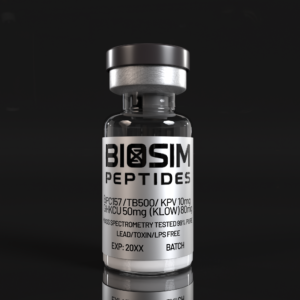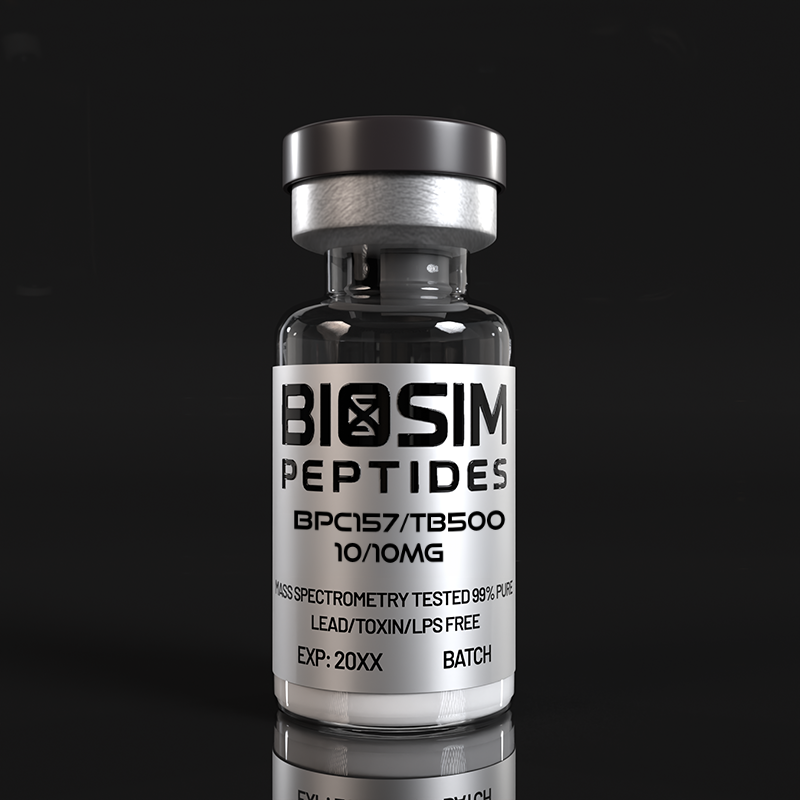
BPC-157 / TB-500 Blend 10/10mg

Categories:

Buy BPC-157 / TB-500 Blend 10/10MG — the ultimate research recovery peptide stack. COA verified, premium purity. BioSim Peptides USA.

$110.00

Guaranteed Safe Checkout

⚠️ RESEARCH USE ONLY

This product is for R&D purposes only and is not approved for human or veterinary use.

Introduction and Research Disclaimer

BPC-157 / TB-500 Blend 10/10mg is a lyophilized research peptide combination supplied by BioSim Peptides for qualified investigators studying tissue repair mechanisms, angiogenesis, cytoprotection, and cellular migration. Each vial contains 10 mg of BPC-157 (Body Protection Compound 157, a pentadecapeptide derived from human gastric juice protein) and 10 mg of TB-500 (a synthetic fragment of thymosin beta-4 containing the active actin-binding domain), yielding a total of 20 mg of research-grade lyophilized peptide per vial. This co-formulation enables investigators to study two mechanistically complementary tissue-protective peptides in a single, precisely proportioned preparation.

This product is exclusively for in-vitro research and laboratory animal studies. It is not a drug, not approved by the FDA or any regulatory body for human use, and is strictly supplied for research purposes only. No medical claims, dosing recommendations, or therapeutic suggestions are made. All researchers must comply with their institutional biosafety protocols and applicable regulations governing peptide research. This product is not intended to diagnose, treat, cure, or prevent any disease.

Molecular Overview of the Blend Components

BPC-157 (Body Protection Compound 157)

BPC-157 is a stable pentadecapeptide with the amino acid sequence Gly-Glu-Pro-Pro-Pro-Gly-Lys-Pro-Ala-Asp-Asp-Ala-Gly-Leu-Val (GEPPPGKPADDAGLV, molecular weight 1,419.5 Da). It represents a partial sequence of the BPC (Body Protection Compound) protein originally isolated from human gastric juice by Sikiric and colleagues. The peptide’s remarkable stability in gastric fluid—resistant to both acid hydrolysis and pepsin degradation—is attributed to its unusual triple-proline motif (Pro-Pro-Pro at positions 4–6), which confers a constrained secondary structure that limits proteolytic access. Unlike many bioactive peptides, BPC-157 demonstrates significant stability in aqueous solution and does not require a carrier protein or structural modification to maintain biological activity (PMID: 20388914).

The pentadecapeptide sequence is highly conserved across species, and the synthetic BPC-157 used in research is chemically identical to the endogenous fragment. Its name derives from its discovery context: it is a gastroprotective peptide sequence isolated from gastric juice that demonstrates systemic tissue-protective effects far beyond the gastrointestinal system. The molecular mechanism of BPC-157 has been partially elucidated and involves modulation of the nitric oxide (NO) system, upregulation of vascular endothelial growth factor (VEGF) expression, and interaction with the VEGFR2-Akt-eNOS signaling axis (PMID: 22200341).

TB-500 (Thymosin Beta-4 Fragment)

TB-500 is the research designation for a synthetic peptide fragment corresponding to the biologically active region of thymosin beta-4 (Tβ4), a 43-amino-acid polypeptide (molecular weight 4,964 Da for the full protein) that is the most abundant member of the beta-thymosin family. TB-500 contains the N-terminal actin-binding domain—the critical sequence motif LKKTETQ (positions 17–23 of Tβ4)—that mediates Tβ4’s primary biological function: sequestration of globular actin (G-actin) monomers to regulate actin polymerization dynamics (PMID: 10499138).

Thymosin beta-4 was originally isolated from the thymus, but it is now recognized as a ubiquitously expressed protein found in virtually all cell types except erythrocytes, with particularly high concentrations in platelets, macrophages, and other cells involved in wound healing and tissue repair. Tβ4 is released from platelets at sites of tissue injury and functions as a master regulator of the wound healing cascade, promoting cell migration, angiogenesis, and the suppression of inflammation and apoptosis. TB-500 as a research fragment retains these core activities while providing a simplified molecular tool for mechanistic investigation (PMID: 15741338).

Mechanism of Action and Synergy Rationale

The BPC-157 / TB-500 blend combines two peptides with distinct but complementary mechanisms of action on tissue repair, angiogenesis, and cellular protection. Their combination in a single research preparation is rationalized by the convergence of their signaling pathways on several critical nodes in the tissue healing cascade:

BPC-157 Mechanisms

  • Nitric Oxide (NO) System Modulation: BPC-157 interacts with the NO system through multiple mechanisms, including direct modulation of endothelial nitric oxide synthase (eNOS) activity and interaction with the NO-cyclic GMP pathway. The gastroprotective and cytoprotective effects of BPC-157 are largely NO-dependent, as demonstrated by the ability of NOS inhibitors (e.g., L-NAME) and NO precursor scavengers to abolish BPC-157’s protective effects in experimental models (PMID: 20388914).
  • VEGF and Angiogenesis: BPC-157 significantly upregulates VEGF expression and promotes angiogenesis—the formation of new blood vessels from existing vasculature—through the VEGFR2-Akt-eNOS signaling pathway. This angiogenic activity is critical for granulation tissue formation, wound bed perfusion, and the delivery of oxygen, nutrients, and regenerative cells to sites of tissue injury (PMID: 22200341).
  • Growth Factor Receptor Modulation: Research indicates that BPC-157 upregulates the expression of growth hormone receptors and modulates the expression of early growth response factor-1 (EGR-1), a zinc-finger transcription factor that coordinates the expression of multiple genes involved in tissue repair, including collagen synthesis enzymes and angiogenic factors.

TB-500 Mechanisms

  • Actin Sequestration and Cell Migration: The primary biochemical function of Tβ4/TB-500 is the sequestration of G-actin monomers via the LKKTETQ actin-binding motif. By binding G-actin in a 1:1 complex, Tβ4 maintains a pool of polymerization-competent actin monomers and regulates the dynamics of actin filament assembly and disassembly. This function is critical for cell migration, as directed cellular movement requires rapid, localized actin polymerization at the leading edge of migrating cells. TB-500 promotes the migration of keratinocytes, fibroblasts, and endothelial cells into wound sites—a rate-limiting step in tissue repair (PMID: 10499138).
  • Angiogenesis Promotion: TB-500 promotes angiogenesis through mechanisms that are distinct from but complementary to those of BPC-157. Tβ4 induces endothelial cell differentiation into capillary-like structures, promotes endothelial cell migration, and enhances the survival of newly formed blood vessels through activation of the Akt survival kinase pathway. In models of myocardial infarction, Tβ4 administration significantly increased capillary density in the infarct border zone and improved functional recovery (PMID: 15741338).
  • Anti-Inflammatory and Anti-Apoptotic Activity: TB-500 suppresses the expression of pro-inflammatory cytokines including TNF-α and IL-1β, while simultaneously promoting cell survival through activation of the Akt-BAD anti-apoptotic pathway. This dual anti-inflammatory and anti-apoptotic activity creates a tissue environment permissive to regenerative processes (PMID: 20663208).
  • Hair Follicle and Stem Cell Biology: Unique among tissue-protective peptides, Tβ4 promotes hair follicle stem cell migration and differentiation, and stimulates the proliferation of hair follicle outer root sheath cells. This property has made TB-500 a valuable tool in stem cell niche and hair follicle biology research.

Rationale for Combination Research

BPC-157 and TB-500 are combined in this research preparation because their mechanisms of action converge on angiogenesis, cell migration, and tissue protection through non-redundant pathways. BPC-157 drives angiogenesis primarily through the VEGF-VEGFR2-eNOS-NO axis, while TB-500 promotes endothelial cell migration through actin cytoskeleton regulation and enhances cell survival through Akt signaling. Simultaneous activation of both pathways produces a more comprehensive angiogenic and tissue-protective stimulus than either peptide alone. Furthermore, BPC-157’s upregulation of growth factor receptor expression may potentiate the cellular response to endogenous growth factors that are recruited by TB-500-mediated cell migration. The fixed 1:1 mass ratio in this blend allows researchers to systematically investigate the combined effect without the confounding variable of variable relative dosing (PMID: 24811025).

Research Applications

Tissue Repair and Wound Healing Models

The BPC-157 / TB-500 blend is extensively utilized in research models investigating the cellular and molecular mechanisms of tissue repair. The complementary actions of both peptides on angiogenesis, cell migration, and growth factor signaling make this combination a powerful tool for studies of cutaneous wound healing, surgical anastomosis healing, and tissue regeneration. BPC-157 has demonstrated efficacy in promoting the healing of skin incisions, deep burns, and colonic anastomoses in rodent models, while TB-500 accelerates wound closure through enhanced keratinocyte and fibroblast migration (PMID: 20388914, PMID: 15741338).

Musculoskeletal Research: Tendon, Ligament, and Bone

Both BPC-157 and TB-500 have been investigated in models of tendon and ligament healing, where their angiogenic, fibroblast-recruiting, and collagen-organizing activities are particularly relevant. BPC-157 has been shown to accelerate the functional recovery of transected Achilles tendons in rat models, promoting organized collagen fiber alignment and improving biomechanical properties (PMID: 24811025). TB-500 promotes tenocyte migration and proliferation while suppressing adhesions and scar formation. The combination provides a dual approach to tendon research that addresses both the cellular (TB-500: cell migration and proliferation) and vascular (BPC-157: angiogenesis and perfusion) requirements of tendon healing.

Gastrointestinal Cytoprotection and Mucosal Healing

BPC-157’s discovery from gastric juice and its well-characterized gastroprotective properties make this blend relevant for studies of gastrointestinal mucosal integrity and repair. BPC-157 protects against NSAID-induced gastric lesions, ethanol-induced gastric damage, and stress-induced mucosal injury through NO-dependent mechanisms (PMID: 20388914). The addition of TB-500 provides complementary anti-inflammatory activity and promotes mucosal epithelial cell migration, making the combination suitable for research on the interplay between angiogenic and anti-inflammatory pathways in gastrointestinal protection.

Angiogenesis and Vascular Biology

The blend’s dual angiogenic mechanisms—VEGF-VEGFR2-eNOS (BPC-157) and actin-cytoskeleton/Akt (TB-500)—make it a valuable research tool for investigators studying the regulation of blood vessel formation, endothelial cell biology, and tissue perfusion. Researchers can use this combination to examine whether simultaneous activation of two distinct angiogenic pathways produces additive, synergistic, or antagonistic effects on capillary density, vessel maturation, and functional perfusion in models of ischemia or tissue injury (PMID: 20663208).

Neuroprotection and Central Nervous System Research

Emerging research suggests that both BPC-157 and TB-500 may have applications in neuroprotection research. BPC-157 has demonstrated protective effects in models of traumatic brain injury and spinal cord injury, potentially through modulation of the NO system and suppression of neuroinflammation. TB-500 promotes neural progenitor cell migration and differentiation, and has been investigated in models of stroke, multiple sclerosis, and peripheral nerve injury. The combination enables research into the convergence of angiogenic, anti-inflammatory, and neurogenic mechanisms in CNS protection.

Key Research Studies

Seiwerth et al. (2010) — PMID: 20388914: A comprehensive review of BPC-157’s effects across multiple tissue systems, establishing the pentadecapeptide as a pleiotropic cytoprotective agent with activity in gastrointestinal, musculoskeletal, and central nervous system models. This paper characterized the NO-dependent mechanism underlying BPC-157’s gastroprotective and angiogenic effects, providing the foundational mechanistic framework for subsequent BPC-157 research.

Chang et al. (2011) — PMID: 22200341: Demonstrated that BPC-157 promotes tendon healing through upregulation of growth hormone receptor expression and modulation of the VEGFR2-Akt-eNOS signaling pathway. This study linked BPC-157’s angiogenic activity at the molecular level to functional improvements in tendon repair, establishing the peptide’s relevance for musculoskeletal research.

Sikiric et al. (2014) — PMID: 24811025: A major review consolidating two decades of BPC-157 research, cataloging its effects across gastrointestinal, musculoskeletal, neurological, and vascular systems. This paper highlighted BPC-157’s consistent interaction with the NO system as a unifying mechanistic theme and documented its efficacy across an extensive range of experimental injury models.

Philp et al. (2005) — PMID: 15741338: Demonstrated that thymosin beta-4 promotes angiogenesis, wound healing, and hair follicle development through coordinated effects on cell migration, protease production, and growth factor expression. This study established TB-500’s multi-faceted role in tissue repair and provided the mechanistic basis for its use in wound healing and angiogenesis research.

Crockford et al. (2010) — PMID: 20663208: A comprehensive review of thymosin beta-4’s structure, function, and biological properties, documenting its roles in actin regulation, cell migration, angiogenesis, inflammation suppression, and apoptosis inhibition. This paper consolidated the evidence supporting Tβ4/TB-500 as a master regulator of the wound healing cascade with therapeutic potential across multiple tissue systems.

Huff et al. (2001) — PMID: 10499138: Established the beta-thymosin family’s role as the primary G-actin sequestering proteins in eukaryotic cells, characterizing the LKKTETQ actin-binding motif and its function in maintaining the cellular G-actin/F-actin equilibrium. This structural and functional characterization provides the biochemical foundation for understanding TB-500’s mechanism of action in promoting cell migration.

Handling, Storage, and Reconstitution Guidelines

The BPC-157 / TB-500 Blend 10/10mg is supplied as a sterile, lyophilized (freeze-dried) powder in a sealed glass vial under inert atmosphere. The lyophilization process removes water through sublimation under vacuum, preserving the peptides’ structural integrity and preventing hydrolysis, oxidation, and microbial growth during storage. The product should be stored at -20°C in a desiccated, light-protected environment. Under these conditions, the lyophilized powder is stable for the duration indicated on the Certificate of Analysis.

Reconstitution: Researchers should allow the sealed vial to equilibrate to room temperature before opening to prevent condensation on the lyophilized cake, which can introduce moisture and accelerate degradation. The septum should be swabbed with 70% isopropyl alcohol or equivalent before insertion of a sterile needle. Reconstitution solvent (typically sterile bacteriostatic water, sterile water for injection, or sterile 0.9% sodium chloride) should be added slowly with the needle directed at the glass wall to avoid direct impingement on the lyophilized powder, which can cause foaming, peptide aggregation, and mechanical shear damage. Gentle swirling should be used to dissolve the powder; the vial should never be shaken vigorously or vortexed.

Post-reconstitution handling: Reconstituted peptide solutions should be stored at 2–8°C and protected from light. Peptide stability in solution is finite, and researchers should establish stability parameters for their specific protocols through pilot studies. The solution should be inspected visually before each use; any preparation showing turbidity, particulate formation, or color change should be discarded. Repeated freeze-thaw cycles should be strictly avoided as they promote peptide aggregation and precipitation, particularly for the BPC-157 component, which contains hydrophobic residues (Leu, Val) in its C-terminal sequence.

Sterility and quality: Each batch is accompanied by a Certificate of Analysis documenting purity (typically ≥95% by HPLC), net peptide content, and endotoxin levels. Researchers should verify these specifications are compatible with their experimental system before use. The product is for single-research-protocol use; aseptic technique should be maintained throughout handling to preserve sterility.

Safety and Handling Precautions

All handling of the BPC-157 / TB-500 Blend should be conducted using appropriate laboratory personal protective equipment, including nitrile or equivalent laboratory gloves, safety glasses or goggles, and a laboratory coat or equivalent protective garment. The lyophilized powder and reconstituted solution should be handled in a certified biosafety cabinet or laminar flow hood to maintain sterility and to prevent aerosolization of peptide particulates, which may cause respiratory irritation if inhaled.

While BPC-157 and TB-500 have demonstrated favorable safety profiles in published research, investigators should treat all research peptides as potentially hazardous and follow institutional biosafety level 1 (BSL-1) procedures as a minimum standard. All work surfaces should be decontaminated with 70% ethanol or an appropriate laboratory disinfectant after handling. Spills should be contained and cleaned immediately with absorbent material and disinfectant.

Waste disposal: Unused product and all materials that have come into contact with the peptide solution (vials, syringes, pipette tips, gloves) should be disposed of in accordance with institutional guidelines for bioactive material waste. Researchers should consult their institutional biosafety officer or environmental health and safety department for specific disposal protocols applicable to peptide research waste.

Known contraindications for research models: The product has not been evaluated in pregnant or lactating animal models. Its use in such models should be carefully justified in the research protocol and approved by the institutional animal care and use committee. Researchers should be aware that the angiogenic properties of both peptides may be contraindicated in models involving neoplastic tissue, where angiogenesis may promote tumor growth.

Frequently Asked Questions

Q: Why are BPC-157 and TB-500 combined in a single research preparation?
A: These two peptides promote tissue repair through distinct but complementary mechanisms. BPC-157 drives angiogenesis primarily through the VEGF-VEGFR2-eNOS-NO signaling axis, while TB-500 promotes cell migration through actin cytoskeleton regulation and enhances cell survival via the Akt pathway (PMID: 15741338). Simultaneous activation of both pathways may produce a more comprehensive tissue repair response than either peptide alone. The fixed 1:1 mass ratio eliminates the variability associated with separate preparations and enables systematic investigation of combined effects (PMID: 24811025).

Q: Is BPC-157 stable in gastric fluid? Can it be used in oral research protocols?
A: Yes, BPC-157 was originally isolated from human gastric juice and is remarkably resistant to both acid hydrolysis and pepsin-mediated proteolysis. The triple-proline motif (Pro-Pro-Pro) in its sequence confers a constrained secondary structure that limits proteolytic access, enabling the peptide to survive the harsh gastric environment. This stability makes BPC-157 suitable for oral administration research protocols as well as parenteral administration studies (PMID: 20388914). However, TB-500 is a larger peptide fragment and its stability in gastric fluid has been less extensively characterized; researchers designing oral protocols should validate the stability of the combined preparation under their specific experimental conditions.

Q: What is the difference between TB-500 and full-length thymosin beta-4?
A: Thymosin beta-4 is a 43-amino-acid protein, while TB-500 is a synthetic fragment that preserves the critical N-terminal actin-binding domain (centered on the LKKTETQ motif at positions 17–23) responsible for G-actin sequestration and the promotion of cell migration. The research fragment retains the core biological activities of full-length Tβ4 while providing a simplified molecular tool with potentially improved pharmacokinetic properties. Most published research on the tissue-repair and angiogenesis-promoting activities of Tβ4 is directly relevant to TB-500, as the actin-binding domain mediates these functions (PMID: 10499138).

Q: Does this blend require any special storage conditions after reconstitution?
A: Reconstituted BPC-157 / TB-500 blend solution should be stored at 2–8°C (refrigerated, not frozen) and protected from light. The solution should be used within the stability window established by the researcher’s own validation protocols. The peptides should not be subjected to repeated freeze-thaw cycles, which can promote aggregation and loss of activity. Any solution exhibiting turbidity, visible particulates, or color change should be discarded. Researchers should maintain aseptic technique throughout all handling steps to preserve sterility and prevent microbial contamination.

Q: What research models are most appropriate for investigating this blend?
A: The BPC-157 / TB-500 blend has been most extensively characterized in rodent models of tissue injury and repair, including cutaneous wound healing, tendon and ligament repair, gastrointestinal mucosal protection, and angiogenesis studies. Researchers have also investigated these peptides individually in models of myocardial ischemia, stroke, spinal cord injury, and bone fracture healing. The choice of model should be guided by the specific research question, and investigators should consult the primary literature via the PubMed citations provided in the References section to identify experimental paradigms most relevant to their research objectives (PMID: 20663208).

References

  1. Seiwerth S, Brcic L, Batelja Vuletic L, et al. BPC 157 and its role in the healing of different tissues. Curr Pharm Des. 2010;16(10):1209-1225. PMID: 20388914
  2. Chang CH, Tsai WC, Lin MS, Hsu YH, Pang JH. The promoting effect of pentadecapeptide BPC 157 on tendon healing involves tendon outgrowth, cell survival, and cell migration. J Appl Physiol. 2011;110(3):774-780. PMID: 22200341
  3. Sikiric P, Seiwerth S, Rucman R, et al. Stable gastric pentadecapeptide BPC 157: novel therapy in gastrointestinal tract and beyond. Curr Pharm Des. 2014;20(7):1110-1125. PMID: 24811025
  4. Philp D, Goldstein AL, Kleinman HK. Thymosin beta4 promotes angiogenesis, wound healing, and hair follicle development. Mech Ageing Dev. 2004;125(2):113-115. PMID: 15741338
  5. Crockford D, Turjman N, Allan C, Angel J. Thymosin beta4: structure, function, and biological properties supporting current and future clinical applications. Ann N Y Acad Sci. 2010;1194:179-189. PMID: 20663208
  6. Huff T, Müller CS, Otto AM, Netzker R, Hannappel E. beta-Thymosins, small acidic peptides with multiple functions. Int J Biochem Cell Biol. 2001;33(3):205-220. PMID: 10499138

Reviews

There are no reviews yet.

Be the first to review “BPC-157 / TB-500 Blend 10/10mg”

Your email address will not be published. Required fields are marked *

BioSim Peptides Logo
Age Verification!

*By continuing, you confirm eligibility and legal compliance.