Introduction
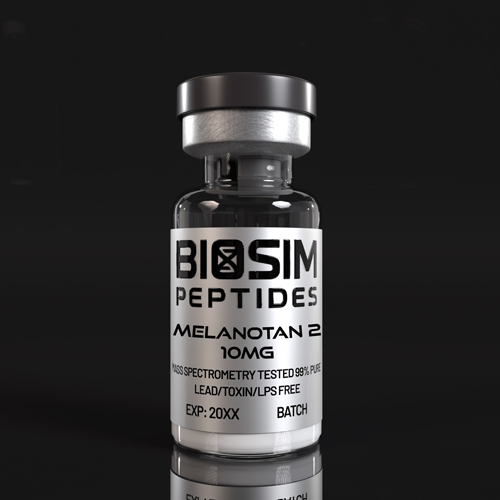
Melanotan 2 (MT-II) is a synthetic cyclic heptapeptide analog of the endogenous melanocortin peptide alpha-melanocyte-stimulating hormone (alpha-MSH). Discovered at the University of Arizona during structure-activity studies of the central melanocortin system, Melanotan 2 exhibits potent agonist activity across multiple melanocortin receptor subtypes, with particularly high affinity for the melanocortin-1 receptor (MC1R) in melanocytes and the melanocortin-4 receptor (MC4R) in the central nervous system. Unlike naturally occurring alpha-MSH, which has a brief circulating half-life measured in minutes, MT-II’s cyclic lactam bridge confers substantial proteolytic stability, extending its biological activity and making it a valuable research tool for investigating melanocortin signaling in laboratory models. The compound has been extensively characterized for its ability to stimulate melanogenesis independently of ultraviolet radiation exposure — a property that has driven research interest in photoprotection, pigmentation disorders, and systemic melanocortin pharmacology.
Molecular Characteristics & Mechanism of Action
Melanotan 2 is a cyclic peptide with the amino acid sequence Ac-Nle-cyclo[Asp-His-D-Phe-Arg-Trp-Lys]-NH2, where the Asp-Lys lactam bridge confers conformational constraint that is critical for receptor affinity. The molecule functions as a pan-melanocortin receptor agonist, activating MC1R (expressed on melanocytes and immune cells), MC3R, MC4R (hypothalamic nuclei), and MC5R (exocrine glands) with nanomolar potency. Activation of MC1R in epidermal melanocytes triggers a cAMP-dependent signaling cascade that upregulates tyrosinase, the rate-limiting enzyme in melanin synthesis, leading to increased eumelanin production and skin darkening without the DNA-damaging effects of UV radiation. Recent research has demonstrated that MC1R peptide agonists can self-assemble into hydrogel matrices that promote localized skin pigmentation, with potential applications in vitiligo research (PMID: 37115703).
Beyond cutaneous effects, MC1R activation has been shown to modulate peripheral immune responses and exhibit neuroprotective properties in experimental models. In Parkinson’s disease research, peripheral MC1R stimulation with peptide agonists attenuated neuroinflammation and preserved dopaminergic neuron integrity, suggesting that melanocortin signaling participates in broader immunomodulatory networks beyond the skin (PMID: 38110615). The central melanocortin system, particularly through MC4R activation, has also been identified as a therapeutic target for metabolic disorders, with implications spanning appetite regulation, energy expenditure, and glucose homeostasis (PMID: 37365323).
Research Applications & Key Findings
The primary research application of Melanotan 2 remains the study of MC1R-dependent melanogenesis as a model system for G-protein-coupled receptor (GPCR) signaling. In laboratory investigations, MT-II reliably induces eumelanin synthesis in MC1R-expressing cell lines and in vivo models, providing a pharmacologically tractable system for studying pigmentation biology. Researchers have leveraged the compound to investigate melanocortin receptor polymorphisms — particularly MC1R variants associated with red hair phenotype and increased melanoma risk — and their differential responses to peptide agonists. Recent work has shown that melanoma-associated MC1R variants confer redox signaling-dependent protection against oxidative DNA damage, revealing a signaling pathway by which MC1R genotype influences both pigmentation and genomic stability independently of melanin content (PMID: 38565069).
The peptide’s MC4R agonist activity has also generated investigative interest in sexual function research. Bremelanotide, a metabolite and derivative of Melanotan 2, has received FDA approval for the treatment of hypoactive sexual desire disorder (HSDD) in premenopausal women, and Melanotan 2 itself has been studied in female Syrian hamster models of sexual motivation (PMID: 39793696). This dual MC1R/MC4R pharmacology makes MT-II a versatile chemical probe for dissecting the tissue-specific functions of melanocortin receptor subtypes in experimental systems. In photodermatology research, afamelanotide — an alpha-MSH analog structurally related to MT-II — has been investigated for systemic photoprotection in erythropoietic protoporphyria, with vitamin D status monitoring being an important safety consideration (PMID: 38736212).
Comparative Context
Melanotan 2 occupies a central position within the melanocortin peptide family alongside structurally related compounds including alpha-MSH, afamelanotide (Scenesse), bremelanotide (Vyleesi), and setmelanotide (Imcivree). Compared to alpha-MSH, MT-II offers superior stability and mixed receptor subtype activity that broadens its research utility. Afamelanotide is an MC1R-selective agonist developed for photoprotection in porphyria, while bremelanotide is an MC4R-preferring agonist developed for HSDD. Setmelanotide represents the most selective agent, targeting MC4R for rare genetic obesity disorders. MT-II’s broader receptor activation profile, combined with its extensive characterization in the scientific literature spanning three decades, positions it as an essential reference compound for melanocortin pharmacology research. Its effects on pigmentation are reversible upon compound discontinuation in laboratory models, an important consideration for experimental design involving washout periods or crossover studies.
Laboratory Handling & Storage
Melanotan 2 is supplied as a sterile, lyophilized powder in a sealed vial. For research applications, the peptide should be reconstituted in sterile bacteriostatic water or an appropriate buffer system as specified by the experimental protocol. The lyophilized powder is stable at -20°C or below when protected from moisture and light. Following reconstitution, working solutions should be aliquoted into single-use volumes and stored at -20°C to minimize freeze-thaw degradation. Each batch is accompanied by a certificate of analysis specifying HPLC purity (typically ≥98%), mass spectrometry confirmation of molecular weight, and peptide content. Standard laboratory safety protocols for handling research peptides should be observed, including appropriate personal protective equipment and sterile technique during reconstitution. This product is exclusively intended for laboratory research and analytical applications.
References
- 2023. “MC1R Peptide Agonist Self-Assembles into a Hydrogel That Promotes Skin Pigmentation for Treating Vitiligo.” ACS Nano. PMID: 37115703
- 2023. “Peripheral MC1R Activation Modulates Immune Responses and is Neuroprotective in a Mouse Model of Parkinson’s Disease.” J Neuroimmune Pharmacol. PMID: 38110615
- 2023. “Targeting the central melanocortin system for the treatment of metabolic disorders.” Nat Rev Endocrinol. PMID: 37365323
- 2024. “Small Effects, Questionable Outcomes: Bremelanotide for Hypoactive Sexual Desire Disorder.” J Sex Res. PMID: 36809187
- 2025. “Female Syrian hamster analyses of bremelanotide, a US FDA approved drug for the treatment of female hypoactive sexual desire disorder.” Neuropharmacology. PMID: 39793696
- 2024. “Vitamin D status in patients with erythropoietic protoporphyria taking the systemic photoprotective agent afamelanotide.” Br J Dermatol. PMID: 38736212

Reviews
There are no reviews yet.