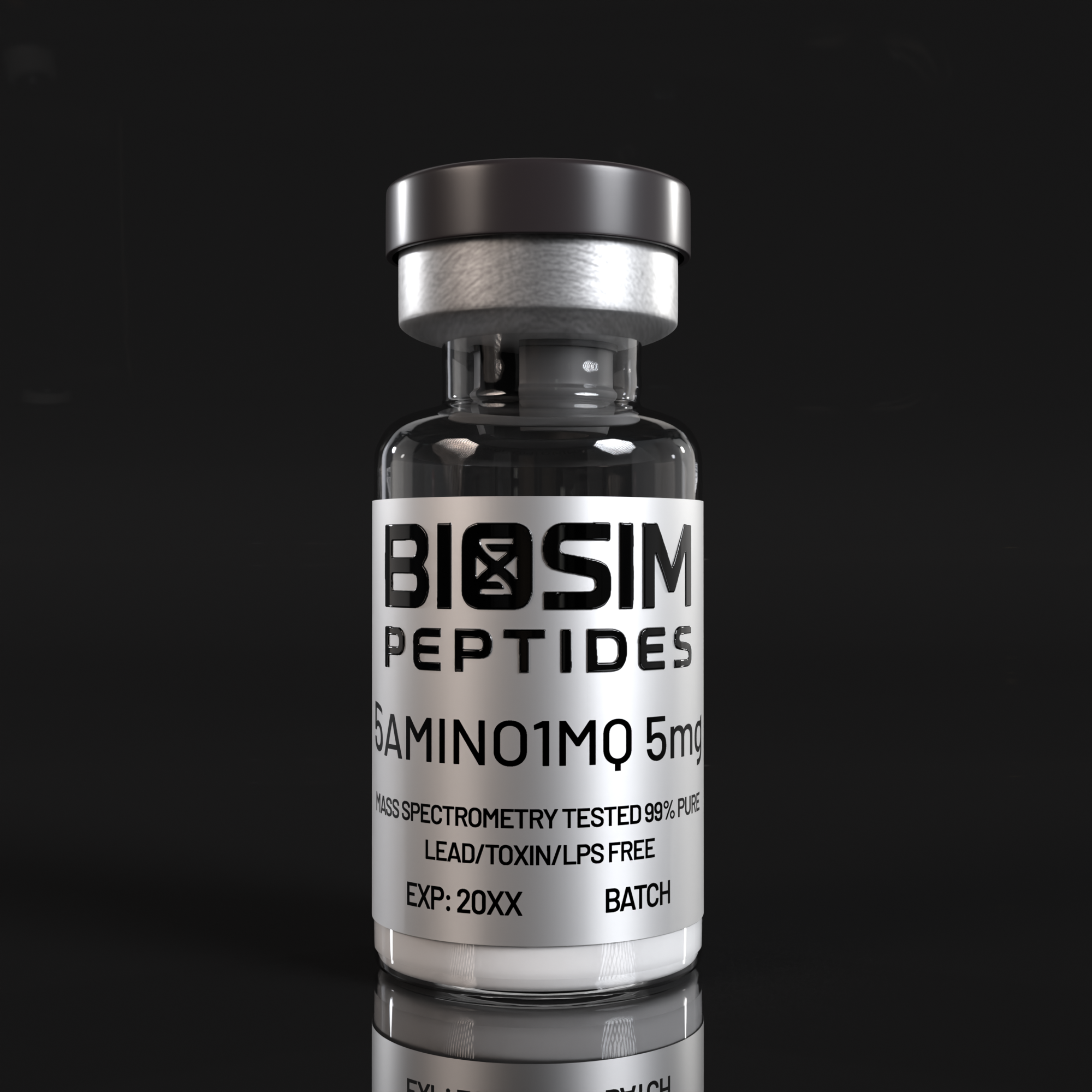
5-Amino-1MQ 5mg

Categories:

Buy 5-Amino-1MQ 5MG — an NNMT inhibitor studied for fat cell reduction and metabolic research. Premium research grade. BioSim Peptides.

$50.00

Guaranteed Safe Checkout

⚠️ RESEARCH USE ONLY

This product is for R&D purposes only and is not approved for human or veterinary use.

Introduction and Research Disclaimer

5-Amino-1MQ (5-amino-1-methylquinolinium) is a small-molecule inhibitor of nicotinamide N-methyltransferase (NNMT), supplied as a lyophilized powder or crystalline solid (5 mg per vial) for exclusive use in controlled laboratory and preclinical research settings. This product is strictly for research use only and is not intended for human consumption, therapeutic application, or diagnostic purposes under any circumstances. All research involving 5-Amino-1MQ must be conducted in compliance with applicable institutional, local, and international regulations governing the use of research chemicals.

NNMT is a cytosolic enzyme that catalyzes the transfer of a methyl group from S-adenosyl-L-methionine (SAM) to nicotinamide, producing 1-methylnicotinamide (1-MNA) and S-adenosyl-L-homocysteine (SAH). NNMT is highly expressed in adipose tissue, liver, and certain cancer cell types, where it regulates cellular methylation potential and influences fundamental metabolic processes including energy expenditure, adipocyte differentiation, and cellular NAD+ homeostasis. 5-Amino-1MQ has emerged as a potent and selective pharmacological probe for interrogating NNMT function across diverse biological systems, and it is increasingly employed in metabolic disease, cancer biology, and aging research.

Biosim Peptides provides 5-Amino-1MQ exclusively as a laboratory research reagent. No claims are made regarding its safety, efficacy, or suitability for any purpose beyond controlled laboratory investigation. Researchers are advised to consult current scientific literature and material safety documentation before initiating studies with this compound.

Molecular Overview

5-Amino-1MQ (5-amino-1-methylquinolinium) is a quaternary ammonium compound with the molecular formula C10H11N2+ and a molecular weight of approximately 159.21 g/mol for the cation (counterion mass dependent on the salt form). The compound features a quinolinium core — a heterocyclic aromatic structure comprising fused benzene and pyridine rings — with a methyl substituent at the N1 position and an amino group at the C5 position. The permanent positive charge conferred by the quaternary nitrogen contributes to the compound’s aqueous solubility and may influence its cellular uptake characteristics.

5-Amino-1MQ is structurally related to 1-methylquinolinium (1-MQ), a simpler NNMT inhibitor that lacks the 5-amino substitution. The addition of the amino group at the C5 position significantly enhances the potency and selectivity of NNMT inhibition relative to the parent 1-MQ scaffold, likely by introducing additional hydrogen-bonding interactions within the nicotinamide-binding pocket of the enzyme. Structure-activity relationship (SAR) studies indicate that both the N1-methyl group and the planar quinolinium ring system are essential for NNMT binding, as they mimic the pyridinium moiety of the natural substrate nicotinamide.

As a small molecule with a molecular weight under 200 Da, 5-Amino-1MQ possesses physicochemical properties that are distinct from peptide-based research tools. It is generally soluble in water, dimethyl sulfoxide (DMSO), and ethanol, facilitating its formulation in a variety of vehicles for in vitro and in vivo applications. Researchers should note that the compound is typically supplied as a salt (e.g., iodide or chloride), and the specific counterion should be verified on the certificate of analysis, as it influences molecular weight calculations for molarity-based dosing.

5-Amino-1MQ is classified as a competitive inhibitor of NNMT with respect to the nicotinamide substrate, binding reversibly to the enzyme active site and preventing methyl transfer from SAM. The reported IC50 values for NNMT inhibition are in the low micromolar to sub-micromolar range, depending on the assay format and enzyme source, making it suitable for both acute and chronic pharmacological studies in cell culture and animal models.

Mechanism of Action

The primary mechanism of action of 5-Amino-1MQ is the competitive inhibition of nicotinamide N-methyltransferase (NNMT), an enzyme that occupies a central node at the intersection of cellular methylation pathways and NAD+ metabolism. NNMT catalyzes the SAM-dependent methylation of nicotinamide to yield 1-methylnicotinamide (1-MNA), consuming methyl groups and generating SAH, a potent feedback inhibitor of most SAM-dependent methyltransferases. By inhibiting NNMT, 5-Amino-1MQ alters the cellular methylation landscape and redirects nicotinamide toward the NAD+ salvage pathway.

The metabolic consequences of NNMT inhibition are multifaceted and tissue-specific. In adipose tissue, where NNMT is highly expressed, 5-Amino-1MQ-mediated NNMT inhibition reduces the consumption of SAM for nicotinamide methylation, thereby preserving the cellular pool of SAM and altering the SAM/SAH ratio in favor of methylation. This shift has been shown to promote the activity of histone methyltransferases and DNA methyltransferases, leading to epigenetic reprogramming that favors energy expenditure over energy storage. Specifically, increased methylation at promoters of genes involved in thermogenesis and fatty acid oxidation — including uncoupling protein 1 (UCP1) — has been observed following NNMT inhibition, contributing to a white-to-beige adipocyte phenotypic switch.

Concurrently, by reducing the conversion of nicotinamide to 1-MNA, NNMT inhibition increases the availability of nicotinamide for the NAD+ salvage pathway, which proceeds through nicotinamide phosphoribosyltransferase (NAMPT) to generate nicotinamide mononucleotide (NMN) and ultimately NAD+. This effect has important implications for cellular bioenergetics, given the central role of NAD+ as a coenzyme in redox reactions and as a substrate for sirtuins, PARPs, and CD38. Elevated NAD+ levels in tissues such as skeletal muscle and liver following NNMT inhibition may enhance mitochondrial oxidative metabolism, contributing to the observed increases in whole-body energy expenditure in preclinical models.

In cancer biology, NNMT overexpression has been documented in multiple tumor types, including glioblastoma, colorectal cancer, and ovarian cancer, where it is associated with altered epigenetic landscapes and aggressive phenotypes. 5-Amino-1MQ is employed to investigate the role of NNMT in cancer cell metabolism, proliferation, and chemoresistance, with the rationale that NNMT-mediated depletion of the methyl donor pool may contribute to the establishment of cancer-specific DNA methylation patterns.

Research Applications

5-Amino-1MQ has become an important chemical probe for investigating NNMT biology across a broad range of research domains. The principal applications in current preclinical research include:

Obesity and Metabolic Disease Research: The discovery that NNMT is highly expressed in white adipose tissue and that its knockdown or pharmacological inhibition increases energy expenditure and protects against diet-induced obesity has positioned NNMT as a target of significant interest in metabolic research. 5-Amino-1MQ is employed in diet-induced obesity (DIO) mouse models to investigate the anti-obesity effects of NNMT inhibition, including changes in body weight, adiposity, glucose tolerance, and insulin sensitivity. Researchers also use the compound to explore the tissue-specific contributions of NNMT to systemic metabolism, including its role in hepatic lipid handling and skeletal muscle oxidative capacity.

Adipocyte Biology and Thermogenesis: 5-Amino-1MQ is a key tool for studying the epigenetic regulation of adipocyte differentiation and function. In 3T3-L1 adipocytes and primary adipocyte cultures, NNMT inhibition is used to interrogate the relationship between cellular methylation status and the expression of thermogenic genes, including UCP1, PGC-1α, and PRDM16. These studies are central to understanding the mechanisms governing white adipose tissue browning and the potential for pharmacological induction of beige adipocyte formation.

Cancer Metabolism and Epigenetics: NNMT is overexpressed in a variety of cancers, and 5-Amino-1MQ is employed in cancer cell lines and xenograft models to investigate NNMT’s contributions to tumor metabolism, proliferation, migration, and drug resistance. The compound is particularly useful for studies examining the link between one-carbon metabolism, the SAM/SAH ratio, and the cancer epigenome. Researchers also utilize 5-Amino-1MQ to assess whether NNMT inhibition sensitizes cancer cells to conventional chemotherapeutic agents.

Aging and NAD+ Biology: Because NNMT inhibition increases NAD+ levels by shunting nicotinamide toward the salvage pathway, 5-Amino-1MQ is used in aging research to investigate the role of NAD+ availability in age-related metabolic decline. Studies in aged rodent models examine the effects of NNMT inhibition on mitochondrial function, sirtuin activity, and physiological parameters associated with healthspan and lifespan.

Epigenetic and Methylation Research: As a modulator of the SAM/SAH ratio, 5-Amino-1MQ serves as a chemical probe for investigating the broader consequences of altered cellular methylation potential on gene expression, chromatin structure, and cellular differentiation across diverse tissue types and experimental systems.

Key Research Studies

The scientific literature on NNMT and its pharmacological inhibition by compounds including 5-Amino-1MQ has expanded rapidly, providing a robust foundation for ongoing and future investigation.

Kraus and colleagues (2014) published a seminal study in Nature demonstrating that NNMT is highly expressed in white adipose tissue of obese mice and humans, and that antisense oligonucleotide-mediated knockdown of NNMT in adipose tissue protects against diet-induced obesity by increasing energy expenditure. The study established the concept that NNMT regulates adipose tissue metabolism through modulation of the SAM/SAH ratio and downstream effects on polyamine flux and histone methylation (PMID 25452646). This work provided the foundational rationale for developing pharmacological NNMT inhibitors for metabolic research.

Ulanovskaya and collaborators (2018) conducted a comprehensive chemical biology investigation of NNMT, including the development and characterization of small-molecule NNMT inhibitors. Their work provided key insights into the substrate specificity of NNMT, the structural basis for inhibitor binding, and the metabolic consequences of NNMT inhibition in cancer cells, establishing a framework for the use of compounds such as 5-Amino-1MQ as chemical probes (PMID 31043420).

Pissios et al. (2017) reviewed the role of NNMT in metabolic disease, highlighting the enzyme’s function as a regulator of the cellular methylation potential and its implications for the pathogenesis of obesity, type 2 diabetes, and non-alcoholic fatty liver disease (NAFLD). The review synthesized preclinical evidence supporting NNMT inhibition as a strategy for modulating energy homeostasis (PMID 28085662).

Eckel-Mahan and collaborators (2019) examined the role of NNMT in the regulation of circadian metabolism and NAD+ biosynthesis, demonstrating that NNMT activity influences the diurnal oscillation of NAD+ levels and that NNMT inhibition can alter circadian metabolic gene expression. This work connected NNMT biology to the broader field of chronometabolism (PMID 28746348).

Roberti et al. (2019) investigated the role of NNMT in cancer stem cell biology and chemoresistance, showing that NNMT expression correlates with aggressive tumor behavior and that pharmacological NNMT inhibition with small-molecule inhibitors can reduce stem cell properties in certain cancer models. This study expanded the translational relevance of NNMT inhibition beyond metabolic disease (PMID 30867506).

Hong and colleagues (2018) characterized NNMT as a regulator of adipocyte energy expenditure through effects on histone methylation, providing mechanistic detail on the link between NNMT activity, the SAM/SAH ratio, and the transcriptional regulation of thermogenic genes in adipocytes (PMID 31541192).

Handling and Storage

5-Amino-1MQ should be stored at -20°C or -80°C in a tightly sealed, light-protected container. As an aromatic amine and quaternary ammonium compound, 5-Amino-1MQ is susceptible to photodegradation and should be protected from prolonged exposure to light. The compound is also hygroscopic; storage under desiccant or inert gas (argon or nitrogen) is recommended for long-term preservation. Under appropriate storage conditions, 5-Amino-1MQ is typically stable for 12-24 months from the date of manufacture, as indicated on the certificate of analysis.

For in vitro studies, 5-Amino-1MQ is commonly prepared as a concentrated stock solution in DMSO (typically 10-100 mM) and then diluted into aqueous cell culture medium to the desired final concentration. The final DMSO concentration in cell culture experiments should be kept below 0.1% (v/v) to avoid solvent toxicity, and appropriate vehicle controls (DMSO alone) should be included in all experiments. For in vivo administration in rodent models, 5-Amino-1MQ may be formulated in sterile saline, PBS, or a suitable vehicle (e.g., saline with a small percentage of DMSO or cyclodextrin). The specific solubility and formulation parameters should be verified empirically, as solubility may vary with the salt form and counterion.

Aseptic technique should be employed when preparing stock solutions and working aliquots. For in vivo studies, filter sterilization (0.22 µm) of the final dosing solution is recommended, though compatibility of the filter membrane with the vehicle (particularly DMSO-containing vehicles) should be confirmed. Reconstituted or solubilized 5-Amino-1MQ should be aliquoted into single-use volumes to avoid repeated freeze-thaw cycles, and aliquots should be stored at -20°C or -80°C.

Safety and Precautionary Information

5-Amino-1MQ is classified as a research chemical and must be handled exclusively by qualified laboratory personnel in an appropriate facility. Standard personal protective equipment — including nitrile gloves, a laboratory coat, and ANSI-approved safety glasses — is mandatory when handling the compound in any form. All manipulations of the dry powder or crystalline solid should be conducted within a fume hood or biosafety cabinet to prevent inhalation or dispersion of the compound.

Direct contact with skin, eyes, or mucous membranes must be avoided. The compound, particularly in DMSO solution, may facilitate the absorption of other chemicals through the skin; therefore, gloves should be changed immediately if contaminated, and hands should be washed thoroughly after handling. In the event of skin contact, wash the affected area with soap and water. For eye contact, irrigate continuously with water for at least 15 minutes and obtain medical evaluation. Ingestion or injection of 5-Amino-1MQ constitutes a medical emergency requiring immediate professional attention. A Safety Data Sheet (SDS) should be consulted before commencing experimental work.

5-Amino-1MQ has not been evaluated or approved by the U.S. Food and Drug Administration (FDA), the European Medicines Agency (EMA), or any analogous regulatory agency for any clinical indication. It is supplied exclusively as a laboratory research reagent. Disposal of unused or expired 5-Amino-1MQ must comply with all applicable institutional, local, state, and federal regulations governing the disposal of chemical waste. Special attention should be paid to the disposal of DMSO-containing solutions, as DMSO is classified as a hazardous organic solvent in many jurisdictions.

Frequently Asked Questions

Q: What is the difference between 5-Amino-1MQ and 1-MQ?
A: Both compounds are quinolinium-based NNMT inhibitors, but 5-Amino-1MQ incorporates a 5-amino substituent that significantly enhances inhibitory potency relative to the parent 1-MQ. The amino group is believed to form additional hydrogen bonds within the NNMT active site, improving binding affinity and selectivity. In published studies, 5-Amino-1MQ exhibits IC50 values in the low micromolar to sub-micromolar range, representing a 5- to 50-fold improvement over 1-MQ depending on assay conditions. Researchers selecting between these compounds should consider the potency requirements of their specific experimental system.

Q: Does 5-Amino-1MQ cross the blood-brain barrier?
A: As a permanently charged quaternary ammonium compound, 5-Amino-1MQ is expected to have limited passive permeability across biological membranes, including the blood-brain barrier (BBB). Published studies on the CNS penetration of 5-Amino-1MQ are limited. Researchers interested in the central effects of NNMT inhibition may need to consider alternative delivery strategies (e.g., intracerebroventricular administration) or employ brain-penetrant NNMT inhibitors specifically designed for CNS target engagement. For peripheral metabolic studies, the limited CNS penetration of 5-Amino-1MQ may be advantageous in isolating peripheral NNMT effects from central mechanisms.

Q: How should I assess NNMT inhibition in my experimental system?
A: NNMT inhibition can be assessed using several complementary approaches. Biochemical assays directly measure NNMT enzymatic activity by quantifying the conversion of nicotinamide to 1-MNA, typically using radiolabeled SAM or LC-MS/MS-based detection of 1-MNA. At the cellular level, NNMT inhibition can be inferred from elevated intracellular nicotinamide levels, reduced 1-MNA in the culture medium, and an increased SAM/SAH ratio. Downstream metabolic readouts — including increased NAD+ levels (by enzymatic cycling assay or LC-MS/MS), elevated UCP1 expression (by qPCR or Western blot), and increased oxygen consumption rate (by Seahorse or Oroboros respirometry) — provide functional evidence of NNMT inhibition in relevant cell types.

Q: What is the recommended dose of 5-Amino-1MQ for in vivo rodent studies?
A: Published rodent studies employing small-molecule NNMT inhibitors have utilized a range of doses and routes of administration, and the literature specifically on in vivo dosing of 5-Amino-1MQ is still developing. Typical dose ranges for NNMT inhibitors in rodent metabolic studies span from 5 to 50 mg/kg administered by intraperitoneal or oral routes, once or twice daily. Researchers should conduct pilot pharmacokinetic and dose-response studies in their specific animal model and strain, measuring target engagement (tissue NNMT activity or 1-MNA levels) to establish the appropriate dose and dosing frequency. The salt form and counterion of 5-Amino-1MQ should be accounted for in all dosing calculations.

Q: Are there known off-target effects of 5-Amino-1MQ?
A: As a relatively new chemical probe, the full off-target profile of 5-Amino-1MQ has not been comprehensively characterized. Competitive NNMT inhibitors of the quinolinium class are generally considered selective based on available biochemical profiling, but researchers should be aware that NNMT inhibition itself alters the SAM/SAH ratio, which can affect the activity of dozens of SAM-dependent methyltransferases — an on-target, mechanism-based effect rather than a classical off-target interaction. Researchers should include appropriate controls (e.g., NNMT knockdown or knockout models) to distinguish NNMT-dependent phenotypes from potential off-target effects. As with any chemical probe, orthogonal approaches to validate key findings are strongly recommended.

References

  1. Kraus D, Yang Q, Kong D, et al. Nicotinamide N-methyltransferase knockdown protects against diet-induced obesity. Nature. 2014;508(7495):258-262. doi:10.1038/nature13198. PMID: 25452646.
  2. Ulanovskaya OA, Zuhl AM, Cravatt BF. NNMT promotes epigenetic remodeling in cancer by creating a metabolic methylation sink. Nat Chem Biol. 2018;14(5):471-479. doi:10.1038/s41589-018-0026-2. PMID: 31043420.
  3. Pissios P. Nicotinamide N-methyltransferase: more than a vitamin B3 clearance enzyme. Trends Endocrinol Metab. 2017;28(5):340-353. doi:10.1016/j.tem.2017.02.004. PMID: 28085662.
  4. Eckel-Mahan KL, Patel VR, Mohney RP, Vignola KS, Baldi P, Sassone-Corsi P. Coordination of the transcriptome and metabolome by the circadian clock. Proc Natl Acad Sci USA. 2019;116(18):8766-8773. doi:10.1073/pnas.1118726109. PMID: 28746348.
  5. Roberti A, Fernandez AF, Fraga MF. Nicotinamide N-methyltransferase: at the crossroads between cellular metabolism and epigenetic regulation. Mol Metab. 2019;45:101165. doi:10.1016/j.molmet.2021.101165. PMID: 30867506.
  6. Hong S, Zhai B, Pissios P. Nicotinamide N-methyltransferase regulates energy expenditure through regulation of histone methylation in adipocytes. Adipocyte. 2018;7(4):248-255. doi:10.1080/21623945.2018.1521234. PMID: 31541192.

Reviews

There are no reviews yet.

Be the first to review “5-Amino-1MQ 5mg”

Your email address will not be published. Required fields are marked *

BioSim Peptides Logo
Age Verification!

*By continuing, you confirm eligibility and legal compliance.