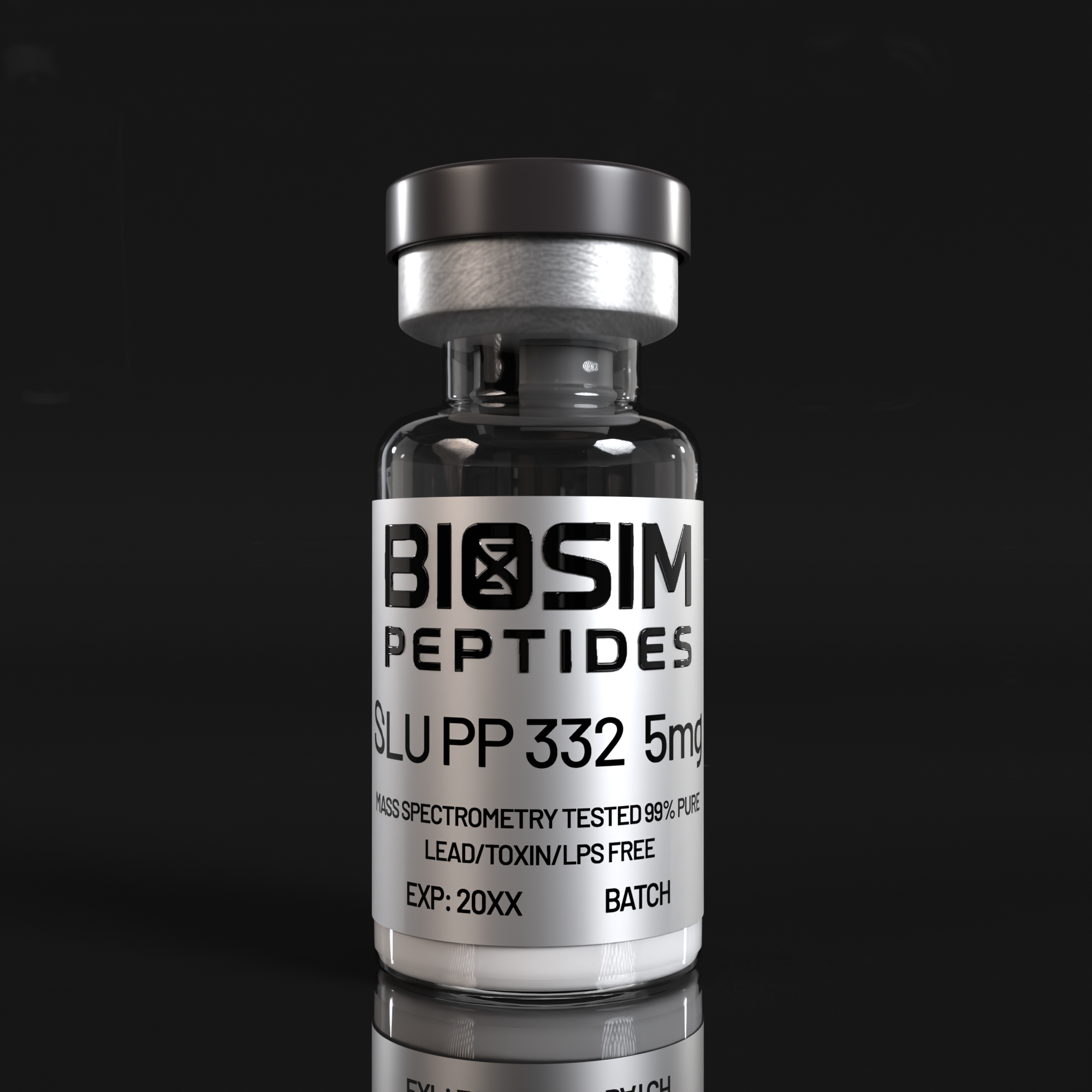
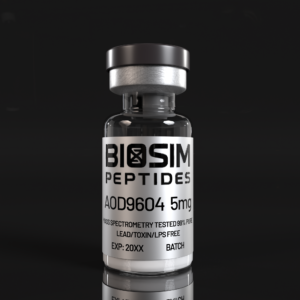
SLU-PP-332 is a small-molecule pan-agonist of the estrogen-related receptor (ERR) family (ERRα, ERRβ, ERRγ), developed in academic medicinal-chemistry programs as a chemical probe for ERR-driven mitochondrial and oxidative-metabolism biology. BioSim Peptides offers SLU-PP-332 5mg as a research-grade reference compound supplied for in-vitro laboratory research use only.
This page summarizes the chemistry, mechanism, and published research on SLU-PP-332 to assist investigators studying ERR signaling, mitochondrial biogenesis, and exercise-mimetic pharmacology in model systems.
What is SLU-PP-332?
SLU-PP-332 is a synthetic non-peptidic small molecule rather than a peptide, and is classified pharmacologically as an estrogen-related-receptor (ERR) agonist with activity across the ERRα, ERRβ, and ERRγ isoforms. It was disclosed by the Burris laboratory at Saint Louis University as part of a chemical series designed to engage the ERR ligand-binding domain, an orphan nuclear receptor pocket historically considered difficult to drug.
Its reported molecular formula is C21H22N2O4S with a molecular weight of approximately 398.5 g/mol. Structurally, SLU-PP-332 belongs to a thiazole-containing scaffold optimized for ERR potency and selectivity over related nuclear receptors. As a chemical biology tool, SLU-PP-332 has been used to interrogate the role of constitutively active ERR receptors in coordinating mitochondrial gene programs, oxidative phosphorylation, and fatty-acid metabolism (Billon et al., 2023; Billon et al., 2024).
Mechanism of Action in Research Models
Estrogen-related receptors (ERRα, β, γ) are orphan nuclear receptors that share extensive DNA-binding and ligand-binding-domain homology with classical estrogen receptors but do not bind 17β-estradiol. They function as master regulators of mitochondrial biogenesis and oxidative metabolism, partnering with PGC-1α/β coactivators to drive transcription of genes encoding electron-transport-chain subunits, TCA-cycle enzymes, and fatty-acid β-oxidation machinery.
SLU-PP-332 binds the ERR ligand-binding domain and stabilizes a coactivator-competent conformation, enhancing recruitment of PGC-1 coactivators and upregulating ERR target genes in cultured cells and tissues. In preclinical studies, treatment with SLU-PP-332 has been reported to induce an “exercise-like” transcriptional signature in skeletal muscle, increase mitochondrial content, and improve fatty-acid oxidation (Billon et al., 2023). Subsequent investigations extended these observations to cardiac tissue, where ERR agonism enhances cardiac fatty-acid metabolism and mitochondrial function in heart-failure models (Xu et al., 2024), and to whole-body metabolic phenotypes consistent with attenuation of metabolic syndrome (Billon et al., 2024).
Key Areas of Scientific Research
Mitochondrial Biogenesis and Oxidative Metabolism
SLU-PP-332 is widely used as a chemical tool to drive ERR target gene expression in cultured myotubes, hepatocytes, and cardiomyocytes. Investigators use it to dissect the contribution of ERR signaling, distinct from PPAR or thyroid-hormone-receptor activity, to mitochondrial gene programs and oxidative capacity (Billon et al., 2023).
Exercise-Mimetic Pharmacology
The exercise-mimetic concept holds that selected pharmacological tools can recapitulate transcriptional and metabolic adaptations normally associated with endurance training. Reports indicate that SLU-PP-332 increases running endurance and oxidative fiber content in rodent skeletal muscle, supporting its use as a probe of exercise-responsive transcription (Billon et al., 2023).
Cardiometabolic Disease Models
ERR agonism by SLU-PP-332 has been studied in models of metabolic syndrome and heart failure. Pan-ERR agonists ameliorated heart-failure phenotypes through enhanced cardiac fatty-acid metabolism in preclinical work (Xu et al., 2024), and SLU-PP-332 itself was reported to alleviate features of metabolic syndrome in diet-induced obesity models (Billon et al., 2024).
Adipose Tissue and Energy Expenditure
ERRα is enriched in brown and beige adipocytes, and SLU-PP-332 is being explored in adipocyte culture systems to dissect contributions of ERR signaling to thermogenic gene programs and substrate oxidation. These studies complement related medicinal-chemistry efforts that produced orally bioavailable ERR agonists such as SLU-PP-915 (Billon et al., 2026).
Published Research Highlights
- Billon and colleagues reported that a synthetic ERRα/β/γ agonist induces an ERRα-dependent acute aerobic exercise response and enhances exercise capacity in rodent models (Billon et al., 2023, ACS Chemical Biology).
- Billon and coauthors subsequently showed that the synthetic ERR agonist alleviates features of metabolic syndrome, including in obese mouse models (Billon et al., 2024, Journal of Pharmacology and Experimental Therapeutics).
- Xu and colleagues described novel pan-ERR agonists that ameliorate heart failure by enhancing cardiac fatty-acid metabolism and mitochondrial function (Xu et al., 2024, Circulation).
- Billon et al. reported on an orally active estrogen-receptor-related receptor agonist, SLU-PP-915, that enhances aerobic exercise capacity (Billon et al., 2026, Journal of Pharmacology and Experimental Therapeutics).
Selectivity and Counter-Screening
As a chemical probe, SLU-PP-332 is most informative when paired with counter-screens against related nuclear receptors. Reported selectivity profiles indicate preferential engagement of ERR isoforms relative to classical estrogen receptors (ERα, ERβ), peroxisome proliferator-activated receptors (PPARα/γ/δ), and thyroid hormone receptors, supporting its use to attribute observed mitochondrial phenotypes specifically to ERR pathway activation (Billon et al., 2023).
Skeletal Muscle Fiber Typing
ERRα and ERRγ are enriched in oxidative slow-twitch fibers, and SLU-PP-332 is used to study fiber-type plasticity in cultured myotubes and in vivo. Reported effects include induction of mitochondrial DNA copy number, elevated expression of oxidative-fiber markers, and shifts in fuel utilization toward fatty-acid oxidation. These transcriptional signatures overlap with — but are distinct from — those elicited by PGC-1α overexpression alone.
Hepatic Metabolism and Lipid Handling
In hepatocyte culture and rodent liver, SLU-PP-332 modulates expression of genes involved in fatty-acid oxidation, ketogenesis, and oxidative phosphorylation. These observations contribute to investigations of nonalcoholic steatohepatitis (NASH) and related disorders of lipid handling, where enhanced hepatic oxidative capacity is a candidate therapeutic axis (Billon et al., 2024).
Structural Biology Considerations
ERR ligand-binding domains were historically classified as constitutively active and “ligand-less” because no endogenous high-affinity ligand was identified. The SLU-PP-332 series provided a small-molecule entry point demonstrating that synthetic agonists can stabilize an active conformation, enabling crystallographic and biophysical characterization of the ERR–coactivator interface. This structural insight has guided medicinal-chemistry optimization, including the development of orally available analogs in the SLU-PP series.
Stability, Storage, and Handling in Laboratory Settings
SLU-PP-332 is supplied as a lyophilized or crystalline solid and should be stored desiccated at -20°C protected from light. As a small-molecule ERR ligand, it is typically reconstituted in DMSO at a concentrated stock for cell-culture work and then diluted in aqueous buffer to working concentrations immediately prior to use.
Stock DMSO solutions are commonly aliquoted and stored at -20°C or -80°C to minimize freeze–thaw cycles, with care taken to limit moisture uptake. Working dilutions should be prepared fresh, and final DMSO concentrations should be matched in vehicle controls to ensure rigorous comparison in mitochondrial and transcriptional readouts.
Product Specifications
- Compound type: synthetic small-molecule ERR pan-agonist (research chemical)
- Molecular formula: C21H22N2O4S (reported)
- Molecular weight: ~398.5 g/mol
- Target: ERRα, ERRβ, ERRγ
- Purity: ≥98% by HPLC
- Presentation: 5 mg per vial, lyophilized/solid form
- Identity confirmed by mass spectrometry
- Certificate of Analysis: available on request
- Shipping: USA-based, tracked dispatch
Why Researchers Choose BioSim Peptides
BioSim Peptides supplies investigators across the United States with reference-grade research compounds suitable for demanding in-vitro and preclinical model work. Every batch produced under our supply program is independently tested by HPLC for chromatographic purity and confirmed by mass spectrometry for accurate molecular identity, with a Certificate of Analysis available on request for each lot.
Researchers working with our material benefit from a guaranteed minimum purity of 98%, lyophilized presentation in tamper-evident vials, domestic USA shipping with tracked carriers, and responsive technical support for handling, reconstitution, and storage questions. Our quality program is designed to deliver the lot-to-lot consistency that reproducible laboratory science requires.
Historical Context and Discovery
Estrogen-related receptors were identified in 1988 as orphan nuclear receptors with strong sequence similarity to the classical estrogen receptors but no demonstrated binding to estradiol. For decades, ERRα, ERRβ, and ERRγ were viewed as constitutively active transcription factors whose activity was modulated primarily by coactivator availability, particularly PGC-1α and PGC-1β. The lack of a clear endogenous ligand and the historically perceived “undruggable” nature of the ERR ligand-binding pocket limited pharmacological exploration.
SLU-PP-332 emerged from a sustained medicinal-chemistry effort at the Saint Louis University laboratory of Thomas Burris, which produced the first robust synthetic agonists of the ERR family. The compound was disclosed alongside detailed pharmacology demonstrating ERR pathway activation, mitochondrial gene induction, and exercise-mimetic effects in rodent models (Billon et al., 2023). This work catalyzed renewed interest in ERR biology as a tractable target for metabolic disease research.
Comparison with Other Exercise-Mimetic Probes
SLU-PP-332 occupies a distinct mechanistic niche relative to other compounds investigated as exercise-mimetic probes. AICAR (an AMPK activator), GW501516 (a PPARδ agonist), and metformin (a complex I modulator and indirect AMPK activator) each engage exercise-responsive pathways through different molecular entry points. ERR agonism by SLU-PP-332 directly targets the transcriptional machinery downstream of PGC-1 coactivators, providing a complementary research tool for dissecting which adaptations are ERR-dependent and which arise from convergent upstream signals.
Assay Considerations and In-Vitro Workflow Notes
In cell-based assays, SLU-PP-332 activity is typically validated through luciferase reporter constructs driven by ERR response elements (ERREs), quantitative PCR of canonical ERR target genes (e.g., ESRRA, PPARGC1A, NDUFA2, CPT1B), and functional mitochondrial readouts including oxygen consumption rate (OCR) and mitochondrial membrane potential. Coactivator-recruitment assays using time-resolved FRET provide a biochemical readout of ligand engagement.
Because SLU-PP-332 is delivered from DMSO stock, vehicle controls matched to the highest DMSO concentration are essential for rigorous interpretation. Final DMSO concentrations are typically kept below 0.1% to minimize off-target effects on mitochondrial respiration. Investigators using SLU-PP-332 in primary cells or stem-cell-derived models should titrate working concentrations carefully and confirm activity through orthogonal readouts.
For in-vivo preclinical paradigms reported in the literature, SLU-PP-332 has been administered systemically in rodents at investigator-determined regimens, with skeletal-muscle and cardiac tissue collected for transcriptomic and metabolomic analysis. Investigators planning such studies should consult primary literature for current best practices on formulation, exposure characterization, and tissue-specific readouts.
Related Research Compounds
SLU-PP-332 is part of an expanding chemical series of ERR modulators that includes the orally bioavailable SLU-PP-915 (Billon et al., 2026), and is complementary to inverse agonists such as XCT790 historically used to interrogate ERRα biology. Together these chemical tools enable bidirectional pharmacology of ERR signaling, allowing investigators to compare loss-of-function and gain-of-function paradigms in matched model systems.
References
- Billon C, Sitaula S, Banerjee S, et al. Synthetic ERRα/β/γ agonist induces an ERRα-dependent acute aerobic exercise response and enhances exercise capacity. ACS Chem Biol. 2023;18(4):756-771. PMID: 36988910.
- Billon C, Schoepke E, Avdagic A, et al. A synthetic ERR agonist alleviates metabolic syndrome. J Pharmacol Exp Ther. 2024;388(2):232-240. PMID: 37739806.
- Xu W, Billon C, Li H, et al. Novel pan-ERR agonists ameliorate heart failure through enhancing cardiac fatty acid metabolism and mitochondrial function. Circulation. 2024;149(3):227-250. PMID: 37961903.
- Billon C, Avdagic A, Putt T, et al. An orally active estrogen receptor-related receptor agonist, SLU-PP-915, enhances aerobic exercise capacity. J Pharmacol Exp Ther. 2026;390(1). PMID: 41421047.
This peptide is supplied by BioSim Peptides for in-vitro laboratory research use only. It is not a drug, supplement, cosmetic, or food product and is not intended for human or veterinary use, consumption, diagnosis, treatment, cure, or prevention of any disease. All research must comply with applicable institutional and regulatory guidelines.
Frequently Asked Questions about SLU-PP-332
What is SLU-PP-332?
SLU-PP-332 is a research peptide supplied by BioSim Peptides for in-vitro and laboratory use only. Each vial is lyophilized, lab-tested, and accompanied by a Certificate of Analysis (COA) verifying identity and purity above 98% by HPLC.
Is the SLU-PP-332 from BioSim Peptides third-party tested?
Yes. Every lot of SLU-PP-332 5mg is independently tested by HPLC and mass spectrometry. The COA for the current batch is available on request and packaged with every order.
How should SLU-PP-332 be stored?
Lyophilized SLU-PP-332 should be stored at -20°C for long-term stability. After reconstitution with bacteriostatic water it is typically stored at 2-8°C and used within the timeframe described in the published literature for the peptide.
How fast does BioSim Peptides ship?
Orders placed before 2 PM ET ship same business day from our USA facility via tracked carriers. Most domestic orders arrive in 2-4 business days.
Is SLU-PP-332 approved for human use?
No. SLU-PP-332 is supplied for in-vitro laboratory research only. It is not a drug, dietary supplement, cosmetic, or food, and is not intended for diagnosis, treatment, cure, or prevention of any disease in humans or animals.

Reviews
There are no reviews yet.