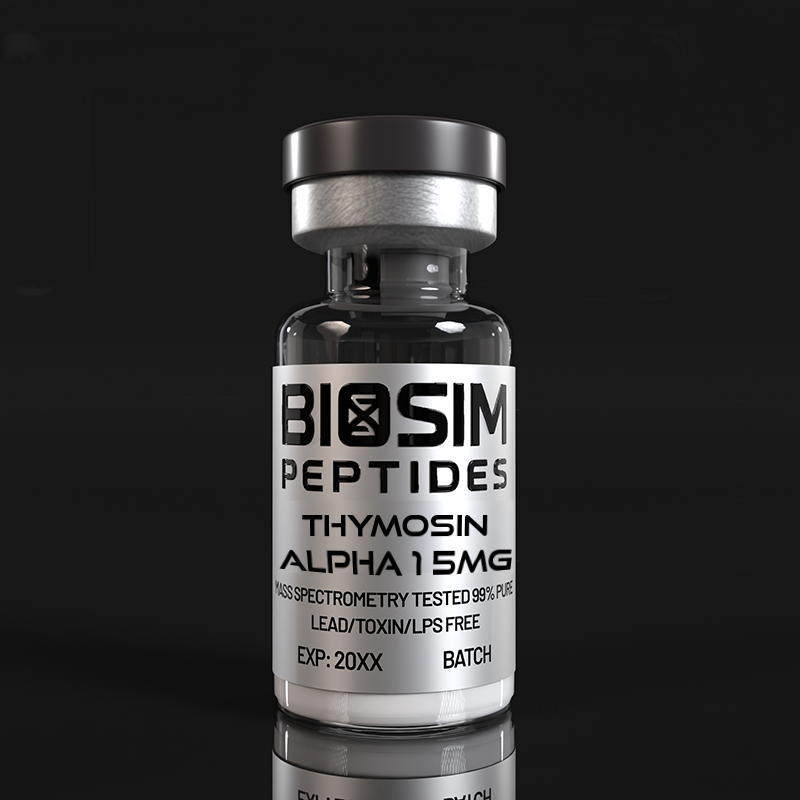
Thymosin Alpha-1 5mg: Research Overview
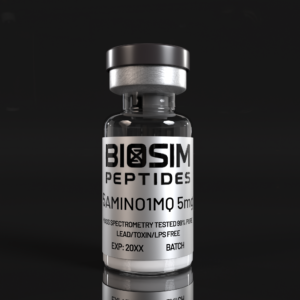
Thymosin Alpha-1 (Tα1), also known as thymalfasin, is a 28-amino acid peptide fragment (residues 1–28) originally isolated from thymosin fraction 5 of bovine thymus tissue. This highly conserved, naturally occurring peptide has been the subject of extensive laboratory investigation for its pleiotropic immunomodulatory properties. Tα1 is supplied as a lyophilized powder (5 mg per vial) and is intended strictly for in vitro laboratory research applications. It is not an FDA-approved therapeutic and is not for human or veterinary use. Researchers employ Tα1 in studies investigating innate and adaptive immune signaling, dendritic cell (DC) biology, T-cell polarization, toll-like receptor (TLR) pathways, and the intersection of immune restoration with antiviral and antitumor responses [1][2].
Molecular Background & Mechanism of Action
Thymosin Alpha-1 is a 28-amino acid peptide (Ac-Ser-Asp-Ala-Ala-Val-Asp-Thr-Ser-Ser-Glu-Ile-Thr-Thr-Lys-Asp-Leu-Lys-Glu-Lys-Lys-Glu-Val-Val-Glu-Glu-Ala-Glu-Asn-OH; molecular weight ~3,108 Da) that corresponds to the N-terminal fragment of prothymosin alpha. In the research context, Tα1 has been shown to exert immunomodulatory effects predominantly through interaction with toll-like receptors (TLRs) on dendritic cells and precursor T cells. Seminal work by Romani et al. (2004) demonstrated that Tα1 activates dendritic cells via TLR9 and, to a lesser extent, TLR2 signaling pathways, promoting the maturation of myeloid DCs and their capacity to prime Th1-type antifungal responses [1]. Subsequent investigations by Giacomini et al. (2015) revealed a nuanced dual effect: Tα1 differentially modulates human monocyte-derived dendritic cell responses depending on the specific TLR agonist encountered, enhancing IFN-α and IL-12 production upon TLR9 stimulation while dampening inflammatory cytokine output in the context of TLR4 ligation [2]. More recent studies have elucidated Tα1’s capacity to chaperone microRNA ligands of TLR7 in dendritic cells, revealing an additional mechanism through which Tα1 bridges innate sensing and adaptive immune instruction [3].
Tα1’s pleiotropic signaling converges on several downstream pathways relevant to immune cell differentiation. Research demonstrates that Tα1 promotes the polarization of naive CD4+ T cells toward a Th1 phenotype—characterized by IFN-γ and IL-2 secretion—while suppressing Th2-dominant responses. This bias is mediated in part through enhanced IL-12 production by antigen-presenting cells and increased expression of MHC class II and co-stimulatory molecules (CD80/CD86) on the DC surface. Additionally, Tα1 has been observed to upregulate natural killer (NK) cell cytotoxicity and to promote the maturation of CD8+ cytotoxic T lymphocytes, both of which are essential effector arms studied in tumor immunology and antiviral defense research [4][5].
Preclinical & Clinical Evidence
Thymosin Alpha-1 has been investigated across a broad spectrum of disease models in both preclinical and clinical research settings. A comprehensive review by Dominari et al. (2020) catalogued decades of Tα1 literature, highlighting its applications in infectious disease research, oncology models, and immune deficiency studies [6]. The peptide’s safety profile in laboratory models has been consistently reported as favorable, with no significant adverse immunological events documented at standard research dosages.
In the domain of viral hepatitis research, Tα1 has been studied extensively. A randomized clinical trial reported by Iino et al. (2005) evaluated Tα1 in Japanese patients with chronic hepatitis B, demonstrating that Tα1 monotherapy produced biochemical and virological improvements including ALT normalization and HBV DNA suppression in a subset of subjects [7]. Earlier work by Garaci et al. (2000) established foundational evidence for Tα1’s utility in restoring immune competence in cancer models, demonstrating enhanced lymphocyte proliferation, improved NK cell activity, and synergistic effects when combined with conventional chemotherapy agents in murine melanoma models [4]. In more recent oncology research, Liu et al. (2024) demonstrated that Tα1 reverses oncolytic adenovirus-induced M2 polarization of tumor-associated macrophages, restoring an M1-dominant tumor microenvironment and significantly improving antitumor therapeutic efficacy in preclinical models [5].
Beyond oncology and hepatitis, a systematic review and meta-analysis by Soeroto et al. (2023) evaluated Tα1 therapy in moderate-to-critical COVID-19 patients, finding that Tα1 administration was associated with reduced mortality and decreased IL-6 levels compared to standard care alone—findings consistent with its proposed mechanism of tempering hyperinflammatory responses while preserving adaptive immune function [8]. The breadth of research contexts in which Tα1 has demonstrated immunomodulatory effects—from chronic viral infection models to acute inflammatory states—speaks to its fundamental role in immune homeostasis.
Research Applications
- Innate Immunity Research: Investigate TLR2/TLR9 signaling pathways, dendritic cell maturation, and cytokine profiling (IL-12, IFN-α, TNF-α) in response to Tα1 stimulation. Useful for studying the transition from innate sensing to adaptive immune activation [1][2].
- Adaptive Immunity Research: Study Th1/Th2 polarization dynamics, CD4+ and CD8+ T-cell differentiation, and the role of Tα1 in promoting cell-mediated immunity. Tα1 serves as a tool to bias T-helper responses toward a Th1 phenotype in controlled experimental systems [4][6].
- Oncology & Tumor Immunology Research: Examine the effects of Tα1 on tumor-associated macrophage (TAM) repolarization from M2 to M1 phenotype, NK cell cytotoxicity, and combination immunotherapy strategies with checkpoint inhibitors or oncolytic viral vectors [5].
- Antiviral & Infectious Disease Research: Model immune restoration in chronic viral infection systems, including hepatitis B and C virus replication models. Evaluate Tα1’s capacity to enhance antiviral cytokine production and restore exhausted T-cell responses [7][8].
- Vaccine Adjuvant Research: Explore Tα1 as a co-adjuvant in vaccine formulations to enhance antigen-specific antibody titers and T-cell memory responses. Studies have investigated Tα1-enhanced influenza and hepatitis B vaccine immunogenicity [6].
- Immune Senescence & Reconstitution Research: Model thymic function recovery and immune reconstitution following chemotherapy-induced or age-related immune decline. Tα1 has been investigated in contexts of lymphopenia and hematopoietic recovery in preclinical models [4].
Comparative Context
Thymosin Alpha-1 belongs to a broader family of thymic peptides with distinct but sometimes overlapping immunological profiles. Understanding the comparative landscape is essential for researchers selecting appropriate peptides for specific experimental paradigms. Tα1 is distinguished by its potent and specific engagement of TLR pathways on professional antigen-presenting cells—a mechanism not shared by other thymic peptide family members.
| Peptide | Source | Primary Target | Key Application |
|---|---|---|---|
| Thymosin Alpha-1 (Tα1) | Thymus (prothymosin α fragment) | TLR2/TLR9 on DCs; T-cell maturation | Immune modulation; antiviral/antitumor research |
| Thymalin | Thymus extract (polypeptide complex) | T-lymphocyte differentiation | Broad immunorestoration; aging research |
| Thymosin Beta-4 (Tβ4) | Thymus / ubiquitous (actin-binding) | G-actin sequestration; cell migration | Wound healing; angiogenesis; tissue repair |
| LL-37 (Cathelicidin) | Epithelial / immune cells | TLR; membrane disruption; FPR2 | Antimicrobial host defense; inflammation |
Unlike Thymosin Beta-4—which primarily functions as an actin-sequestering protein involved in cytoskeletal dynamics, cell migration, and tissue repair—Tα1 specifically targets immunological signaling nodes. Thymalin, a crude polypeptide complex extracted from thymus tissue, shares Tα1’s immunorestorative profile but lacks the molecular specificity and defined TLR-mediated mechanism. LL-37, while also a TLR-interacting peptide, derives from the cathelicidin family and functions predominantly in antimicrobial defense. For researchers requiring a defined, receptor-level tool to probe TLR-dependent DC maturation and Th1 polarization, Tα1 offers unmatched specificity in the thymic peptide family.
Safety & Laboratory Handling
For laboratory research use, Thymosin Alpha-1 should be handled in accordance with standard biosafety practices for peptide reagents. The lyophilized powder should be stored at -20°C in a desiccated environment, protected from light and moisture. Reconstitution is typically performed using sterile bacteriostatic water or appropriate buffer solution (e.g., phosphate-buffered saline, pH 7.4). Following reconstitution, the solution should be aliquoted and stored at 2–8°C, with a recommended usage window of 28–30 days to maintain peptide integrity and avoid degradation. Personnel should wear appropriate personal protective equipment (PPE), including gloves, lab coat, and eye protection. All work should be conducted in a biosafety cabinet for sterile technique. This product is for in vitro research only and is not intended for diagnostic or therapeutic procedures.
References
- Romani L, Bistoni F, Gaziano R, Bozza S, Montagnoli C, et al. (2004). “Thymosin alpha 1 activates dendritic cells for antifungal Th1 resistance through toll-like receptor signaling.” Blood. 103(11):4232-4239. PMID: 14982877.
- Giacomini E, Severa M, Cruciani M, Etna MP, Rizzo F, et al. (2015). “Dual effect of Thymosin α 1 on human monocyte-derived dendritic cell in vitro stimulated with viral and bacterial toll-like receptor agonists.” Expert Opin Biol Ther. 15(Suppl 1):S59–S70. PMID: 26096650.
- Wei Y, Chen J, Zhang Y, Liu Y, et al. (2026). “Thymosin Alpha-1 Restores Chemotherapy-Induced Antitumor Immunity by Chaperoning a MicroRNA Ligand of TLR7 in Dendritic Cells.” Cancer Res. 86(12):2315-2330. PMID: 42295795.
- Garaci E, Pica F, Rasi G, Favalli C. (2000). “Thymosin alpha 1 in the treatment of cancer: from basic research to clinical application.” Int J Immunopharmacol. 22(12):1067-1076. PMID: 11137613.
- Liu K, Kong L, Cui H, Zhang L, Xin Q, et al. (2024). “Thymosin α1 reverses oncolytic adenovirus-induced M2 polarization of macrophages to improve antitumor immunity and therapeutic efficacy.” Cell Rep Med. 5(10):101751. PMID: 39357524.
- Dominari A, Hathaway III D, Pandav K, Matos W, Biswas S, et al. (2020). “Thymosin alpha 1: A comprehensive review of the literature.” World J Virol. 9(5):67-78. PMID: 33362999.
- Iino S, Toyota J, Kumada H, Kiyosawa K, Kakumu S, et al. (2005). “The efficacy and safety of thymosin alpha-1 in Japanese patients with chronic hepatitis B; results from a randomized clinical trial.” J Viral Hepat. 12(3):300-306. PMID: 15850471.
- Soeroto AY, Suryadinata H, Yanto TA, Hariyanto TI. (2023). “The efficacy of thymosin alpha-1 therapy in moderate to critical COVID-19 patients: a systematic review, meta-analysis, and meta-regression.” Inflammopharmacology. 31(6):2957-2967. PMID: 37845598.
⚠ Research Use Only: Sold for in vitro lab research. Not FDA-evaluated for human use.

Reviews
There are no reviews yet.