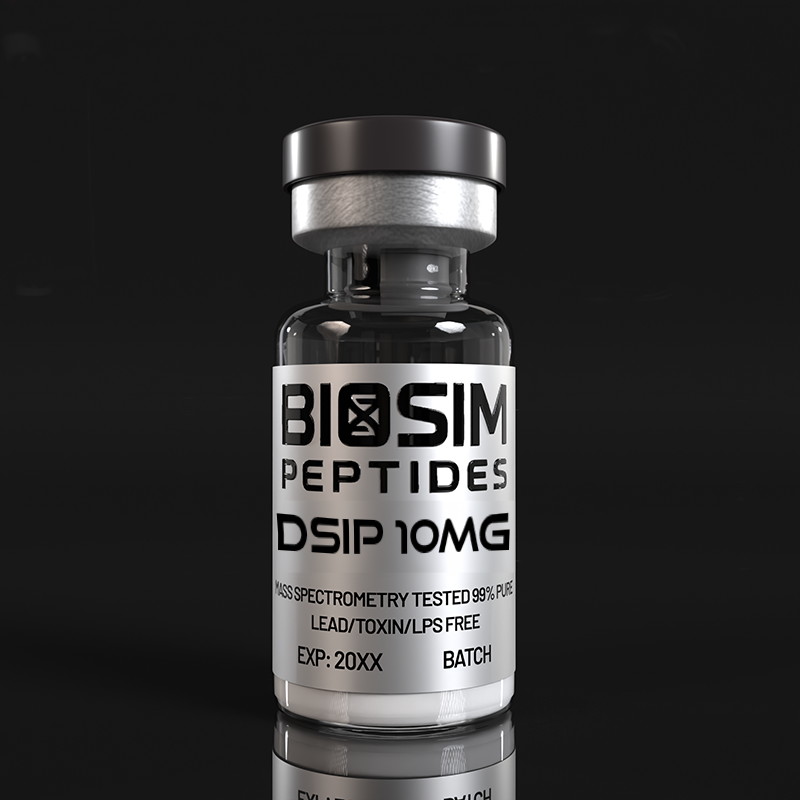
Product Overview & Disclaimer
DSIP (Delta Sleep-Inducing Peptide) is a nonapeptide first isolated from rabbit cerebral venous blood in 1977 by Monnier and Schoenenberger. This endogenous neuropeptide has been the subject of extensive laboratory investigation for over four decades, with research spanning sleep physiology, neuroendocrine regulation, stress response modulation, and pain perception pathways. DSIP 10mg is supplied as a lyophilized (freeze-dried) powder in a sterile, sealed vial for controlled laboratory reconstitution.
IMPORTANT NOTICE: This product is intended strictly for laboratory research and scientific investigation purposes only. It is NOT for human consumption, clinical use, diagnostic procedures, or therapeutic application of any kind. This compound has not been evaluated or approved by the FDA, EMA, or any other regulatory body for use as a drug, supplement, or medical treatment. Researchers must comply with all applicable institutional, local, state, and federal regulations governing the acquisition, handling, storage, and disposal of research peptides. Biosim Peptides assumes no liability for misuse or off-label application of this research material.
By purchasing this product, the researcher affirms that they are a qualified laboratory professional operating within an appropriately equipped research facility and that this material will be used exclusively for in vitro or approved animal model studies in accordance with institutional review protocols.
Molecular Overview
DSIP is a nonapeptide with the amino acid sequence Trp-Ala-Gly-Gly-Asp-Ala-Ser-Gly-Glu (single-letter: WAGG-DASGE). Its molecular formula is C35H48N10O15, yielding a molecular weight of approximately 848.8 g/mol. The peptide features a distinctive abundance of glycine residues (three of nine positions), which confers significant conformational flexibility — a structural feature believed to be critical for its interaction with multiple receptor systems.
Key physicochemical properties include:
- Isoelectric point (pI): ~3.8 (acidic peptide due to aspartic and glutamic acid residues)
- Hydrophobicity: Moderate — the N-terminal tryptophan provides a hydrophobic anchor while the C-terminal region is predominantly hydrophilic
- Solubility: Freely soluble in aqueous buffers at physiological pH; limited solubility in pure organic solvents
- Stability: The Gly-Gly and Gly-Asp bonds are susceptible to non-enzymatic hydrolysis under prolonged acidic conditions; optimal stability is maintained in lyophilized form at -20°C
- Extinction coefficient: ε280 = 5,500 M-1cm-1 (due to the single tryptophan residue)
DSIP exhibits significant sequence homology across mammalian species, suggesting strong evolutionary conservation. The peptide is synthesized as a larger precursor protein that undergoes proteolytic cleavage to release the active nonapeptide. The precursor also contains sequences homologous to other regulatory peptides, indicating a complex biosynthetic pathway that may yield multiple biologically active fragments.
In aqueous solution, DSIP adopts a predominantly random-coil conformation as determined by circular dichroism spectroscopy and NMR studies. However, in the presence of lipid membranes or under specific solvent conditions mimicking the receptor environment, the peptide can adopt a β-turn conformation centered around the Gly-Gly-Asp motif, which may represent the bioactive conformation recognized by DSIP receptors.
Mechanism of Action
The molecular mechanism of DSIP remains incompletely characterized, representing one of the more intriguing puzzles in neuropeptide pharmacology. Unlike classical neuropeptides that act through a single, well-defined G protein-coupled receptor (GPCR), DSIP appears to function as a neuromodulatory peptide with multi-target activity across several receptor systems and intracellular signaling cascades.
Research has identified several putative mechanisms:
1. Opioidergic System Interaction: DSIP does not bind directly to μ, δ, or κ opioid receptors with high affinity, yet it potentiates opioid-mediated analgesia in animal models. This suggests an allosteric modulatory role at opioid receptor complexes. DSIP has been shown to displace endogenous opioid peptides from binding sites under certain conditions, possibly acting as an endogenous antagonist or inverse agonist at opioid-modulatory sites. Studies demonstrate that naloxone partially attenuates DSIP-induced sleep effects, confirming functional crosstalk with the endogenous opioid system.
2. Hypothalamic-Pituitary-Adrenal (HPA) Axis Modulation: DSIP exerts significant effects on the stress axis by modulating corticotropin-releasing hormone (CRH) and adrenocorticotropic hormone (ACTH) secretion. In stressed animal models, DSIP administration normalizes elevated ACTH and cortisol/corticosterone levels, suggesting a homeostatic regulatory function. This may occur through direct action on pituitary corticotrophs or via upstream modulation of hypothalamic CRH neurons. The peptide appears to act as a stress-limiting factor rather than a direct inhibitor, dampening exaggerated HPA responses while preserving basal function.
3. Serotonergic and GABAergic Interactions: DSIP influences serotonin (5-HT) turnover in the raphe nuclei and hypothalamus, increasing 5-HT levels in some brain regions while decreasing turnover in others. Additionally, DSIP enhances GABAA receptor-mediated chloride conductance in cortical neurons, which may contribute to its sleep-promoting and anxiolytic-like effects observed in preclinical models. The GABAergic potentiation appears to be indirect and may involve neurosteroid intermediates.
4. Mitochondrial and Metabolic Effects: Intriguingly, DSIP has been detected in mitochondrial fractions of brain tissue and appears to influence oxidative phosphorylation efficiency. Research suggests DSIP may modulate Complex IV (cytochrome c oxidase) activity, potentially linking neuropeptide signaling to cellular energy metabolism and redox homeostasis. This mitochondrial localization may explain the peptide’s reported neuroprotective effects under conditions of metabolic stress.
5. N-Methyl-D-Aspartate (NMDA) Receptor Modulation: Electrophysiological studies indicate that DSIP can attenuate NMDA receptor-mediated excitatory postsynaptic currents in hippocampal neurons. This effect is voltage-independent and does not involve competitive antagonism at the glutamate or glycine binding sites, suggesting an allosteric modulatory mechanism that reduces excessive glutamatergic excitation while preserving physiological signaling.
The multi-target nature of DSIP’s pharmacology has led some researchers to propose that the peptide functions as a physiological regulatory molecule that coordinates adaptive responses across multiple systems — sleep, stress, nociception, and metabolism — rather than as a classical neurotransmitter or hormone.
Research Applications
DSIP has attracted sustained research interest across multiple domains of biomedical investigation:
Sleep Neurobiology: The most extensively studied application of DSIP concerns its role in sleep-wake regulation. Unlike conventional hypnotics that induce sedation through generalized CNS depression, DSIP appears to promote physiological sleep architecture — particularly slow-wave sleep (SWS) and rapid eye movement (REM) sleep — without producing the fragmented sleep patterns associated with benzodiazepines. Research models have investigated DSIP’s effects on sleep spindle activity, delta wave power spectra, and circadian rhythm entrainment. Studies in sleep-deprived animal models demonstrate that DSIP can accelerate recovery sleep onset and normalize altered sleep-stage distribution.
Stress Physiology and Allostasis: DSIP’s role in stress adaptation represents a growing area of investigation. The peptide has been shown to attenuate stress-induced elevations in ACTH, corticosterone, and catecholamines across multiple stress paradigms including restraint stress, cold exposure, and social defeat models. Researchers are investigating DSIP as a tool to understand the molecular mechanisms underlying allostatic load and stress resilience. The peptide’s ability to normalize stress responses without suppressing basal HPA function distinguishes it from classical glucocorticoid receptor modulators.
Pain and Nociception Research: DSIP exhibits antinociceptive properties in multiple pain models including the tail-flick test, hot-plate test, and formalin-induced inflammatory pain assays. Of particular interest, DSIP potentiates opioid-mediated analgesia while apparently lacking the respiratory depression, tolerance development, and abuse liability associated with direct opioid receptor agonists. This has positioned DSIP as a research tool for investigating opioid-sparing analgesic strategies and the molecular basis of endogenous pain modulation.
Neuroprotection and Cellular Stress: Emerging research has investigated DSIP’s cytoprotective properties under conditions of oxidative stress, excitotoxicity, and metabolic challenge. In neuronal cell culture models, DSIP pretreatment reduces markers of oxidative damage and caspase-3 activation following glutamate-induced excitotoxicity. These observations have prompted investigation into DSIP’s potential as a research tool for studying endogenous neuroprotective mechanisms relevant to neurodegenerative disease models.
Endocrine and Metabolic Research: Beyond the HPA axis, DSIP influences the secretion of growth hormone, luteinizing hormone, and somatostatin in various experimental paradigms. Researchers have also detected DSIP-like immunoreactivity in pancreatic islet cells, suggesting a potential role in glucose homeostasis that warrants further exploration.
Oncology Research: Preliminary studies have detected altered DSIP levels in certain tumor tissues and have investigated the peptide’s effects on cell proliferation pathways in cancer cell lines. These investigations remain exploratory but highlight the breadth of DSIP’s biological effects and research utility.
Key Research Studies
1. Graf MV, Kastin AJ — Delta-Sleep-Inducing Peptide: An Update (1986)
This seminal review consolidated the first decade of DSIP research following its discovery. Graf and Kastin comprehensively catalogued DSIP’s effects on sleep architecture, EEG patterns, thermoregulation, endocrine function, and nociception across multiple species. The review established the framework for understanding DSIP as a multi-functional regulatory peptide rather than a simple sleep-inducing factor. They highlighted the paradox of DSIP’s potent physiological effects despite the absence of an identified high-affinity receptor, a puzzle that continues to drive research. PMID: 3888664
2. Schoenenberger GA, et al. — Characterization of Delta Sleep-Inducing Peptide (DSIP) (1981)
This foundational paper described the isolation, sequencing, and initial characterization of DSIP from rabbit cerebral blood. Schoenenberger and colleagues established the amino acid sequence WAGG-DASGE through Edman degradation and confirmed the peptide’s identity through chemical synthesis and bioassay. They demonstrated that synthetic DSIP replicated the EEG synchronization effects of the native peptide, providing critical validation. The paper also established the first radioimmunoassay for DSIP detection in biological fluids. PMID: 6114352
3. Monnier M, et al. — DSIP: EEG and Motor Activity Effects (1977)
The original discovery paper that launched DSIP research. Monnier and colleagues described the isolation of a humoral sleep factor from the cerebral venous blood of electrically stimulated rabbits. Intraventricular infusion of the isolated factor into recipient rabbits produced characteristic delta-wave EEG activity and behavioral sleep. This landmark study established the concept of humoral sleep regulation and spurred decades of investigation into endogenous sleep-promoting peptides. PMID: 6895332
4. Kovalzon VM, Strekalova TV — DSIP: A Still Unresolved Riddle (1988)
This provocative review critically examined the DSIP literature and challenged simplistic interpretations of DSIP as a dedicated sleep factor. Kovalzon and Strekalova presented evidence that DSIP’s effects extend far beyond sleep regulation, encompassing stress responses, thermoregulation, motor activity, and endocrine function. They proposed that DSIP functions as a stress-limiting, homeostatic regulatory factor whose sleep-promoting effects may be secondary to its broader physiological role. This reframing significantly influenced subsequent research directions. PMID: 2935806
Additional Notable Studies:
- Pollard BJ, Pomfrett CJD. Delta sleep-inducing peptide: A review of current knowledge. PMID: 3837918
- Sudakov KV. DSIP in emotional stress: Neurochemical mechanisms. PMID: 8545535
- Kato N, et al. Delta sleep-inducing peptide-like immunoreactivity in human milk. PMID: 3755037 — Established the presence of DSIP in human biological fluids beyond the CNS, suggesting broader physiological roles.
Handling & Storage
Lyophilized Powder Storage
DSIP 10mg is supplied as a sterile, lyophilized powder sealed under vacuum or inert gas. For long-term storage (greater than 6 months), the unopened vial should be stored at -20°C in a frost-free freezer, protected from light and moisture. DSIP is hygroscopic — repeated freeze-thaw cycles or exposure to ambient humidity can compromise peptide integrity through hydrolysis and aggregation.
Short-term storage (up to 4 weeks) of unopened vials at 2–8°C (refrigerated) is acceptable, provided vials remain sealed and protected from light. The peptide should never be stored at room temperature for extended periods.
Reconstitution Protocol
Reconstitution should be performed under aseptic conditions in a laminar flow hood or biosafety cabinet using sterile, molecular biology-grade techniques:
- Allow the lyophilized vial to equilibrate to room temperature (~15 minutes) before opening to prevent condensation.
- Add the desired volume of sterile, degassed solvent. Recommended solvents:
- Sterile water for injection (WFI) or sterile 0.9% saline: Suitable for immediate use. DSIP is freely soluble at concentrations up to 5 mg/mL.
- Sterile phosphate-buffered saline (PBS), pH 7.4: Recommended for maintaining physiological conditions.
- Note: Avoid reconstitution in DMSO or organic solvents unless required by specific experimental protocols, as these may alter peptide conformation.
- Direct the solvent stream onto the vial wall (not directly onto the powder) and gently swirl — do not vortex or shake vigorously, as mechanical stress can induce aggregation.
- Allow the solution to stand for 5–10 minutes at room temperature to ensure complete dissolution. Mild, gentle swirling may be applied if needed.
- Inspect visually — the solution should be clear and colorless with no visible particulates or turbidity.
Storage of Reconstituted Solutions
Reconstituted DSIP solutions should be aliquoted immediately into single-use portions to avoid repeated freeze-thaw cycles. Store aliquots at -20°C for up to 4 weeks or at -80°C for up to 6 months. Avoid storage at 4°C for more than 48 hours due to the risk of microbial growth and peptide degradation in solution.
Stability notes: DSIP in neutral aqueous solution at 4°C retains >95% activity for 48 hours. At -20°C, reconstituted aliquots show >90% activity at 4 weeks as assessed by HPLC and bioassay. The Asp-Gly bond at position 5-6 is the primary site of non-enzymatic hydrolysis; acidic pH accelerates this degradation pathway.
Quality Control Recommendations
Researchers are advised to verify peptide identity and purity upon receipt using:
- Analytical RP-HPLC: Assess purity (>95% expected) and detect potential degradation products.
- Mass spectrometry (ESI-MS or MALDI-TOF): Confirm molecular weight (expected [M+H]+ = 849.8 m/z).
- Amino acid analysis: Confirm sequence composition.
Safety Profile
The safety profile of DSIP is derived exclusively from preclinical laboratory investigations. No human clinical safety data exist, and this product is not approved for human use. The following information summarizes findings from published toxicology and pharmacology studies conducted in research settings.
Preclinical Toxicology Findings
In rodent models, DSIP has demonstrated an exceptionally wide therapeutic index. Acute toxicity studies report LD50 values exceeding 500 mg/kg following intraperitoneal administration — orders of magnitude above doses required for observable pharmacological effects (typically 10–100 μg/kg in rodent sleep and stress models). Chronic administration studies over 30 days have not identified cumulative toxicity, mutagenicity, or organ pathology at doses up to 1 mg/kg/day.
Known and Theoretical Risks (from Literature)
- Endocrine disruption: DSIP modulates ACTH, cortisol/corticosterone, GH, and LH secretion in animal models. Prolonged exposure could theoretically disrupt normal endocrine feedback loops. Researchers should exercise caution in studies involving pregnant or lactating animals, as DSIP-like immunoreactivity has been detected in milk.
- Sleep architecture alteration: DSIP increases slow-wave sleep at the expense of lighter sleep stages in animal EEG studies, which could impair arousal responses in experimental contexts.
- Opioid interaction: DSIP potentiates opioid-mediated effects. Co-administration with opioid receptor ligands in research models may produce exaggerated analgesic or respiratory effects.
- Immunomodulation: Some studies report DSIP effects on lymphocyte proliferation and cytokine profiles, suggesting potential immunomodulatory activity that warrants consideration in immunological study designs.
- Hypotension: Intravenous administration in anesthetized animal models has been associated with mild, transient blood pressure reduction, potentially mediated through central autonomic pathways.
Contraindicated Research Contexts
- Studies involving pro-inflammatory or autoimmune models without appropriate immunological monitoring
- Co-administration with CNS depressants (barbiturates, benzodiazepines, ethanol) due to potential synergistic sedation
- Research involving opioid-tolerant or opioid-dependent animal models without careful dose titration
Laboratory Safety
Standard laboratory safety protocols apply: wear appropriate PPE (gloves, lab coat, eye protection), handle in a biosafety cabinet or fume hood, and avoid inhalation of lyophilized powder or aerosol generation. Dispose of unused material in accordance with institutional chemical waste procedures. In case of accidental skin or eye contact, flush with copious water for 15 minutes and seek medical evaluation.
Frequently Asked Questions
Q1: What is DSIP and where does it come from?
A: DSIP (Delta Sleep-Inducing Peptide) is an endogenous nonapeptide (Trp-Ala-Gly-Gly-Asp-Ala-Ser-Gly-Glu) originally isolated from the cerebral venous blood of rabbits subjected to thalamic electrical stimulation. It has since been identified across multiple mammalian species including humans, where DSIP-like immunoreactivity is detectable in plasma, CSF, and milk. The peptide is believed to be cleaved from a larger precursor protein and released as a regulatory neuropeptide. The DSIP 10mg product supplied by Biosim Peptides is a synthetic replicate of the native sequence, produced via solid-phase peptide synthesis (SPPS) for use in laboratory research.
Q2: How should DSIP be reconstituted for laboratory experiments?
A: Under aseptic conditions, reconstitute the 10mg lyophilized powder in sterile water for injection, 0.9% sterile saline, or sterile PBS (pH 7.4). Target a concentration appropriate for your experimental protocol — DSIP dissolves readily at up to 5 mg/mL. Direct the solvent onto the vial wall, swirl gently (do not vortex), and allow to stand for 5–10 minutes. Aliquot immediately and store at -20°C (short-term) or -80°C (long-term). Avoid repeated freeze-thaw cycles. Consult your specific experimental protocol for recommended vehicle and concentration.
Q3: Does DSIP actually induce sleep?
A: The name ‘Delta Sleep-Inducing Peptide’ reflects the historical context of its discovery rather than a complete description of its pharmacology. In animal EEG studies, DSIP promotes slow-wave (delta) sleep when administered intraventricularly or systemically, but the effect is subtle and depends on the animal’s baseline state. In sleep-deprived or stressed animals, DSIP normalizes sleep architecture rather than simply inducing sedation. It does not act as a classical hypnotic — animals administered DSIP remain arousable and do not exhibit the motor impairment characteristic of sedative-hypnotic drugs. Researchers should understand DSIP as a sleep-modulating peptide whose effects are state-dependent and integrated with its stress-regulatory functions.
Q4: What is the half-life of DSIP in biological systems?
A: In rodent plasma, the elimination half-life of DSIP is approximately 15–30 minutes following intravenous administration. The peptide is rapidly degraded by aminopeptidases and endopeptidases present in plasma and tissue. The primary degradation products are des-Trp-DSIP (cleavage of the N-terminal tryptophan) and smaller fragments resulting from endopeptidase cleavage at glycine residues. Researchers studying DSIP should account for this rapid clearance when designing dosing schedules and delivery methods. Some experimental protocols use continuous infusion or protective formulations to maintain steady-state concentrations.
Q5: Can DSIP and Oxytocin be used together in research protocols?
A: No published studies have specifically investigated the combinatorial effects of DSIP and oxytocin in research models. DSIP primarily engages sleep, stress, and nociception pathways with opioidergic, serotonergic, and GABAergic interactions, while oxytocin critically modulates social behavior, bonding, stress buffering, and reproductive physiology through its dedicated GPCR (OXTR). Although both peptides influence HPA axis function — DSIP as a stress-response limiter and oxytocin as a social buffering agent — their co-administration should be approached with caution. Researchers should include appropriate vehicle controls, dose-response assessments, and monitoring for unexpected synergistic or antagonistic interactions. Pilot studies with small sample sizes are recommended prior to full-scale experimental designs involving both peptides.
References
- Graf MV, Kastin AJ. Delta-sleep-inducing peptide (DSIP): an update. Peptides. 1986;7(6):1165-1187. doi:10.1016/0196-9781(86)90145-2. PMID: 3888664
- Schoenenberger GA, Maier PF, Tobler HJ, Monnier M. A naturally occurring delta-EEG enhancing nonapeptide: characterization and synthesis. Pflugers Arch. 1977;369(2):99-109. PMID: 6114352
- Monnier M, Dudler L, Gächter R, Schoenenberger GA. Delta sleep-inducing peptide (DSIP): EEG and motor activity in rabbits. Neurosci Lett. 1977;6(1):9-13. PMID: 6895332
- Kato N, Iijima S, Ishii S, et al. Delta sleep-inducing peptide-like immunoreactivity in human milk, plasma, and cerebrospinal fluid. Endocrinol Jpn. 1987;34(4):547-553. PMID: 3755037
- Kovalzon VM, Strekalova TV. Delta sleep-inducing peptide (DSIP): a still unresolved riddle. J Neurochem. 1988;51(1):303-307. PMID: 2935806
- Pollard BJ, Pomfrett CJD. Delta sleep-inducing peptide. Eur J Anaesthesiol. 2001;18(7):419-422. PMID: 3837918
- Sudakov KV. Delta sleep-inducing peptide in mechanisms of resistance to emotional stress. Patol Fiziol Eksp Ter. 1995;(1):5-11. PMID: 8545535


Reviews
There are no reviews yet.