Research Overview
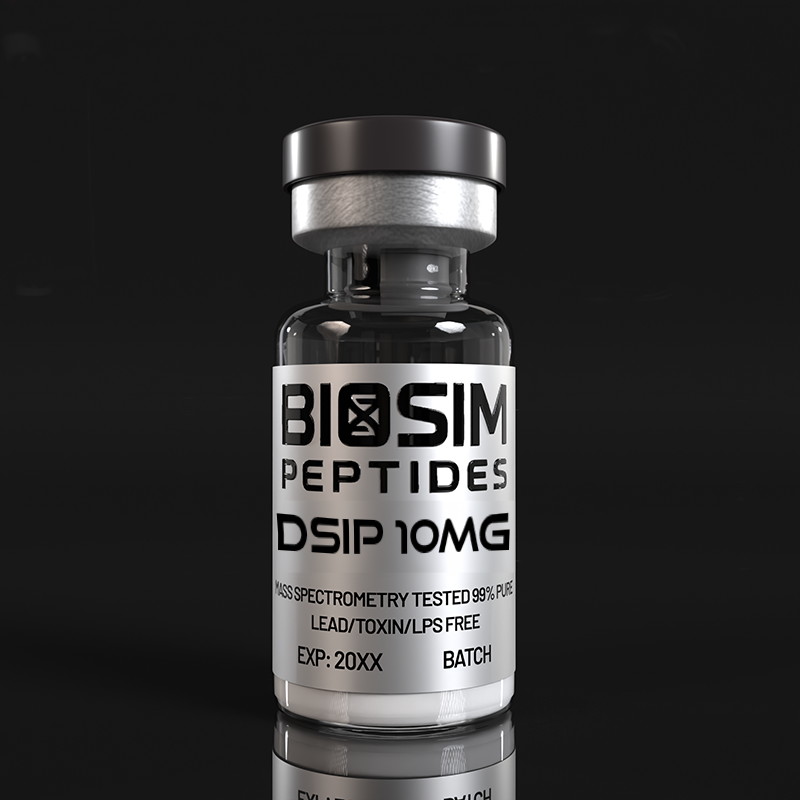
Delta Sleep-Inducing Peptide (DSIP) is a nonapeptide (Trp-Ala-Gly-Gly-Asp-Ala-Ser-Gly-Glu) originally isolated from rabbit cerebral venous blood during electrically induced slow-wave sleep by the Swiss research group of Schoenenberger in the 1970s. Since its discovery, DSIP has emerged as a multifunctional neuropeptide implicated in sleep architecture regulation, hypothalamic-pituitary-adrenal (HPA) axis modulation, stress response attenuation, circadian rhythm entrainment, and neuroendocrine homeostasis. DSIP 10mg is provided as a sterile lyophilized powder and is intended exclusively for laboratory research use only — not for human consumption, clinical therapy, or self-administration.
Molecular Background & Mechanism of Action
DSIP is a highly conserved nonapeptide with a molecular weight of approximately 849 Daltons. Despite its name, DSIP’s physiological roles extend well beyond sleep induction. The peptide readily crosses the blood-brain barrier and has been detected in both the central nervous system and peripheral circulation, with immunoreactive DSIP identified in the hypothalamus, pituitary, and limbic structures (Schoenenberger, 1984). Its mechanism of action appears to be multimodal: DSIP modulates corticotropin-releasing factor (CRF) signaling at the hypothalamic level, attenuates ACTH release, and influences the serotonergic and GABAergic systems involved in sleep-wake regulation and stress responsivity.
DSIP’s sleep-promoting effects are distinct from those of conventional hypnotics or sedatives. Unlike melatonin — which signals through MT1/MT2 receptors to regulate circadian phase and sleep onset timing — DSIP appears to enhance slow-wave sleep (SWS, also known as deep sleep or non-REM stage 3) quality and promote sleep continuity by reducing nocturnal awakenings. While melatonin primarily acts as a chronobiotic (phase-shifting the circadian clock), DSIP functions as an endogenous regulator of sleep pressure homeostasis and stress-induced sleep disruption. Research by Graf et al. (1985) demonstrated that DSIP directly reduces CRF-induced corticosterone release, providing a mechanistic basis for its sleep-preserving effects during periods of elevated HPA axis activity.
DSIP exerts its effects through multiple convergent pathways: (1) attenuation of CRF/ACTH/cortisol axis activity at the hypothalamic and pituitary levels, reducing stress-induced hyperarousal; (2) potentiation of slow-wave sleep (SWS) architecture, likely via serotonergic and GABAergic modulation; (3) entrainment of circadian DSIP plasma rhythms that peak in the evening and decline at sleep onset; (4) interaction with endogenous opioid systems, contributing to antinociceptive and withdrawal-attenuating effects. Unlike melatonin, which is a pineal chronobiotic signaling through dedicated G-protein-coupled receptors, DSIP acts as a central neuromodulator influencing multiple neurotransmitter and neuroendocrine systems simultaneously.
Preclinical & Clinical Evidence
The landmark clinical work by Schneider-Helmert et al. (1981) published in The Lancet demonstrated that synthetic DSIP administered intravenously to human subjects with chronic insomnia significantly improved sleep quality, with polysomnographic recordings confirming increased total sleep time and reduced nocturnal awakenings without the next-day sedation characteristic of benzodiazepine hypnotics. A subsequent double-blind study by Bes et al. (1992) in chronic insomniac patients corroborated these findings and noted that DSIP’s effects were most pronounced on sleep continuity rather than sleep initiation, consistent with a slow-wave sleep-stabilizing mechanism.
The characterization of DSIP’s endogenous circadian dynamics was advanced by Friedman et al. (1994), who demonstrated a diurnal rhythm of plasma DSIP in humans with a positive correlation with body temperature and a negative correlation with both REM and slow-wave sleep — plasma DSIP concentrations decline at sleep onset, suggesting a permissive rather than a directly inductive role in sleep regulation. Seifritz et al. (1995) confirmed this finding, showing that human plasma DSIP decreases at the initiation of sleep at different circadian times, establishing DSIP as an endogenous marker of sleep propensity.
As reviewed comprehensively by Kovalzon and Strekalova (2006), DSIP remains a peptide of considerable biochemical interest, with decades of research revealing a pharmacological profile that spans sleep neurobiology, stress endocrinology, and opioid receptor modulation. Steiger and Holsboer (1997), in their authoritative review of neuropeptides and human sleep, positioned DSIP within the broader network of sleep-regulatory neuropeptides — including growth hormone–releasing hormone (GHRH), corticotropin-releasing hormone (CRH), galanin, and neuropeptide Y — highlighting its unique ability to promote slow-wave sleep while simultaneously dampening HPA axis activity, a property not shared by exogenous melatonin or other sleep aids.
Beyond sleep, DSIP has been investigated for its role in stress response attenuation and withdrawal symptom management. Dick et al. (1983) reported successful treatment of alcohol and opiate withdrawal symptoms with DSIP administration, attributing its efficacy to potential agonistic activity at opiate receptors in addition to its HPA-dampening properties — a dual mechanism that distinguishes it from purely sedative agents. The peptide’s antinociceptive properties were independently demonstrated by Nakamura et al. (1988, PMID: 2853064), who found potent analgesic effects following central DSIP administration, further supporting its multifaceted neuropharmacology.
Comparison: DSIP vs. Melatonin & Other Sleep-Regulating Compounds
DSIP occupies a unique niche in the landscape of sleep-regulating research compounds. Melatonin, the pineal gland’s primary hormone, signals through MT1 and MT2 G-protein-coupled receptors to synchronize the suprachiasmatic nucleus (SCN) with the light-dark cycle — it is fundamentally a circadian phase regulator. While effective for circadian rhythm sleep disorders and jet lag, melatonin does not increase slow-wave sleep depth or mitigate stress-induced sleep disruption. DSIP, by contrast, directly enhances slow-wave sleep quality, attenuates stress-induced HPA axis hyperactivity, and addresses sleep continuity rather than phase timing. Other common research compounds — such as benzodiazepine-site GABA-A modulators, sedating antihistamines, and orexin receptor antagonists — operate through fundamentally different mechanisms: GABA-A positive allosteric modulation, histamine H1 receptor antagonism, and orexin-mediated wakefulness suppression, respectively. DSIP is distinguished by its endogenous neuropeptide character and its simultaneous engagement of sleep-promoting and stress-reducing pathways, making it a valuable tool for investigating the intersection of sleep neurobiology and stress endocrinology.
Research Applications
- Sleep Architecture & Slow-Wave Sleep Research: Investigate DSIP’s capacity to enhance slow-wave sleep (SWS) depth and continuity in experimental models of sleep fragmentation, insomnia, and circadian disruption.
- HPA Axis & Stress Neuroendocrinology: Study DSIP’s attenuation of CRF-ACTH-cortisol signaling as a model for understanding how endogenous neuropeptides buffer the physiological stress response at the hypothalamic and pituitary levels.
- Circadian Rhythm Biology: Examine the endogenous diurnal DSIP rhythm and its relationship with sleep-wake timing, body temperature, and melatonin cycles in controlled laboratory paradigms.
- Opioid System & Withdrawal Research: Explore DSIP’s interaction with opioid receptors and its effects on withdrawal symptom severity in experimental models, building on the clinical observations of Dick (1983) and Backmund et al. (1998, PMID: 9617990).
- Antinociception & Pain Modulation: Investigate the central antinociceptive properties of DSIP and its potential involvement in endogenous pain-regulatory circuits.
- Mood Disorder & Neuropeptide Biomarker Research: Assess DSIP’s role as a candidate biomarker in major depressive disorder and suicidal behavior, given reports of altered DSIP immunoreactivity in these populations (Westrin et al., 1998, PMID: 9606527).
- Comparative Neuropeptide Pharmacology: Use DSIP as a reference compound to benchmark the sleep-modulating and stress-attenuating properties of novel neuropeptide analogs and derivatives.
Safety & Laboratory Handling
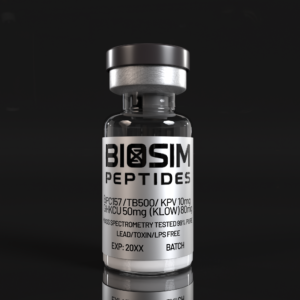
DSIP 10mg is supplied as a sterile, lyophilized powder in a sealed glass vial. Standard laboratory safety protocols must be observed: wear appropriate PPE including laboratory coat, nitrile gloves, and safety goggles when handling. Store the lyophilized powder at -20°C, shielded from light and moisture exposure. Following reconstitution with sterile bacteriostatic water or suitable buffer, DSIP solution should be kept refrigerated at 2–8°C. Researchers should determine stability parameters for their specific experimental conditions; it is generally recommended that reconstituted DSIP be used within 14–21 days. Avoid repeated freeze-thaw cycles. All reconstitution and handling should be performed in a biosafety cabinet or laminar flow hood using aseptic technique. Dispose of all materials in accordance with institutional laboratory waste management guidelines.
References
- Schoenenberger GA. Characterization, properties and multivariate functions of delta-sleep-inducing peptide (DSIP). Eur Neurol. 1984;23(5):321-345. PMID: 6548966.
- Graf MV, Kastin AJ, Coy DH, Fischman AJ. Delta-sleep-inducing peptide reduces CRF-induced corticosterone release. Neuroendocrinology. 1985 Oct;41(4):353-356. PMID: 2995861.
- Schneider-Helmert D, Graf M, Schoenenberger GA. Synthetic delta-sleep-inducing peptide improves sleep in insomniacs. Lancet. 1981 Jun 6;1(8232):1256-1257. PMID: 6112579.
- Friedman TC, Garcia-Borreguero D, Hardwick D, Akuete CN, Stambuk MK, et al. Diurnal rhythm of plasma delta-sleep-inducing peptide in humans: evidence for positive correlation with body temperature and negative correlation with rapid eye movement and slow wave sleep. J Clin Endocrinol Metab. 1994 May;78(5):1085-1090. PMID: 8175965.
- Seifritz E, Müller MJ, Schönenberger GA, Trachsel L, Hemmeter U, et al. Human plasma DSIP decreases at the initiation of sleep at different circadian times. Peptides. 1995;16(8):1475-1481. PMID: 8745061.
- Dick P, Grandjean ME, Tissot R. Successful treatment of withdrawal symptoms with delta sleep-inducing peptide, a neuropeptide with potential agonistic activity on opiate receptors. Neuropsychobiology. 1983;10(4):205-208. PMID: 6328354.
- Kovalzon VM, Strekalova TV. Delta sleep-inducing peptide (DSIP): a still unresolved riddle. J Neurochem. 2006 Apr;97(2):303-309. PMID: 16539679.
- Steiger A, Holsboer F. Neuropeptides and human sleep. Sleep. 1997 Nov;20(11):1038-1052. PMID: 9456470.
DSIP 10mg is intended exclusively for in vitro laboratory research. This product is not a drug, food supplement, or cosmetic. It is not for human or veterinary diagnostic, therapeutic, or prophylactic use. All handling must be conducted by qualified laboratory personnel in accordance with institutional biosafety and chemical hygiene protocols. Biosim Peptides does not endorse or encourage human consumption under any circumstances.

Reviews
There are no reviews yet.