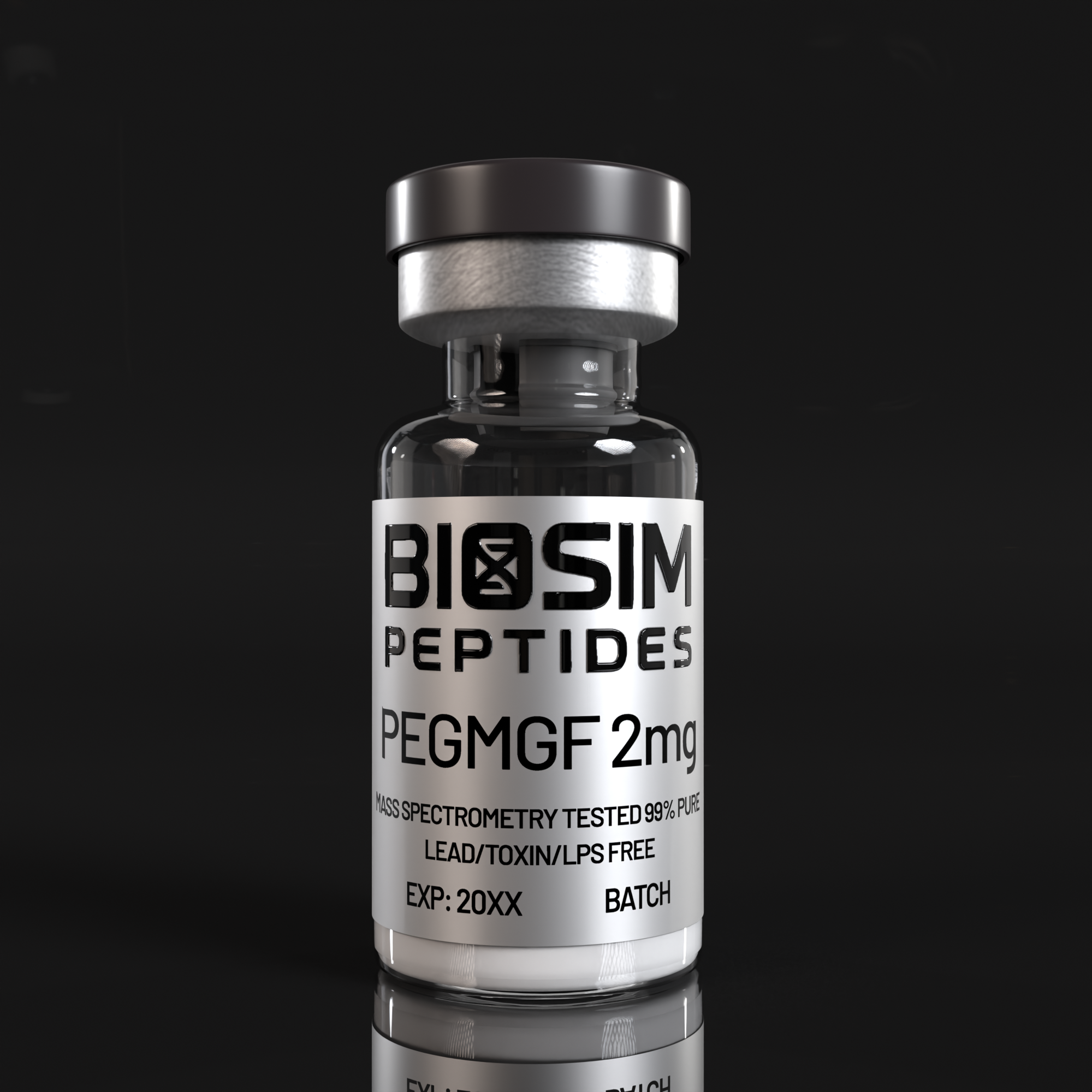
PEGMGF (2 mg)
PEGMGF is a synthetic peptide compound under investigation for potential applications in basic biological research. This product is designed for use in academic and industrial research settings only, offering a controlled form of a peptide sequence that may be relevant for studying signaling pathways, protein interactions, or molecular biology experiments. Due to its specific structural characteristics, PEGMGF serves as a research tool to facilitate targeted biochemical investigations.
Research Context
Peptides like PEGMGF are increasingly utilized in laboratory research to probe cellular mechanisms, receptor-ligand interactions, and protein folding. Their use often involves applications such as biochemical assays, molecular cloning studies, or functional genomic analyses. In this context, PEGMGF may be employed as a probe to investigate its potential biological effects in controlled laboratory conditions.
Research Overview
PEGMGF, which contains a polyethylene glycol (PEG) modification, may be of interest to researchers studying modified peptides in biochemical or biophysical experiments. The PEGylation process often enhances solubility, stability, or targeting capabilities, making such compounds valuable in systems where native peptides may be limited by bioavailability or degradation. While its specific functional properties are yet to be fully elucidated, PEGMGF is presented here for use in experimental settings where precise biochemical characterization is required.
Key Research Focus Areas
- Protein Stability and Solubility: PEGMGF may be utilized to evaluate how PEG modifications affect peptide conformation, stability, and solubility in various biochemical environments.
- Receptor-Ligand Interactions: Investigators may explore PEGMGF’s potential as a probe to study its binding dynamics with target proteins or receptors under controlled experimental conditions.
- Biochemical Assays: The peptide may serve as a substrate or inhibitor in enzymatic reactions, helping to characterize its biochemical behavior in vitro.
- Cellular Uptake and Distribution: Researchers could investigate how PEG modifications influence PEGMGF’s cellular localization, uptake efficiency, or intracellular trafficking in model systems.
- Structural Biophysics: Advanced structural analysis (e.g., NMR, crystallography) may be employed to determine PEGMGF’s conformation, flexibility, or binding interactions with other molecules.
Please ensure compliance with all applicable local, national, and international laws and regulations regarding the handling and use of research chemicals. This product is intended solely for academic and research purposes and should only be used in accordance with approved experimental protocols.
Important Compliance Notice
This product is not intended for human or animal consumption. It is strictly for research use only and should be handled with the utmost care. Always follow institutional guidelines for the safe storage, preparation, and disposal of research chemicals. Failure to adhere to these restrictions may result in legal or ethical consequences.
For research use only. Not for human or animal consumption.

Reviews
There are no reviews yet.