Introduction
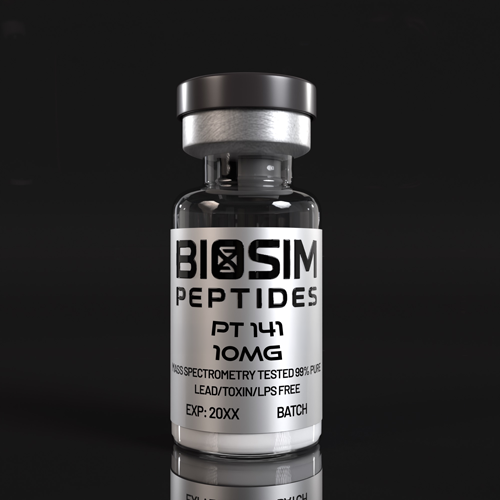
PT-141, also known by its international nonproprietary name bremelanotide, is a synthetic cyclic heptapeptide lactam analog of alpha-melanocyte-stimulating hormone (alpha-MSH). Unlike its parent compound Melanotan 2, PT-141 has been pharmacologically optimized for selective activation of the melanocortin-4 receptor (MC4R) within the central nervous system while exhibiting reduced activity at peripheral melanocortin-1 receptors (MC1R) responsible for pigmentation. This receptor selectivity profile was engineered to maximize effects on MC4R-mediated pathways — including sexual arousal, desire, and motivated behavior — while minimizing MC1R-mediated melanogenesis. PT-141 received FDA approval in 2019 for the treatment of acquired, generalized hypoactive sexual desire disorder (HSDD) in premenopausal women, representing the first centrally acting melanocortin agonist to reach clinical approval. For laboratory researchers, PT-141 provides a well-characterized pharmacological tool for investigating MC4R signaling in sexual function, reward circuitry, and motivated behavior paradigms.
Molecular Characteristics & Mechanism of Action
PT-141 is a cyclic heptapeptide with the sequence Ac-Nle-cyclo[Asp-His-D-Phe-Arg-Trp-Lys]-OH, differing from Melanotan 2 by a C-terminal free acid rather than an amide. This structural modification, combined with additional pharmacological optimization, shifts the compound’s receptor activation profile toward preferential MC4R agonism. MC4R is densely expressed in hypothalamic nuclei — including the paraventricular nucleus, medial preoptic area, and ventromedial hypothalamus — as well as in limbic structures such as the nucleus accumbens and amygdala. Activation of MC4R in these brain regions modulates dopaminergic and oxytocinergic neurotransmission, promoting sexual motivation, arousal, and the appetitive phases of sexual response through mechanisms distinct from those of vasoactive agents that target peripheral vascular function.
The neurobiological basis of bremelanotide’s effects has been the subject of extensive investigation. Preclinical studies have demonstrated that MC4R agonism enhances solicitative behaviors and sexual receptivity in female rodent models through activation of downstream oxytocin neurons in the paraventricular nucleus. Unlike phosphodiesterase type 5 inhibitors (PDE5i) such as sildenafil, which act peripherally to facilitate vasodilation, PT-141 operates centrally at the level of desire and arousal circuitry, making it mechanistically complementary to — rather than competitive with — peripheral vasoactive agents. Reviews of the neurobiology of bremelanotide have consolidated evidence supporting a dual mechanism involving both dopaminergic reward pathway activation and oxytocinergic facilitation of sexual receptivity (PMID: 33455598).
Research Applications & Key Findings
Early clinical investigations established PT-141’s capacity to modulate subjective sexual response. A seminal study in premenopausal women with sexual arousal disorder demonstrated that bremelanotide significantly increased self-reported sexual desire and genital arousal compared to placebo, providing the first clinical evidence that central melanocortin agonism could enhance female sexual function (PMID: 16839319). Two pivotal randomized Phase 3 clinical trials (RECONNECT) subsequently confirmed the efficacy and safety of subcutaneous bremelanotide for HSDD, with statistically significant improvements in sexual desire and distress scores over 24 weeks of as-needed dosing (PMID: 31599840). Long-term open-label extension data covering up to 52 weeks of treatment demonstrated sustained efficacy and a consistent safety profile (PMID: 31599847).
Preclinical investigations in female Syrian hamsters have further characterized bremelanotide’s effects on sexual motivation, providing translational evidence that MC4R agonism enhances the appetitive (desire) phase of sexual behavior independently of consummatory (physical) effects (PMID: 39793696). The broader understanding of HSDD has been contextualized through comprehensive reviews covering etiology, diagnosis, and treatment options, with bremelanotide occupying a distinct therapeutic niche as the only centrally acting MC4R agonist approved for this indication (PMID: 38161863). For researchers investigating the neurochemical substrates of sexual motivation, MC4R pharmacology, or the translational pipeline from peptide discovery to clinical approval, PT-141 represents a landmark compound with extensive preclinical and clinical characterization.
Comparative Context
PT-141 occupies a unique position within both the melanocortin peptide family and the broader landscape of sexual medicine pharmacology. Within the melanocortin family, PT-141 is distinguished from Melanotan 2 by its attenuated MC1R activity (reduced pigmentation effects) and from afamelanotide by its central MC4R activity (CNS-penetrant). Compared to PDE5 inhibitors, PT-141 targets desire and arousal rather than vasodilation, making it mechanistically orthogonal and, in principle, combinable with peripheral vasoactive agents. Relative to flibanserin, a 5-HT1A agonist/5-HT2A antagonist also approved for HSDD, PT-141 acts through a completely distinct receptor system and is administered on an as-needed basis rather than daily. The compound’s evolutionary path — from alpha-MSH analog to dual MC1R/MC4R agonist (Melanotan 2) to MC4R-preferring agonist (PT-141) — provides an instructive case study in peptide engineering and receptor selectivity optimization that is relevant across multiple research disciplines.
Laboratory Handling & Storage
PT-141 is supplied as a sterile, lyophilized powder in a sealed vial. For research applications, the peptide should be reconstituted in sterile bacteriostatic water or an appropriate buffer system according to the experimental protocol. The lyophilized powder is stable at -20°C or below when protected from moisture and light. Following reconstitution, working solutions should be aliquoted into single-use volumes and stored at -20°C to avoid repeated freeze-thaw cycles, which may promote aggregation or hydrolysis. Each batch is accompanied by a certificate of analysis specifying HPLC purity (typically ≥98%), molecular weight confirmation by mass spectrometry, and peptide content. Standard laboratory safety protocols for handling research peptides should be observed. This product is exclusively intended for laboratory research and analytical applications.
References
- 2006. “An effect on the subjective sexual response in premenopausal women with sexual arousal disorder by bremelanotide (PT-141), a melanocortin receptor agonist.” J Sex Med. PMID: 16839319
- 2025. “Female Syrian hamster analyses of bremelanotide, a US FDA approved drug for the treatment of female hypoactive sexual desire disorder.” Neuropharmacology. PMID: 39793696
- 2023. “Understanding Hypoactive Sexual Desire Disorder (HSDD) in Women: Etiology, Diagnosis, and Treatment.” Cureus. PMID: 38161863
- 2022. “The neurobiology of bremelanotide for the treatment of hypoactive sexual desire disorder in premenopausal women.” CNS Spectr. PMID: 33455598
- 2019. “Bremelanotide for the Treatment of Hypoactive Sexual Desire Disorder: Two Randomized Phase 3 Trials.” Obstet Gynecol. PMID: 31599840
- 2020. “Bremelanotide: New Drug Approved for Treating Hypoactive Sexual Desire Disorder.” Ann Pharmacother. PMID: 31893927

Reviews
There are no reviews yet.