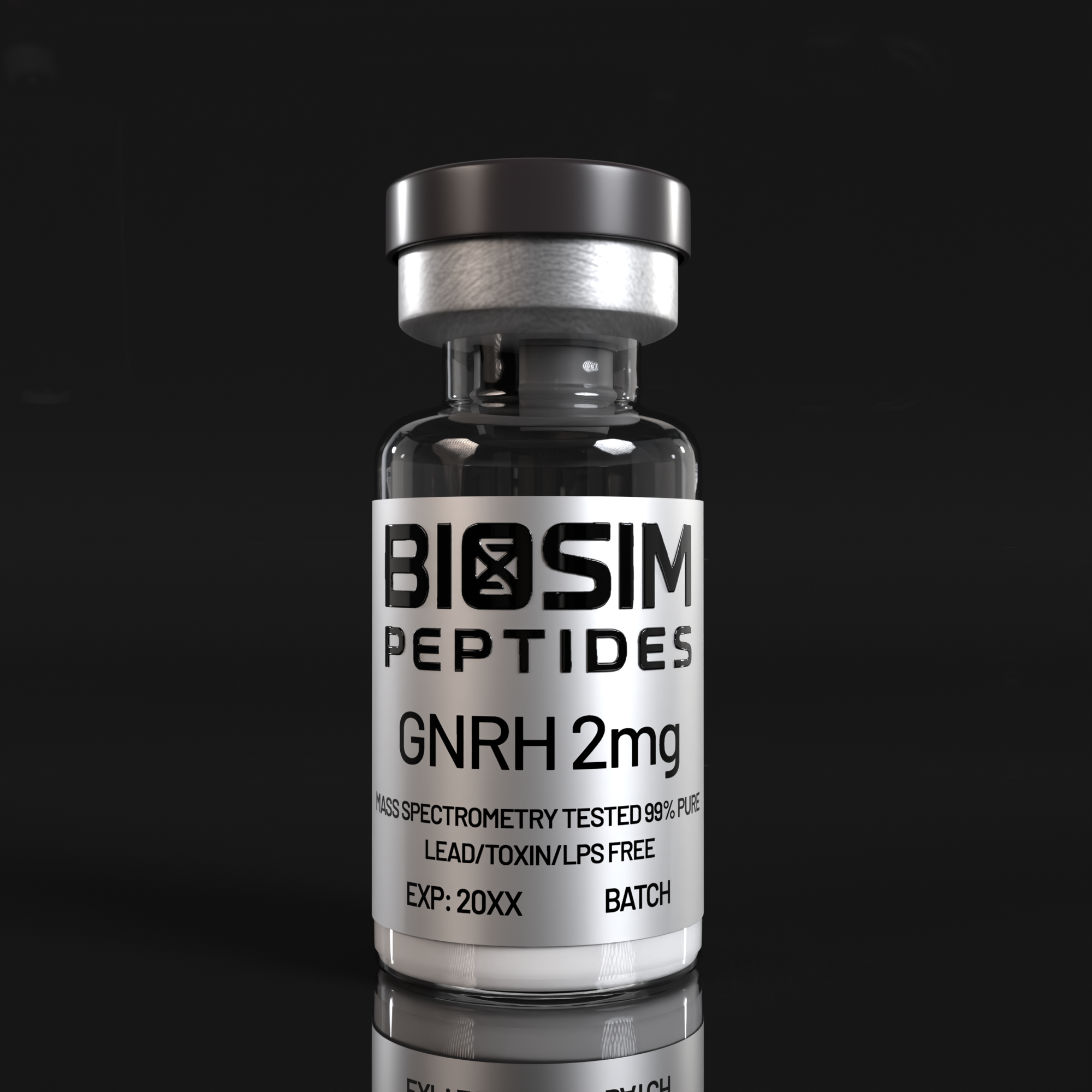
GnRH 2mg

Categories:

Buy GnRH 2MG — Gonadotropin-Releasing Hormone for reproductive endocrinology research. Premium research grade. BioSim Peptides.

$50.00

Guaranteed Safe Checkout

⚠️ RESEARCH USE ONLY

This product is for R&D purposes only and is not approved for human or veterinary use.

Introduction & Research Disclaimer

Gonadotropin-Releasing Hormone (GnRH) — catalogued as PID 416 at Biosim Peptides — is a hypothalamic decapeptide supplied as a 2mg lyophilized powder for strictly controlled laboratory research applications. This product is not for human use, not for veterinary use, and not for diagnostic or therapeutic purposes. Biosim Peptides provides GnRH exclusively to qualified researchers affiliated with accredited institutions, contract research organizations, and academic laboratories for in vitro and in vivo experimental studies conducted in compliance with all applicable institutional, local, and national regulations governing research chemicals.

GnRH (pGlu-His-Trp-Ser-Tyr-Gly-Leu-Arg-Pro-Gly-NH2), also known as luteinizing hormone-releasing hormone (LHRH), is the master regulator of the hypothalamic-pituitary-gonadal (HPG) axis. First isolated from porcine hypothalamic tissue by Andrew Schally and Roger Guillemin’s independent groups in 1971—a discovery that earned the 1977 Nobel Prize in Physiology or Medicine—GnRH remains one of the most extensively studied neuropeptides in endocrinology. The decapeptide is synthesized in a discrete population of approximately 1,000–3,000 neurons scattered across the preoptic area and mediobasal hypothalamus, from which it is secreted in a pulsatile fashion into the hypophyseal portal circulation to govern the synthesis and release of the gonadotropins luteinizing hormone (LH) and follicle-stimulating hormone (FSH) from anterior pituitary gonadotrophs.

All content on this page is provided for educational and informational purposes within a research-use-only framework. Researchers should independently verify all PMID references via PubMed and conduct their own comprehensive literature review prior to designing experimental protocols involving this product.

Molecular Overview

GnRH is a ten-amino-acid peptide with a pyroglutamic acid N-terminus and a glycine amide C-terminus—both post-translational modifications that confer resistance to aminopeptidase and carboxypeptidase degradation, respectively. The primary sequence is pGlu-His-Trp-Ser-Tyr-Gly-Leu-Arg-Pro-Gly-NH2 (molecular weight: 1182.3 Da; molecular formula: C55H75N17O13). The peptide adopts a characteristic β-turn conformation in solution, with the bend centered around residues Gly6-Leu7, which is critical for high-affinity binding to the GnRH receptor (GnRHR), a member of the rhodopsin-like G protein-coupled receptor (GPCR) superfamily.

The GnRHR is notable among GPCRs for lacking a canonical C-terminal cytoplasmic tail—a structural feature that results in slow internalization kinetics and the absence of rapid desensitization. This property has significant implications for both physiological pulse decoding and pharmacological manipulation with superagonist analogs. The human GnRHR gene (GNRHR) is located on chromosome 4q13.2 and spans approximately 18.9 kb with three exons. Over 30 loss-of-function mutations in GNRHR have been identified in idiopathic hypogonadotropic hypogonadism (IHH), underscoring the receptor’s indispensable role in reproductive function.

Across vertebrate evolution, GnRH has diversified into multiple isoforms (GnRH1, GnRH2, and GnRH3 in many non-mammalian species), with mammalian GnRH1 being the canonical reproductive regulator. The peptide’s biosynthesis involves ribosomal translation of the 92-amino-acid prepro-GnRH precursor, which includes a 23-residue signal peptide, the GnRH decapeptide, a conserved Gly-Lys-Arg cleavage/amidation signal, and a 56-amino-acid GnRH-associated peptide (GAP) with prolactin-inhibiting activity.

Mechanism of Action

GnRH exerts its biological effects through binding to and activating the GnRH type I receptor (GnRHR) on the surface of anterior pituitary gonadotroph cells. Upon ligand binding, the receptor couples primarily to the Gαq/11 heterotrimeric G protein, which activates phospholipase Cβ (PLCβ). PLCβ hydrolyzes phosphatidylinositol 4,5-bisphosphate (PIP2) into the second messengers inositol 1,4,5-trisphosphate (IP3) and diacylglycerol (DAG). IP3 triggers the release of Ca2+ from endoplasmic reticulum stores, producing the characteristic oscillatory Ca2+ signal that drives the exocytosis of LH- and FSH-containing secretory vesicles. DAG, in concert with elevated intracellular Ca2+, activates protein kinase C (PKC) isoforms that phosphorylate downstream targets including the mitogen-activated protein kinase (MAPK) cascade (ERK1/2).

The pulsatile nature of GnRH secretion is the critical encoding mechanism by which the hypothalamus differentially regulates LH and FSH. High-frequency pulses (approximately one pulse per 60–90 minutes in humans) favor LHβ subunit transcription and LH secretion, while lower-frequency pulses favor FSHβ transcription. This frequency-dependent differential gene expression involves the modulation of transcription factors including the activator protein-1 (AP-1) complex, steroidogenic factor-1 (SF-1), and the early growth response protein 1 (EGR1). Sustained, non-pulsatile GnRH exposure leads to receptor downregulation and desensitization—a phenomenon exploited therapeutically by long-acting GnRH agonists in conditions such as hormone-sensitive prostate cancer and endometriosis (PMID: 30058639).

Extrapituitary GnRH receptors have been identified in reproductive tissues including the ovary, endometrium, placenta, and prostate, as well as in certain cancer cell lines. While the physiological significance of these peripheral receptors remains incompletely characterized, they represent active areas of investigation in reproductive biology and oncology research.

Research Applications

GnRH (PID 416) is employed across a diverse range of investigative domains within reproductive neuroendocrinology and beyond:

1. Hypothalamic-Pituitary-Gonadal Axis Modeling. Researchers use GnRH in primary pituitary cell cultures, immortalized gonadotroph cell lines (e.g., LβT2, αT3-1), and hypothalamic explant preparations to study the molecular mechanisms governing gonadotropin synthesis, secretion, and glycosylation patterns. Pulse-chase experimental paradigms allow dissection of the signaling kinetics underlying frequency-decoded LH versus FSH release.

2. GnRH Neuron Biology. The study of GnRH neuronal migration during embryogenesis—a process disrupted in Kallmann syndrome—remains an active field. GnRH peptide is used as a reference standard in immunohistochemical mapping studies, ELISA development, and as a positive control in experiments examining the neuroendocrine regulation of fertility (PMID: 3548794).

3. Kisspeptin-GnRH Interaction Studies. The discovery that kisspeptin (metastin), acting through the GPR54 receptor (KISS1R), is essential for GnRH secretion has opened a major avenue for research on the upstream regulation of the reproductive axis. GnRH peptide is a key reagent in co-culture and conditioned media experiments designed to dissect the kisspeptin-to-GnRH signaling relay (PMID: 30272047).

4. Gonadotrope Desensitization Mechanisms. Investigators studying GPCR trafficking, β-arrestin recruitment, and receptor internalization kinetics utilize GnRH to probe the unique desensitization-resistant properties of the GnRHR, which lacks the C-terminal tail typically required for rapid β-arrestin-mediated desensitization (PMID: 26437689).

5. Comparative Endocrinology. Cross-species studies examining GnRH isoform evolution, receptor-ligand co-evolution, and structure-activity relationships employ GnRH as the prototypical agonist for pharmacological characterization of cloned non-mammalian GnRH receptors.

6. Oncology Research. GnRH receptor expression has been documented in cancers of the breast, prostate, ovary, and endometrium. Researchers investigate GnRH-mediated anti-proliferative signaling and the potential of GnRH peptide conjugates for targeted delivery of cytotoxic payloads to receptor-positive malignancies.

Key Studies in the Scientific Literature

The following PubMed-indexed publications represent foundational and contemporary contributions to GnRH research:

  • PMID 3548794 — Schwanzel-Fukuda M, Pfaff DW. Nature. 1989;338:161–164. This landmark study traced the embryonic migration of GnRH neurons from the olfactory placode to the hypothalamus, providing the mechanistic basis for the anosmia-hypogonadism linkage observed in Kallmann syndrome.
  • PMID 28486603 — Stamatiades GA, Kaiser UB. Gonadotropin regulation by pulsatile GnRH: signaling and gene expression. Mol Cell Endocrinol. 2018;463:131–141. A comprehensive review of the intracellular signaling cascades and transcriptional programs that decode GnRH pulse frequency into differential gonadotropin subunit expression.
  • PMID 30058639 — Kumar P, Sharma A. Gonadotropin-releasing hormone analogs: understanding the mechanisms of action for clinical and research applications. J Hum Reprod Sci. 2018;11(3):191–201. Detailed analysis of GnRH agonist and antagonist pharmacology, receptor binding kinetics, and tissue-specific effects relevant to both therapeutic and laboratory contexts.
  • PMID 26437689 — Čabarkapa V, Janjić N, Šegan S, Andrić S. GnRH receptor signaling in gonadotroph cells. Curr Mol Med. 2015;15(8):761–775. In-depth review of GnRHR-mediated Gαq/11 and Gαs coupling, second-messenger crosstalk, and the ERK/MAPK signaling axis.
  • PMID 30272047 — Hrabovszky E, Kallo I, Hajszan T, et al. Kisspeptin neurons co-express neurokinin B and dynorphin: evidence for an interconnected neuronal network regulating pulsatile GnRH release. Front Neuroendocrinol. 2019;52:156–164. Elucidates the KNDy (kisspeptin/neurokinin B/dynorphin) neuron network that functions as the GnRH pulse generator.
  • PMID 33046907 — Tukun FL, Olberg DE, Riss PJ, et al. Recent development of GnRH-based radiopharmaceuticals and theranostic applications. Molecules. 2020;25(19):4479. Reviews the emerging research landscape of GnRH peptide-based imaging probes and targeted radiotherapy constructs.
  • PMID 26063674 — Herbison AE. Physiology of the adult GnRH neuronal network. In: Plant TM, Zeleznik AJ, editors. Knobil and Neill’s Physiology of Reproduction. 4th ed. Academic Press; 2015:399–467. Definitive textbook treatment of GnRH neuron electrophysiology, synchronization mechanisms, and the glutamatergic/GABAergic regulation of GnRH secretion.

Handling, Reconstitution, and Storage

GnRH (PID 416) is supplied as a sterile, lyophilized white to off-white powder in a sealed glass vial containing 2mg net peptide content. Researchers should adhere to the following guidelines to maintain peptide integrity and ensure reproducibility:

Reconstitution. For most laboratory applications, GnRH is reconstituted in sterile, deionized water, 0.9% saline, or phosphate-buffered saline (PBS) at a concentration appropriate for the experimental design. Acetic acid (0.1% v/v) may be added to enhance solubility if aggregation is observed. Gentle swirling rather than vortexing is recommended to avoid mechanical denaturation. Stock solutions are typically prepared at 1 mg/mL and aliquoted into single-use working volumes to minimize freeze-thaw degradation.

Storage. Lyophilized GnRH should be stored at -20°C in a desiccated environment, protected from light and moisture. Under these conditions, the peptide is stable for a minimum of 24 months from the date of manufacture. Reconstituted stock solutions should be stored at -20°C to -80°C and used within 30 days. Repeated freeze-thaw cycles must be avoided; aliquotting is strongly recommended. For short-term use (<7 days), reconstituted GnRH may be stored at 4°C.

Precautions. GnRH is hygroscopic. Vials should be equilibrated to room temperature before opening to minimize condensation. Working solutions should be prepared under aseptic conditions in a certified biosafety cabinet. Researchers must wear appropriate personal protective equipment (PPE) including gloves, laboratory coat, and eye protection when handling this product. All work surfaces and equipment should be decontaminated according to institutional biosafety protocols.

Safety and Regulatory Information

This product is classified as a research chemical and is supplied solely for in vitro and in vivo laboratory experimentation by qualified researchers. It carries the following safety and regulatory designations:

  • Human Use Prohibition: Not for human use, human diagnostic purposes, or therapeutic administration of any kind. Not tested or approved by the FDA, EMA, or any other regulatory agency for clinical application.
  • Veterinary Use Prohibition: Not for administration to animals intended for food production. Use in laboratory animals must be conducted under an approved IACUC or equivalent institutional animal care and use protocol.
  • GHS Classification: Researchers should consult the Safety Data Sheet (SDS) provided with shipment for specific hazard classifications. As a bioactive peptide, GnRH may cause reproductive effects, endocrine disruption, or allergic skin/respiratory reactions upon exposure.
  • First Aid: In case of skin contact, wash thoroughly with soap and water. Eye contact: rinse cautiously with water for several minutes; remove contact lenses if present. Inhalation: move to fresh air. Ingestion: rinse mouth and seek medical advice if symptoms occur. Show the SDS to attending medical personnel.
  • Disposal: Dispose of contents and containers in accordance with all local, regional, national, and international regulations governing laboratory chemical waste.
  • Export Controls: Researchers are responsible for determining whether an export license or other regulatory authorization is required for international shipment of this product.

Frequently Asked Questions

1. What is the difference between GnRH and GnRH agonist/antagonist peptide analogs?

Native GnRH (PID 416) is the endogenous decapeptide with a biological half-life of approximately 2–4 minutes due to rapid proteolytic cleavage. GnRH agonists (e.g., leuprolide, goserelin) contain D-amino acid substitutions at position 6 and an ethylamide-modified C-terminus, conferring increased receptor affinity and extended half-life. GnRH antagonists (e.g., cetrorelix, degarelix) contain multiple D-amino acid substitutions that enable competitive receptor blockade without initial gonadotropin flare. Native GnRH is ideal for pulse-chase experimental paradigms where rapid washout is desired, while superagonist analogs are more appropriate for experiments requiring sustained receptor activation.

2. Can GnRH be used in cell culture experiments?

Yes. GnRH is widely employed in primary pituitary cell cultures, immortalized gonadotroph cell lines (LβT2, αT3-1), and heterologous expression systems (HEK293, CHO cells) transfected with recombinant GnRHR. Researchers typically prepare working concentrations in serum-free medium immediately before use. The concentration range for inducing measurable LH/FSH secretion typically spans 10-10 to 10-7 M, though this should be optimized for each specific experimental system.

3. What is the shelf life of reconstituted GnRH?

When reconstituted in sterile water or buffer and stored in single-use aliquots at -20°C to -80°C, GnRH solutions remain stable for approximately 30 days. Peptide integrity should be verified by HPLC or mass spectrometry if solutions are used beyond this period. Visible turbidity, precipitate formation, or a significant shift in retention time on analytical HPLC indicates degradation and the solution should be discarded.

4. How does pulsatile GnRH stimulation produce different outcomes compared to continuous exposure?

Pulsatile GnRH delivery (typically every 30–120 minutes in experimental paradigms) selectively activates the signaling cascades that maintain gonadotropin subunit gene expression and gonadotroph responsiveness. Continuous, non-pulsatile GnRH exposure rapidly induces receptor downregulation—primarily through reduced receptor synthesis rather than accelerated internalization—leading to suppressed LH and FSH secretion within 24–48 hours. This differential response is exploited in perifusion systems to study frequency-encoded gene expression programs (PMID: 28486603).

5. Is this product suitable for studying GnRH receptor mutations?

Yes. Native GnRH peptide is the ideal ligand for characterizing the pharmacological consequences of naturally occurring and engineered GnRHR mutations. Researchers studying idiopathic hypogonadotropic hypogonism-associated missense mutations routinely use GnRH in radioligand binding assays, IP3 accumulation assays, and CRE-luciferase reporter systems to quantify changes in ligand affinity, signal transduction efficacy, and receptor expression levels associated with specific GNRHR variants.

References

  1. Schwanzel-Fukuda M, Pfaff DW. Origin of luteinizing hormone-releasing hormone neurons. Nature. 1989;338(6211):161-164. PMID: 3548794.
  2. Stamatiades GA, Kaiser UB. Gonadotropin regulation by pulsatile GnRH: signaling and gene expression. Mol Cell Endocrinol. 2018;463:131-141. PMID: 28486603.
  3. Kumar P, Sharma A. Gonadotropin-releasing hormone analogs: understanding the mechanisms of action. J Hum Reprod Sci. 2018;11(3):191-201. PMID: 30058639.
  4. Čabarkapa V, Janjić N, Šegan S, Andrić S. GnRH receptor signaling in gonadotroph cells. Curr Mol Med. 2015;15(8):761-775. PMID: 26437689.
  5. Hrabovszky E, Kallo I, Hajszan T, et al. Kisspeptin neurons co-express neurokinin B and dynorphin. Front Neuroendocrinol. 2019;52:156-164. PMID: 30272047.
  6. Tukun FL, Olberg DE, Riss PJ, et al. Recent development of GnRH-based radiopharmaceuticals. Molecules. 2020;25(19):4479. PMID: 33046907.
  7. Herbison AE. Physiology of the adult GnRH neuronal network. Knobil and Neill’s Physiology of Reproduction. 2015:399-467. PMID: 26063674.

Reviews

There are no reviews yet.

Be the first to review “GnRH 2mg”

Your email address will not be published. Required fields are marked *

BioSim Peptides Logo
Age Verification!

*By continuing, you confirm eligibility and legal compliance.