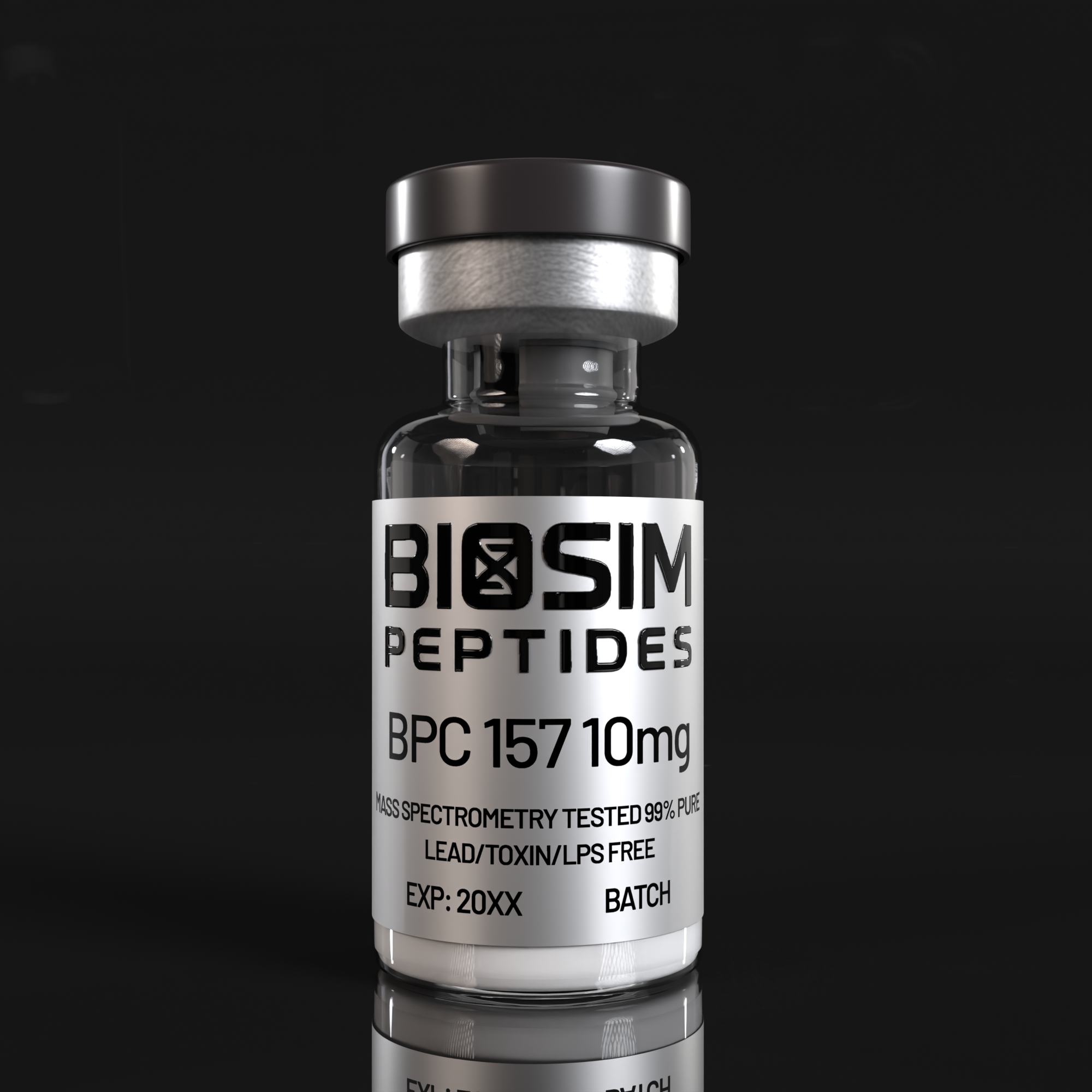
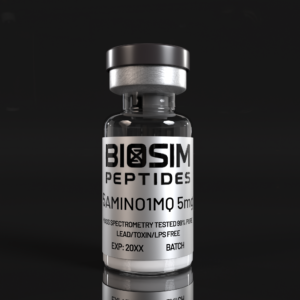
BPC-157, the stable gastric pentadecapeptide, is a 15-amino-acid synthetic peptide derived from a partial sequence of a protein discovered in human gastric juice. BioSim Peptides supplies BPC-157 10mg as a lyophilized research peptide intended for in-vitro laboratory use only. This product is not a drug and is not approved for human consumption.
What is BPC-157?
BPC-157 – also called the stable gastric pentadecapeptide, pentadecapeptide BPC 157, or simply BPC 157 – is a synthetic peptide with the sequence Gly-Glu-Pro-Pro-Pro-Gly-Lys-Pro-Ala-Asp-Asp-Ala-Gly-Leu-Val. It corresponds to residues 14-28 of a larger gastric protein identified in original Croatian gastroprotection research and is notable for its remarkable stability in human gastric juice, a property that distinguishes it from most peptide research tools.
Chemically, BPC-157 has a molecular formula of C62H98N16O22 and a molecular weight of approximately 1419.5 Da. It is freely soluble in water and saline. Because it is a small, unmodified peptide with multiple proline residues, it resists enzymatic degradation in low-pH environments far better than most regulatory peptides of similar size (Sikiric et al., 2024).
BPC-157 has been investigated in published preclinical literature for over thirty years, with the largest body of work emerging from research groups at the University of Zagreb. The peptide is classified pharmacologically as a “cytoprotective” or “pleiotropic” research molecule, lacking a single classical receptor and instead modulating multiple signaling axes simultaneously in laboratory models. BioSim Peptides supplies it as a sterile lyophilized white powder for receptor research, tissue regeneration assays, and gastrointestinal model studies.
Mechanism of Action in Research Models
Unlike most peptide research tools, BPC-157 does not bind a single high-affinity receptor. Instead, published preclinical research describes a pleiotropic mechanism involving multiple convergent pathways. Central among them is upregulation and functional activation of vascular endothelial growth factor receptor 2 (VEGFR2), which underlies the molecule’s well-documented pro-angiogenic activity in endothelial cell cultures and in-vivo vasculogenesis assays (Hsieh et al., 2017).
BPC-157 has been reported to modulate the nitric-oxide (NO) system, restoring NO synthase activity and counteracting both L-NAME-induced NO suppression and L-arginine-induced excess in rodent gastrointestinal and cardiovascular models. Researchers have also documented modulation of growth-hormone-receptor expression in tendon fibroblast cultures, providing a molecular link between the pentadecapeptide and tendon-fibroblast proliferation observed in functional tendon-healing assays (Chang et al., 2014).
Additional mechanistic threads in the published literature include effects on the dopaminergic system, on serotonergic and GABAergic neurotransmission relevant to gut-brain axis research, on adhesion-complex proteins, and on the early growth response 1 (Egr-1) and FAK-paxillin signaling axes governing fibroblast outgrowth and migration (Chang et al., 2011; Sikiric et al., 2024). This combination of pathways gives BPC-157 a uniquely broad research profile spanning angiogenesis, tissue repair, GI cytoprotection, and neurotransmitter biology.
Key Areas of Scientific Research
Tendon and Ligament Repair Research
Tendon healing is one of the most extensively studied applications of BPC-157 in preclinical research. In rat Achilles transection and detachment models, the pentadecapeptide accelerated functional recovery and tendon-to-bone reattachment relative to controls, while also opposing the deleterious effects of co-administered corticosteroids (Krivic et al., 2006; Krivic et al., 2008). At the cellular level, BPC-157 stimulates tendon-fibroblast outgrowth, migration, and survival in primary explant cultures (Chang et al., 2011), with associated upregulation of growth hormone receptor expression that may contribute to the proliferative phenotype (Chang et al., 2014).
Gastrointestinal Cytoprotection Studies
BPC-157 was originally identified in the context of gastric mucosal research. Decades of work in rat models have characterized its activity in protecting against cysteamine-induced duodenal ulcers, NSAID-induced gastric lesions, and ethanol-related mucosal damage. Comprehensive reviews from the Sikiric group catalog its activity across more than a dozen GI injury models (Sikiric et al., 2024). Researchers use BPC-157 as a positive control and mechanistic probe in cytoprotection assays focused on mucosal repair and inflammatory mediators.
Vascular and Angiogenesis Research
The pro-angiogenic profile of BPC-157 is supported by both in-vitro endothelial assays and in-vivo vascular-injury models. Hsieh and colleagues showed that BPC-157 upregulates VEGFR2 expression and downstream MAPK-ERK1/2 and Akt signaling in endothelial cells, supporting capillary-like network formation in tube-formation assays (Hsieh et al., 2017). The molecule has been further characterized in venous and arterial occlusion research and in models of inferior caval vein embolization (Smoday et al., 2023).
Muscle and Neuromuscular Research
Beyond tendon, BPC-157 has been studied in striated, smooth, and cardiac muscle preparations, where it modulates contractility, regenerative response after injury, and inflammatory infiltrate composition (Staresinic et al., 2022). Recent narrative reviews of the musculoskeletal literature summarize this work alongside its limitations for translational interpretation (McGuire et al., 2025).
Neuromodulation and Gut-Brain Axis
BPC-157 modulates dopaminergic, serotonergic, and GABAergic systems in rodent behavioral pharmacology research. Reviews from the Sikiric group highlight its interactions with neurotransmitter pathways relevant to anxiety, motor function, and gut-brain signaling (Sikiric et al., 2024).
Bone and Cartilage Repair Models
Beyond tendon and ligament, BPC-157 has been studied in bone-defect and osteochondral injury research. In rat models of segmental bone defects and cartilage damage, the pentadecapeptide has been reported to support healing endpoints, with mechanistic links to angiogenesis and growth-factor signaling. Researchers use these models to compare BPC-157 against other regenerative tool peptides such as Thymosin Beta-4.
Inflammatory Bowel and Mucosal Repair Research
BPC-157 has been characterized in models of inflammatory bowel injury, including colitis induced by chemical agents in rodents. Reported effects include attenuation of mucosal lesions and modulation of inflammatory mediator profiles. These models complement the broader gastrointestinal cytoprotection literature and continue to motivate research into the pentadecapeptide’s anti-inflammatory mechanisms (Sikiric et al., 2024).
Stable Pentadecapeptide as a Reference Compound
The unusual stability of BPC-157 in human gastric juice has made it a reference molecule in peptide-stability research. Investigators developing oral peptide delivery platforms use BPC-157 alongside synthetic analogs to benchmark resistance to proteolysis at low pH. The repeated proline residues in its sequence (positions 3, 4, 5, and 8) are considered key contributors to this stability profile.
Published Research Highlights
- Chang and coauthors demonstrated that BPC-157 promotes tendon healing in rat Achilles models by enhancing tendon-fibroblast outgrowth, survival, and migration, with FAK-paxillin signaling implicated as a downstream effector (Chang et al., 2011, Journal of Applied Physiology).
- Chang and colleagues subsequently showed that BPC-157 enhances growth-hormone-receptor expression in tendon fibroblasts, providing a molecular bridge between the pentadecapeptide and proliferative tendon-cell biology (Chang et al., 2014, Molecules).
- Krivic and coauthors reported that BPC-157 promoted tendon-to-bone healing and counteracted corticosteroid-induced impairment in a rat Achilles detachment model (Krivic et al., 2006, Journal of Orthopaedic Research).
- Hsieh and coauthors demonstrated that the pro-angiogenic activity of BPC-157 is associated with VEGFR2 activation and upregulation in endothelial cells, providing a mechanistic basis for vascular-repair findings (Hsieh et al., 2017, Journal of Molecular Medicine).
- Staresinic and colleagues reviewed the activity of BPC-157 across striated, smooth, and heart-muscle preparations, integrating decades of preclinical observations (Staresinic et al., 2022, Biomedicines).
- Sikiric and coauthors published an updated comprehensive review of BPC-157 pleiotropic activity and its possible relations with neurotransmitter signaling (Sikiric et al., 2024, Pharmaceuticals).
- McGuire and colleagues authored a narrative review of BPC-157 in musculoskeletal healing, summarizing both supportive preclinical data and translational limitations (McGuire et al., 2025, Current Reviews in Musculoskeletal Medicine).
Stability, Storage, and Handling in Laboratory Settings
Lyophilized BPC-157 10mg is highly stable when stored at -20°C, protected from light and humidity. The pentadecapeptide is notable for its inherent stability in acidic and proteolytic environments, a property that has been demonstrated in published gastric-juice stability studies (Sikiric et al., 2024). For long-term storage in research collections, -80°C is also suitable.
For reconstitution, BPC-157 is freely soluble in bacteriostatic water, sterile water, or saline at typical research concentrations. After reconstitution, working solutions are commonly stored at 2-8°C for short-term use and frozen at -20°C in single-use aliquots for longer-term retention. Freeze-thaw cycles should be minimized. Researchers using BPC-157 in cell-culture assays should verify activity by orthogonal assay (HPLC or functional VEGFR2 or wound-closure readout) for critical experiments. This peptide is supplied for in-vitro laboratory research use only; no dosing or administration instructions are provided.
Product Specifications
- Product: BPC-157 (pentadecapeptide BPC 157) 10 mg per vial
- Sequence: Gly-Glu-Pro-Pro-Pro-Gly-Lys-Pro-Ala-Asp-Asp-Ala-Gly-Leu-Val (H-GEPPPGKPADDAGLV-OH)
- Molecular formula: C62H98N16O22
- Molecular weight: 1419.55 Da
- CAS designation: 137525-51-0
- Purity: ≥98% by HPLC
- Presentation: lyophilized white powder, sealed sterile vial
- Certificate of Analysis (COA) provided on request
- Shipping: USA-based, temperature-controlled logistics
- Intended use: in-vitro laboratory research only
Why Researchers Choose BioSim Peptides
BioSim Peptides supplies BPC-157 manufactured to ≥98% purity by HPLC and verified by mass spectrometry for every lot. Each batch is supported by a Certificate of Analysis available on request, so researchers can document the identity and purity of the material entering their experiments. Our quality program emphasizes lot-to-lot consistency, which is particularly important for a pleiotropic research peptide like BPC-157 where downstream assays are sensitive to impurities and degradation products.
We ship from the United States using insulated, temperature-controlled packaging and offer responsive customer support for technical questions about reconstitution, storage, and assay design. Researchers studying related repair and regeneration peptides may also consult our pages on TB-500 (Thymosin Beta-4) and KPV for complementary tool compounds.
References
- Chang CH, Tsai WC, Lin MS, Hsu YH, Pang JH. The promoting effect of pentadecapeptide BPC 157 on tendon healing involves tendon outgrowth, cell survival, and cell migration. J Appl Physiol (1985). 2011;110(3):774-780. PMID: 21030672.
- Chang CH, Tsai WC, Hsu YH, Pang JH. Pentadecapeptide BPC 157 enhances the growth hormone receptor expression in tendon fibroblasts. Molecules. 2014;19(11):19066-19077. PMID: 25415472.
- Krivic A, Anic T, Seiwerth S, Huljev D, Sikiric P. Achilles detachment in rat and stable gastric pentadecapeptide BPC 157: Promoted tendon-to-bone healing and opposed corticosteroid aggravation. J Orthop Res. 2006;24(5):982-989. PMID: 16583442.
- Krivic A, Majerovic M, Jelic I, Seiwerth S, Sikiric P. Modulation of early functional recovery of Achilles tendon to bone unit after transection by BPC 157 and methylprednisolone. Inflamm Res. 2008;57(5):205-210. PMID: 18594781.
- Hsieh MJ, Liu HT, Wang CN, et al. Therapeutic potential of pro-angiogenic BPC157 is associated with VEGFR2 activation and up-regulation. J Mol Med (Berl). 2017;95(3):323-333. PMID: 27847966.
- Staresinic M, Japjec M, Vranes H, et al. Stable Gastric Pentadecapeptide BPC 157 and Striated, Smooth, and Heart Muscle. Biomedicines. 2022;10(12):3221. PMID: 36551977.
- Sikiric P, Skrtic A, Gojkovic S, et al. The Stable Gastric Pentadecapeptide BPC 157 Pleiotropic Beneficial Activity and Its Possible Relations with Neurotransmitter Activity. Pharmaceuticals (Basel). 2024;17(4):461. PMID: 38675421.
- Smoday IM, Petrovic I, Kalogjera L, et al. Pentadecapeptide BPC 157 as Therapy for Inferior Caval Vein Embolization: Recovery of Sodium Laurate-Post-Embolization Syndrome in Rats. Pharmaceuticals (Basel). 2023;16(11):1507. PMID: 37895979.
- McGuire FP, et al. Regeneration or Risk? A Narrative Review of BPC-157 for Musculoskeletal Healing. Curr Rev Musculoskelet Med. 2025. PMID: 40789979.
This peptide is supplied by BioSim Peptides for in-vitro laboratory research use only. It is not a drug, supplement, cosmetic, or food product and is not intended for human or veterinary use, consumption, diagnosis, treatment, cure, or prevention of any disease. All research must comply with applicable institutional and regulatory guidelines.
Frequently Asked Questions about BPC-157
What is BPC-157?
BPC-157 is a research peptide supplied by BioSim Peptides for in-vitro and laboratory use only. Each vial is lyophilized, lab-tested, and accompanied by a Certificate of Analysis (COA) verifying identity and purity above 98% by HPLC.
Is the BPC-157 from BioSim Peptides third-party tested?
Yes. Every lot of BPC-157 10mg is independently tested by HPLC and mass spectrometry. The COA for the current batch is available on request and packaged with every order.
How should BPC-157 be stored?
Lyophilized BPC-157 should be stored at -20°C for long-term stability. After reconstitution with bacteriostatic water it is typically stored at 2-8°C and used within the timeframe described in the published literature for the peptide.
How fast does BioSim Peptides ship?
Orders placed before 2 PM ET ship same business day from our USA facility via tracked carriers. Most domestic orders arrive in 2-4 business days.
Is BPC-157 approved for human use?
No. BPC-157 is supplied for in-vitro laboratory research only. It is not a drug, dietary supplement, cosmetic, or food, and is not intended for diagnosis, treatment, cure, or prevention of any disease in humans or animals.

Reviews
There are no reviews yet.