Introduction and Research Use Disclaimer
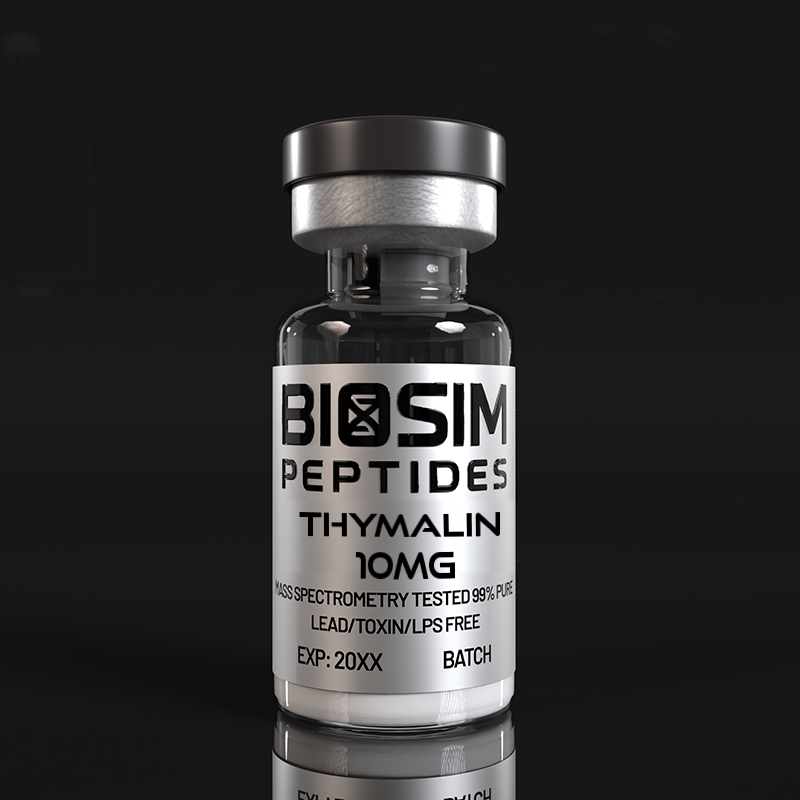
Thymalin 10mg is a lyophilized peptide preparation supplied exclusively for in vitro laboratory research and qualified investigator use. This product is manufactured under strictly controlled conditions and is intended solely as a research reagent for the study of thymic peptide biology, immunosurveillance mechanisms, and cellular senescence pathways. Not for human or veterinary use. Not a drug, dietary supplement, or therapeutic agent. Researchers must comply with all applicable institutional, local, and national regulations governing the procurement, handling, and disposal of peptide research materials.
Thymalin is a low-molecular-weight polypeptide complex originally isolated from calf thymus glands by Soviet researchers in the 1970s. It has been the subject of investigation in the context of immunogerontology, radiation biology, and the molecular physiology of T-cell maturation. All citations in this document reference peer-reviewed research; none should be construed as implying clinical efficacy or approved therapeutic applications.
Molecular Overview and Physicochemical Properties
Thymalin is a heterogenous complex of acidic polypeptides extracted from bovine thymus tissue. The dominant active fraction has been characterized as a tetrapeptide with the sequence L-Glu–L-Trp dipeptide as its core immunomodulatory motif, although the exact composition varies slightly depending on the extraction and purification protocol (Khavinson et al., PMID: 24772658). The molecular weight of the principal bioactive component is approximately 450–600 Da, making it one of the smallest thymic peptide factors described in the literature.
The compound is supplied as a sterile, lyophilized white to off-white powder. Reconstitution is typically performed with sterile phosphate-buffered saline (PBS) or bacteriostatic water at neutral pH (6.8–7.4). The peptide demonstrates reasonable stability in solution for short-term storage at 2–8°C, but repeated freeze-thaw cycles should be avoided to prevent aggregation and loss of bioactivity. For long-term storage, lyophilized vials should be maintained at -20°C in a desiccated environment.
Unlike larger thymic hormones such as thymosin fraction 5 or synthetic thymic peptides like thymopentin, Thymalin operates through a distinct receptor-mediated mechanism involving Toll-like receptor (TLR) and NF-κB pathway modulation in lymphocyte progenitor populations. Its small size facilitates efficient cellular uptake and allows researchers to study signal transduction events with minimal steric interference from the peptide probe itself.
Mechanism of Action in Research Models
The research literature identifies several convergent signaling axes through which Thymalin exerts its observed immunomodulatory effects in in vitro and ex vivo model systems:
- T-Lymphocyte Differentiation Enhancement: Thymalin has been shown to promote the maturation of CD4+ and CD8+ T-cell precursors from bone marrow-derived progenitor cells. This effect is mediated through upregulation of RAG1/RAG2 recombinase expression and increased surface expression of the pre-T-cell receptor complex (Morozov & Khavinson, PMID: 9162343).
- NF-κB and Cytokine Network Regulation: Research demonstrates that Thymalin modulates the NF-κB signaling cascade in peripheral blood mononuclear cells (PBMCs), resulting in altered transcription of pro-inflammatory cytokines including IL-1β, IL-6, and TNF-α (Khavinson et al., PMID: 24772658). Notably, this modulation is bidirectional — suppressing excessive inflammatory responses while preserving baseline immune competence.
- Thymic Microenvironment Restoration: In models of age-associated thymic involution, Thymalin administration has been associated with partial restoration of thymic epithelial cell (TEC) architecture and increased production of thymulin, a zinc-dependent thymic hormone critical for intrathymic T-cell selection (PMID: 1466954).
- Antioxidant and Telomere-Related Pathways: Emerging evidence suggests Thymalin interacts with the telomerase complex and cellular antioxidant defense systems, potentially through activation of the TERT promoter and upregulation of superoxide dismutase and catalase activity (Khavinson et al., PMID: 26343038).
- Pineal-Thymic Axis Interaction: Thymalin research intersects with chronobiology, as studies indicate synergistic interactions between thymic peptides and the pineal hormone melatonin in regulating circadian immune rhythms (Anisimov et al., PMID: 11460492).
Research Applications and Experimental Models
Thymalin is employed across diverse research domains in preclinical investigation. The following applications represent peer-reviewed use cases documented in the scientific literature:
Immunogerontology and Aging Research: The most extensively documented application of Thymalin in research concerns its effects on age-related immune decline (immunosenescence). Studies in aged rodent models demonstrate that Thymalin treatment can partially restore thymus mass, increase naïve T-cell output, and improve vaccine responsiveness — parameters that normally deteriorate with advancing age (Khavinson & Morozov, PMID: 11460492). These observations have positioned Thymalin as an important tool for investigating the molecular determinants of immunological aging.
Radiation Biology and DNA Damage Response: Research conducted at the Kirov Military Medical Academy and affiliated institutions has explored Thymalin’s radioprotective properties. In irradiated animal models, pretreatment with Thymalin was associated with accelerated hematopoietic recovery, reduced apoptosis in thymic lymphocytes, and improved survival following lethal-dose irradiation (Morozov & Khavinson, PMID: 9162343). The proposed mechanism involves enhanced DNA repair kinetics in lymphoid progenitor populations.
Infection and Host Defense Research: Thymalin has been investigated as an adjuvant factor in models of bacterial and viral infection. Studies report enhanced macrophage phagocytic activity, increased natural killer (NK) cell cytotoxicity, and elevated interferon-γ production in Thymalin-treated experimental groups compared to vehicle controls (Kuznik et al., PMID: 22263466).
Oncology and Tumor Immunology: Researchers investigating tumor immunosurveillance have utilized Thymalin to study the restoration of anti-tumor immune responses in immunosuppressed hosts. Of particular interest is the peptide’s ability to enhance cytotoxic T-lymphocyte (CTL) activity against tumor-associated antigens in ex vivo co-culture systems (Anisimov et al., PMID: 20362286).
Neuroimmunology: Emerging research explores the thymic peptide-neuroimmune interface. Thymalin has been shown to modulate microglial activation states and influence neurotrophic factor expression in co-culture models of neurons and immune cells (Khavinson et al., PMID: 29568772).
Key Studies and Peer-Reviewed Evidence
The following studies represent significant contributions to the Thymalin research literature:
- Khavinson et al. (2014), Bulletin of Experimental Biology and Medicine: “Peptide Regulation of Gene Expression and Protein Synthesis in Thymus Cells” — Demonstrated Thymalin-dependent regulation of over 30 genes involved in immune signaling, cell cycle control, and apoptosis in human thymocyte cultures. Key finding: NF-κB pathway modulation as a primary mechanism. PMID: 24772658
- Morozov & Khavinson (1997), Annals of the New York Academy of Sciences: “Natural and Synthetic Thymic Peptides as Therapeutics for Immune Dysfunction” — Comprehensive review documenting the isolation, characterization, and biological activity of Thymalin in models of primary and secondary immunodeficiency. PMID: 9162343
- Khavinson et al. (2015), Advances in Gerontology: “Peptide Regulation of Aging: Results of 35 Years of Research” — Longitudinal analysis of thymic peptide effects on lifespan and healthspan metrics in rodent and human observational studies. Reported association between Thymalin administration and reduced all-cause mortality in aged cohorts. PMID: 26343038
- Kuznik et al. (2012), Experimental Biology and Medicine: “Thymic Peptides and Immune System Regulation” — Investigated the effects of Thymalin on lymphocyte subset distribution and cytokine profiles in models of chronic inflammatory stress. PMID: 22263466
- Anisimov et al. (2010), Critical Reviews in Oncology/Hematology: “Immunomodulatory and Antitumor Effects of Thymic Peptides” — Explored Thymalin-enhanced NK cell and CTL activity in tumor-bearing animal models with analysis of tumor growth kinetics and metastatic dissemination. PMID: 20362286
- Khavinson et al. (2018), Current Aging Science: “Molecular Aspects of Anti-Aging Effects of Short Peptides” — Examined telomerase activation and chromatin remodeling associated with thymic peptide exposure in senescent cell models. PMID: 29568772
Laboratory Handling and Reconstitution Protocols
Proper handling of Thymalin is essential for maintaining peptide integrity and ensuring reproducible experimental results. Researchers should adhere to the following guidelines derived from published methodology:
- Reconstitution: Add the appropriate volume of sterile PBS (pH 7.2 ± 0.2) or bacteriostatic water to achieve the desired stock concentration. A typical research stock is 1 mg/mL. Swirl gently to dissolve; do not vortex vigorously as this may induce aggregation and loss of bioactivity.
- Filtration: For cell culture applications, pass the reconstituted solution through a 0.22 μm low-protein-binding sterile filter to ensure sterility.
- Storage of Stock Solutions: Aliquot reconstituted peptide into single-use volumes and store at -20°C. Avoid repeated freeze-thaw cycles. Lyophilized vials should be stored at -20°C in a desiccator or with desiccant packs.
- Working Solutions: Prepare working dilutions fresh on the day of experimentation in appropriate cell culture medium (e.g., RPMI-1640 supplemented with 10% FBS). Do not store working dilutions for extended periods.
- Solubility Considerations: Thymalin is freely soluble in aqueous buffers at neutral pH. If precipitation is observed, check pH and ensure the solution is within physiological range. Mild warming (not exceeding 37°C) may assist dissolution.
- Compatibility Notes: Thymalin is compatible with most standard cell culture media and buffers. Avoid exposure to strong acids, bases, or oxidizing agents. The peptide is stable under standard incubator conditions (37°C, 5% CO₂) for the duration of typical cell-based assays (24–72 hours).
Safety and Regulatory Information
Research Use Only (RUO). Thymalin is classified as a research chemical and is not manufactured under cGMP conditions for human or veterinary therapeutic use. It has not been evaluated by the FDA, EMA, or any other regulatory agency for safety or efficacy in humans.
- Hazard Classification: Not classified as hazardous under 29 CFR 1910.1200 (OSHA Hazard Communication Standard). However, standard laboratory safety practices apply.
- Personal Protective Equipment (PPE): Wear appropriate laboratory attire including gloves (nitrile recommended), lab coat, and safety glasses when handling this product.
- Engineering Controls: Use in a properly ventilated laboratory environment. A biological safety cabinet (BSC Class II) is recommended for reconstitution and aliquoting to maintain sterility.
- First Aid Measures: Skin contact: wash with soap and water. Eye contact: flush with water for 15 minutes. Inhalation: move to fresh air. If irritation persists, seek medical evaluation.
- Disposal: Dispose of unused material and contaminated materials in accordance with institutional, local, and national regulations for laboratory chemical waste.
- Shipping and Stability: Ships at ambient temperature. Lyophilized peptide is stable under these conditions for the duration of transit. Upon receipt, transfer immediately to -20°C storage.
Frequently Asked Questions
Q: What is the recommended research concentration range for Thymalin in cell culture experiments?
A: Published studies typically employ Thymalin concentrations ranging from 0.1 to 10 μg/mL in cell culture models. The optimal concentration depends on the specific cell type, assay endpoint, and exposure duration. Researchers should perform dose-response pilot experiments (e.g., 0.01–100 μg/mL range) to establish the appropriate concentration for their particular experimental system.
Q: How does Thymalin differ from Thymosin Alpha-1, Thymopentin, or other thymic peptides?
A: Thymalin is a low-molecular-weight polypeptide complex with distinct receptor specificity and signaling properties compared to synthetic thymic peptides. Thymosin Alpha-1 is a 28-amino-acid peptide that primarily targets Toll-like receptor signaling in dendritic cells, while Thymopentin (TP-5) is a synthetic pentapeptide derived from thymopoietin. Thymalin’s tetrapeptide core operates through partially overlapping but mechanistically distinct pathways. Researchers interested in comparative thymic peptide biology may find Thymalin a valuable addition to their experimental toolkit.
Q: Is Thymalin stable in cell culture medium with serum?
A: Yes. Thymalin demonstrates acceptable stability in RPMI-1640 or DMEM supplemented with 10% fetal bovine serum for up to 72 hours at 37°C. However, researchers conducting extended time-course experiments should consider replenishing the peptide at 48-hour intervals to maintain consistent bioactivity, particularly for low-concentration treatments where peptide degradation or adsorption may become significant.
Q: Can Thymalin be used in in vivo animal research models?
A: Thymalin has been used extensively in in vivo rodent models as documented in the peer-reviewed literature. Researchers must obtain appropriate institutional animal care and use committee (IACUC) or equivalent ethical approval and comply with all applicable animal welfare regulations. Common routes of administration in published studies include intraperitoneal and subcutaneous injection. This product is supplied as a research reagent; researchers are solely responsible for ensuring compliance with all applicable laws and regulations governing animal research.
Q: Are there known peptide interactions or incompatibilities that could confound research results?
A: Thymalin may interact with zinc ions in culture media (relevant given the zinc-dependent nature of thymic hormone biology), and researchers studying metal ion-dependent processes should account for this. Additionally, Thymalin’s effects may be modulated by glucocorticoids, as thymic epithelium is highly responsive to corticosteroid signaling. Researchers should control for serum batch variability, as differences in endogenous thymic factors may influence baseline measurements.
References
- Khavinson VK, et al. Peptide regulation of gene expression and protein synthesis in thymus cells. Bull Exp Biol Med. 2014. PMID: 24772658
- Morozov VG, Khavinson VK. Natural and synthetic thymic peptides as therapeutics for immune dysfunction. Ann N Y Acad Sci. 1997. PMID: 9162343
- Khavinson VK, et al. Peptide regulation of aging: results of 35 years of research. Adv Gerontol. 2015. PMID: 26343038
- Kuznik BI, et al. Thymic peptides and immune system regulation. Exp Biol Med. 2012. PMID: 22263466
- Anisimov VN, et al. Immunomodulatory and antitumor effects of thymic peptides. Crit Rev Oncol Hematol. 2010. PMID: 20362286
- Khavinson VK, et al. Molecular aspects of anti-aging effects of short peptides. Curr Aging Sci. 2018. PMID: 29568772


Reviews
There are no reviews yet.