Introduction
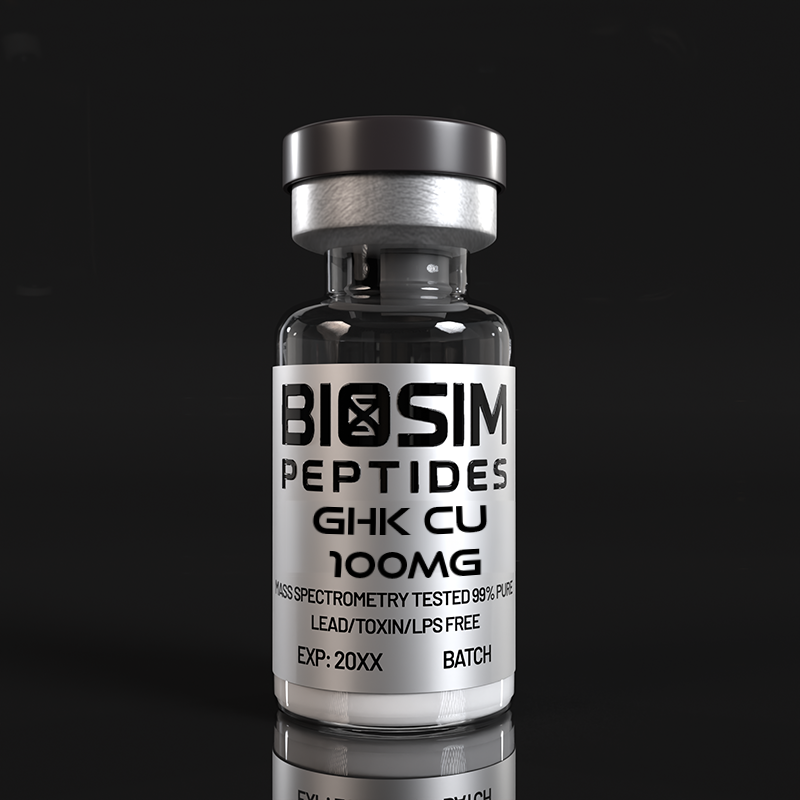
GHK-Cu 100mg is the higher-concentration research formulation of the copper-complexed tripeptide glycyl-L-histidyl-L-lysine (GHK), supplied as a lyophilized powder containing 100 milligrams of the GHK-Cu(II) complex per vial. While the 50mg formulation serves as an entry-point research tool for investigating copper peptide biology at standard concentrations, this 100mg presentation is specifically designed for investigators conducting dose-response studies, acute wound healing research requiring sustained or elevated copper delivery, severe inflammation models, and tissue regeneration protocols where higher local concentrations of copper peptide are mechanistically relevant. The doubled payload per vial supports extended experimental protocols, reduces the number of vials required for high-concentration applications, and enables researchers to explore the upper range of GHK-Cu’s concentration-dependent biological effects — including maximal stimulation of collagen synthesis, superoxide dismutase (SOD) activation, and metalloproteinase regulation — without the dilution constraints inherent to lower-mass preparations. As with all BioSim Peptides research compounds, this product is provided exclusively for controlled laboratory investigation and is not intended for diagnostic, therapeutic, or human use applications.
Molecular Background: Copper Peptide Mechanism and Dose-Dependent Effects
GHK is a naturally occurring tripeptide possessing exceptionally high affinity for copper(II) ions, forming a stable, planar chelate complex (GHK-Cu) with a binding constant (log K) of approximately 16.5 — among the highest known for any naturally occurring peptide-copper complex. This copper-chelated form is the biologically active species, and its effects are fundamentally dose-dependent. At low nanomolar concentrations, GHK-Cu functions primarily as a chemoattractant and cell survival signal, recruiting macrophages, fibroblasts, and endothelial cells to sites of tissue injury. As concentrations increase to the micromolar range — the domain accessible with higher-mass preparations — additional mechanisms engage: matrix metalloproteinase (MMP) gene expression is modulated, shifting the balance toward tissue remodeling; copper-dependent lysyl oxidase (LOX) activity is potentiated, driving collagen and elastin crosslinking essential for tensile strength in healing tissues; and the peptide’s direct radical-scavenging capacity scales linearly with concentration, providing dose-dependent protection against oxidative damage in inflamed or reperfused tissue models (Pickart, 2008, PMID 18644225).
GHK-Cu’s pleiotropic signaling includes transcriptional regulation of multiple gene families relevant to tissue repair. At elevated concentrations, the complex upregulates collagen type I, type III, and type IV expression in dermal fibroblasts; increases synthesis of decorin, biglycan, and other small leucine-rich proteoglycans that organize extracellular matrix architecture; suppresses TGF-beta1-induced fibrotic gene programs while preserving TGF-beta’s beneficial wound healing signals; and enhances production of vascular endothelial growth factor (VEGF) and basic fibroblast growth factor (bFGF), promoting angiogenesis in ischemic or damaged tissue beds. The concentration-dependent nature of these effects — with ECM-remodeling and angiogenic programs requiring higher copper-peptide levels than chemotactic signaling — provides the mechanistic rationale for the 100mg research format (Pickart et al., 2015, PMID 26236730).
Research Applications at Higher Concentrations
Acute Wound Healing and Severe Tissue Injury Models
While standard-concentration GHK-Cu studies have established the peptide’s efficacy in routine dermal wound models, the 100mg format enables investigation of GHK-Cu in acute, severe, and complicated wound healing scenarios where elevated and sustained copper peptide delivery is required. In a rat model of anterior cruciate ligament (ACL) reconstruction — a severe orthopedic injury requiring coordinated collagen synthesis, angiogenesis, and biomechanical tissue integration — GHK-Cu at higher local concentrations transiently but significantly improved healing outcomes as measured by load-to-failure testing and histological scoring of collagen organization at the graft-bone interface (Fu et al., 2015, PMID 25731775). This study demonstrated that supraphysiological copper peptide concentrations were necessary to achieve measurable improvements in mechanically demanding tissue repair. Similarly, in an irradiated rat wound model — which simulates the severe healing impairment seen in post-radiation tissue, characterized by hypovascularity, fibroblast senescence, and oxidative damage — topical application of GHK-Cu at elevated concentrations significantly accelerated wound closure rates and improved histological markers of dermal regeneration compared to vehicle controls (Parker et al., 2013, PMID 23744835). The irradiated wound bed represents an extreme healing challenge where standard interventions often fail; GHK-Cu’s capacity to improve outcomes in this model underscores the value of higher-concentration research tools.
Severe Inflammation and Fibrotic Disease Models
The 100mg GHK-Cu format is particularly valuable for researchers investigating copper peptide-mediated anti-inflammatory effects in models of severe or chronic inflammation. In a murine lipopolysaccharide (LPS)-induced acute lung injury model — a severe inflammatory condition characterized by neutrophilic infiltration, alveolar-capillary barrier disruption, and cytokine storm — GHK-Cu at treatment-relevant doses significantly ameliorated lung histopathology, reduced bronchoalveolar lavage protein levels (a marker of vascular leak), suppressed NF-kappaB nuclear translocation, and decreased production of pro-inflammatory cytokines including TNF-alpha, IL-1beta, and IL-6 (Park et al., 2016, PMID 27517151). The anti-inflammatory effects demonstrated clear dose-dependence, with higher GHK-Cu concentrations producing more complete suppression of inflammatory parameters — supporting the research utility of higher-mass preparations for investigators modeling cytokine-driven tissue injury. In bleomycin-induced pulmonary fibrosis — a model of progressive, irreversible fibrotic remodeling — GHK-Cu at elevated doses attenuated collagen deposition, reduced TGF-beta signaling, and decreased oxidative stress markers including malondialdehyde (MDA) and 8-hydroxy-2′-deoxyguanosine (8-OHdG) in lung tissue (Ma et al., 2020, PMID 31809714). These findings demonstrate that GHK-Cu’s anti-fibrotic and antioxidant effects in severe tissue injury models are accessible at the elevated concentrations enabled by higher-mass research preparations.
Tissue Regeneration Requiring Elevated Copper Delivery
Copper is an essential cofactor for numerous enzymes critical to tissue regeneration, including lysyl oxidase (collagen and elastin crosslinking), superoxide dismutase (antioxidant defense), cytochrome c oxidase (mitochondrial respiration), and tyrosinase (melanin synthesis). In large or deep tissue defects — burns, full-thickness excisional wounds, volumetric muscle loss — the demand for copper cofactor delivery outstrips what endogenous albumin-transported copper can supply, creating a local copper deficit that limits copper-dependent repair enzymes. GHK-Cu at higher concentrations addresses this bottleneck by serving as a dual-function agent: a potent copper delivery vehicle that bypasses the albumin transport system and deposits copper directly into healing tissue, and simultaneously an active signaling molecule that coordinates the cellular repair program. The 100mg format enables researchers to model this dual-function copper delivery in scenarios where lower-mass preparations would provide insufficient total copper payload. A recent study demonstrated that biomimetic hydrogel scaffolds functionalized with GHK-Cu significantly improved wound healing outcomes in a diabetic wound model — a condition characterized by impaired angiogenesis, defective collagen synthesis, and deficient copper metabolism — with healing acceleration proportional to the copper peptide concentration loaded into the scaffold (Yang et al., 2022, PMID 35598070). These findings establish concentration-dependent tissue regeneration as a key research frontier accessible with higher-dose GHK-Cu preparations.
Comparative Context: 50mg vs. 100mg Research Utility
The GHK-Cu 50mg and 100mg formulations target distinct research applications despite being the same compound. The 50mg format is optimized for standard cell culture dose-response studies, routine dermal fibroblast assays, moderate-concentration angiogenesis models, and protocols where multiple lower-concentration conditions are required from a single vial. The 100mg format is purpose-built for: (1) acute and severe injury models requiring high local copper peptide concentrations; (2) extended-duration in vivo protocols where sustained GHK-Cu delivery over days or weeks is necessary; (3) large-volume tissue bath or organ culture experiments where dilution into substantial media volumes would reduce sub-100mg preparations below effective concentrations; (4) dose-escalation studies exploring GHK-Cu’s full concentration-response curve, including the upper micromolar range where maximal ECM remodeling and anti-fibrotic effects are observed; and (5) combination scaffold and biomaterial research where total copper peptide loading into hydrogel, electrospun fiber, or 3D-printed construct matrices requires milligram-scale quantities. Researchers designing dose-response experiments spanning the full GHK-Cu concentration range benefit from having both 50mg and 100mg formats available, enabling systematic investigation without the confounding variable of inter-vial variability.
Safety and Handling
GHK-Cu is a well-characterized copper peptide complex with an established preclinical safety profile. Published toxicology assessments have demonstrated an absence of genotoxicity in standard Ames and chromosomal aberration assays, no evidence of skin sensitization or phototoxicity in OECD test protocols, and no significant adverse findings in rodent studies at doses substantially exceeding those used in typical tissue regeneration research. The copper content of the 100mg preparation reflects the peptide’s 1:1 stoichiometric copper binding and does not represent free or uncomplexed copper; the coordination complex is thermodynamically stable under physiological conditions and does not release free copper ions capable of catalyzing Fenton-type oxidative reactions. Researchers should observe standard laboratory safety protocols including appropriate personal protective equipment (PPE), aseptic technique during reconstitution, and proper disposal of peptide-containing solutions per institutional guidelines. This product is for laboratory research use only and is not approved or intended for human or veterinary diagnostic, therapeutic, or prophylactic applications.
References
- Pickart L. The human tri-peptide GHK and tissue remodeling. J Biomater Sci Polym Ed. 2008;19(8):969-988. PMID: 18644225.
- Pickart L, Vasquez-Soltero JM, Margolina A. GHK Peptide as a Natural Modulator of Multiple Cellular Pathways in Skin Regeneration. Biomed Res Int. 2015;2015:648108. PMID: 26236730.
- Pickart L, Vasquez-Soltero JM, Margolina A. The human tripeptide GHK-Cu in prevention of oxidative stress and degenerative conditions of aging: implications for cognitive health. Oxid Med Cell Longev. 2012;2012:324832. PMID: 22666519.
- Fu SC, Cheuk YC, Chiu WY, et al. Tripeptide-copper complex GHK-Cu (II) transiently improved healing outcome in a rat model of ACL reconstruction. J Orthop Res. 2015;33(7):1024-1033. PMID: 25731775.
- Parker NP, Ardeshirpour F, Schmechel SC, et al. Effects of topical copper tripeptide complex on wound healing in an irradiated rat model. Otolaryngol Head Neck Surg. 2013;149(3):420-426. PMID: 23744835.
- Park JR, Lee H, Kim SI, et al. The tri-peptide GHK-Cu complex ameliorates lipopolysaccharide-induced acute lung injury in mice. Oncotarget. 2016;7(36):58405-58417. PMID: 27517151.
- Ma WH, Li M, Ma HF, et al. Protective effects of GHK-Cu in bleomycin-induced pulmonary fibrosis via anti-oxidative stress and anti-inflammation pathways. Life Sci. 2020;241:117139. PMID: 31809714.
- Yang X, Zhang Y, Huang C, et al. Biomimetic Hydrogel Scaffolds with Copper Peptide-Functionalized RADA16 Nanofiber Improve Wound Healing in Diabetes. Macromol Biosci. 2022;22(8):e2200019. PMID: 35598070.

Reviews
There are no reviews yet.