Introduction
Human growth hormone (hGH), also known as somatropin in its recombinant form, is a 191-amino acid, 22-kDa polypeptide hormone synthesized and secreted by somatotroph cells of the anterior pituitary gland. Produced through recombinant DNA technology in mammalian or bacterial expression systems, recombinant human growth hormone (rhGH) is chemically and structurally identical to endogenous pituitary hGH. The hormone functions as the master regulator of postnatal somatic growth and exerts profound pleiotropic effects on body composition, including promotion of lean body mass accretion, stimulation of lipolysis, and enhancement of protein synthesis across multiple tissue types. Growth hormone’s metabolic actions are mediated both directly through growth hormone receptor (GHR) activation in target tissues and indirectly through stimulation of insulin-like growth factor 1 (IGF-1) synthesis, primarily in the liver. For researchers investigating the somatotropic axis, body composition regulation, or the metabolic consequences of GH-IGF-1 signaling, recombinant hGH provides an indispensable reference standard for experimental models ranging from cell culture to whole-organism physiology.
Molecular Characteristics & Mechanism of Action
Human growth hormone exerts its biological effects through a well-characterized receptor activation mechanism involving sequential binding to two GHR monomers. The hormone possesses two distinct receptor-binding sites that engage the extracellular domains of GHR, inducing receptor dimerization and conformational changes that activate the associated Janus kinase 2 (JAK2). Activated JAK2 phosphorylates multiple tyrosine residues on the GHR cytoplasmic domain, creating docking sites for signal transducer and activator of transcription 5 (STAT5) and other downstream effectors including the MAPK/ERK and PI3K/Akt pathways. STAT5 translocation to the nucleus drives transcription of IGF-1 and other GH-responsive genes, establishing the primary endocrine axis governing somatic growth. In adipose tissue, GH directly stimulates hormone-sensitive lipase activity, promoting triglyceride hydrolysis and free fatty acid release — a catabolic effect that contrasts with the anabolic actions of GH on skeletal muscle and bone.
Clinical and preclinical investigations have extensively characterized the metabolic consequences of rhGH administration. A 24-month study of rhGH intervention in adult growth hormone deficiency patients provided insights into redox regulation, vascular biomarkers, and body composition changes, demonstrating that GH replacement reduces visceral adiposity, improves lipid profiles, and modulates oxidative stress markers over extended treatment periods (PMID: 41683872). Long-acting formulations using polyethylene glycol conjugation have been developed to reduce dosing frequency while maintaining metabolic efficacy, with studies documenting both metabolic and bone effects in growth hormone deficiency patients during the transition period from pediatric to adult care (PMID: 42415557). Comprehensive reviews of the multiple clinical effects of rhGH therapy have catalogued its impact on body composition, bone mineral density, cardiovascular risk factors, and quality of life across diverse patient populations (PMID: 42457321).
Research Applications & Key Findings
Recombinant human growth hormone serves a broad range of research applications spanning endocrinology, metabolism, sports science, and gerontology. In metabolic research, rhGH is used to study substrate partitioning — the balance between protein anabolism and lipid catabolism — under varying nutritional and hormonal conditions. A foundational study demonstrated that biosynthetic human growth hormone preserves muscle protein synthesis and attenuates the decline in intramuscular glutamine concentrations during catabolic stress, establishing the hormone’s role in nitrogen sparing (PMID: 1503519). Investigations of GH pharmacogenomics have identified a common deletion in the growth hormone receptor gene (d3-GHR) that influences receptor signaling efficiency, with maternal placental GH levels during pregnancy modulating this variant’s effects in offspring (PMID: 33096343).
Recent studies have explored rhGH therapy’s effects on metabolic parameters in patients with severe growth hormone deficiency, analyzing changes in glucose homeostasis, lipid profiles, and inflammatory markers during treatment (PMID: 42200338). Interest in unconventional applications of growth hormone — including its use in critical illness, burn recovery, and aging-related sarcopenia research — has generated substantial literature examining both potential benefits and the risks of off-label use in non-deficient populations (PMID: 41915988). For laboratory researchers, rhGH provides a highly characterized reagent with well-defined receptor pharmacology, established pharmacokinetics, and decades of safety data that facilitate experimental design across the full spectrum of somatotropic axis research.
Comparative Context
Recombinant human growth hormone exists within a landscape of GH-related research compounds that includes growth hormone-releasing hormone (GHRH) analogs (tesamorelin, sermorelin), ghrelin receptor agonists (GHRP-2, GHRP-6, ipamorelin), and GH receptor antagonists (pegvisomant). Unlike GHRH analogs and ghrelin mimetics, which stimulate endogenous GH secretion through hypothalamic and pituitary mechanisms, rhGH bypasses endogenous regulatory circuits and provides direct receptor activation — a distinction that is critical for experimental designs requiring controlled, dose-dependent GH exposure independent of hypothalamic-pituitary feedback. Compared to IGF-1 administration, which mimics only the indirect effects of GH, rhGH activates both direct GHR-mediated and indirect IGF-1-mediated pathways, providing a more complete recapitulation of endogenous GH physiology. For studies of the aging somatotropic axis — where GH secretion declines progressively (somatopause) — rhGH allows investigators to restore youthful GH levels in aged animal models, facilitating research into the role of GH-IGF-1 signaling in longevity, healthspan, and age-related functional decline.
Laboratory Handling & Storage
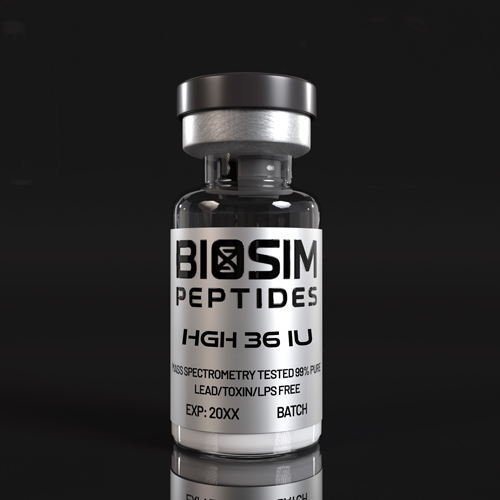
Recombinant human growth hormone is supplied as a sterile, lyophilized powder in a sealed vial. The hormone is a delicate protein — mechanical stress, extreme pH, and elevated temperatures can induce aggregation or denaturation. For research applications, the lyophilized powder should be reconstituted gently with sterile bacteriostatic water or an appropriate buffer, swirling rather than shaking to avoid foaming and shear-induced aggregation. Lyophilized rhGH is stable at 2-8°C (refrigerated) for the duration indicated on the certificate of analysis; long-term storage at -20°C is recommended for extended stability. After reconstitution, the solution should be used promptly and stored refrigerated; freeze-thaw cycles should be avoided. Each batch is accompanied by a certificate of analysis specifying purity, molecular weight, and biological activity. Standard biosafety protocols for handling recombinant protein research materials should be observed. This product is exclusively intended for laboratory research and analytical applications.
References
- 2026. “Twenty-Four-Month rhGH Intervention: Insights into Redox Regulation, Vascular Biomarkers, and Body Composition in Adult GHD Patients.” Int J Mol Sci. PMID: 41683872
- 2026. “Metabolic and bone effects of long-acting polyethylene glycol-recombinant human growth hormone in growth hormone deficiency during the transition period: a prospective study.” Ann Pediatr Endocrinol Metab. PMID: 42415557
- 2026. “[Multiple clinical effects of recombinant human growth hormone therapy].” Zhongguo Dang Dai Er Ke Za Zhi. PMID: 42457321
- 2020. “A common deletion in the growth hormone receptor gene (d3-GHR) in the offspring is related to maternal placental GH levels during pregnancy.” Growth Horm IGF Res. PMID: 33096343
- 2026. “Analysis of the effect of recombinant human growth hormone therapy on metabolic parameters in patients with severe growth hormone deficiency in adulthood.” Endokrynol Pol. PMID: 42200338
- 1992. “Biosynthetic human growth hormone preserves both muscle protein synthesis and the decrease in muscle-free glutamine, and improves whole-body nitrogen economy after operation.” Ann Surg. PMID: 1503519

Reviews
There are no reviews yet.